

In this article
Babassu oil generally makes more sense when you want a lighter finish, while batana oil better suits richer pre-wash or conditioning treatments. Neither oil automatically works for every curl or coil pattern.
Your best choice depends on strand thickness, density, porosity, dryness, and how quickly your hair becomes coated. Fine curls may lose volume under a rich oil, while coarse or highly porous coils may need more weight to stay soft and manageable.
Both oils can reduce friction, add slip, and slow moisture loss, but they do not supply water to dry hair. For moisture retention, apply an oil after a water-based conditioner or leave-in rather than treating oil as the moisturizing step itself.
Key Takeaways
-
Babassu usually leaves a lighter, less greasy finish.
-
Batana works better as a rich pre-wash or conditioning treatment.
-
Hair thickness and porosity matter more than curl pattern alone.
-
Use less product first to reduce grease and buildup.
Batana Oil vs Babassu Oil: The Short Answer
Batana oil vs babassu oil is mainly a choice between richer conditioning and lighter sealing. Babassu melts quickly and tends to spread in a thin layer, making it easier to use on fine, low-density, or easily weighed-down curls. Batana has a denser, more buttery feel that often fits dry, thick, coarse, or high-porosity hair better.
|
Factor |
Babassu Oil |
Batana Oil |
|
Texture |
Light, quick-melting oil |
Rich, dense, sometimes butter-like oil |
|
Finish |
Softer and less greasy |
More coated and deeply conditioned |
|
Best routine step |
Light sealant, finisher, or leave-in blend |
Pre-shampoo or rinse-out treatment |
|
Washout needs |
Usually easier to remove |
May require more thorough shampooing |
|
Buildup potential |
Lower when used sparingly |
Higher if overapplied or layered often |
|
Best hair characteristics |
Fine, low-density, or weight-sensitive hair |
Thick, coarse, dry, or porous hair |
Oil choice affects feel more than true hydration. A review of hair-oil mechanisms explains that oils can coat the shaft, increase slip, smooth the cuticle surface, and help retain existing moisture. Those effects may make curls feel softer and easier to detangle without replacing water or conditioner.
How Batana and Babassu Differ in Feel and Finish
Babassu Oil Feels Lighter and Melts Quickly
Babassu oil is solid or soft at cooler room temperatures but melts rapidly with body heat. Its quick spread and comparatively light finish make it useful when heavier oils leave curls limp, stringy, or visibly coated. A small amount can smooth the ends or soften a cast without removing too much volume.
A medically reviewed overview notes that babassu oil feels lightweight and non-greasy, although direct human research on its hair benefits remains limited. For broader ingredient guidance, see babassu oil for hair.
Batana Oil Provides Richer Conditioning
Batana oil usually behaves more like a dense conditioning oil than a light finisher. Its richer texture can help dry or rough strands feel smoother, especially when used before shampooing or left briefly on the mid-lengths and ends. Fine hair may find the same coating too heavy.
Trichologist Hannah Gaboardi describes batana as a thick, deep-conditioning oil that better suits dry, thick, curly, or coily hair than fine or oily hair. Batana may improve softness, shine, and manageability, but current evidence does not establish it as a direct follicle-growth treatment. Dermatologists likewise note that scientific proof for batana-driven regrowth is lacking.
Which Oil Fits Your Hair Best?
Curl pattern describes the shape of the strand, not how thick each strand is, how densely hair grows, or how readily it absorbs and loses water. Two people with the same curl type may need very different oil weights.
Fine, Low-Density, or Easily Weighed-Down Curls
Babassu is usually the safer first choice for fine or low-density curls because it spreads easily and requires less product to cover the hair. Use it mainly on damp lengths and ends, then check how the hair feels after it dries. Flat roots, separated curl clumps, or an oily sheen suggest that even a light oil was overapplied.
A babassu oil leave-in approach works best when the oil is a minor finishing layer, not the main conditioning product. Mix a trace into the amount of leave-in already in your palm, or smooth it over dry ends only when they feel rough.
Thick, Coarse, Dry, or High-Porosity Coils
Batana may be the better match when strands feel coarse, lose softness quickly, or tolerate creams and butters without collapsing. A richer coating can reduce the rough feel caused by lifted or damaged cuticles and may help the hair hold onto moisture from the conditioning step.
High-porosity hair can still become greasy, so richness should not be confused with unlimited tolerance. Apply batana to the driest sections first, especially the ends, and add more only when the hair absorbs the initial layer without feeling waxy.
Why Curl Pattern Alone Should Not Decide
Strand thickness, density, damage, porosity, climate, and wash frequency all influence oil tolerance. Understanding hair porosity helps explain why one head of coily hair may welcome batana while another develops buildup quickly.
Hair-care guidance on choosing oils by thickness and porosity also warns that heavy raw oils can weigh down fine hair, while coarser hair often handles richer oils and butters better. Treat curl pattern as one clue, not the final decision rule.
When to Use Each Oil in Your Routine
Placement matters as much as the oil itself. Babassu performs well in small finishing roles, while batana is usually easier to control when used as a treatment that will later be shampooed out.
Use Babassu as a Light Sealant or Finisher
Apply babassu after a water-based leave-in when the goal is to slow moisture loss and reduce friction. Concentrate on the ends, which experience the most wear. It can also soften a firm gel cast after the style has fully dried, but too much may loosen definition and reduce volume.
Use Batana as a Pre-Shampoo or Conditioning Treatment
A batana oil pre-shampoo treatment gives the oil time to soften the lengths while making washout part of the plan. Warm a small amount between your fingers, press it into dry or slightly damp mid-lengths and ends, leave it on briefly, and shampoo thoroughly. Readers who prefer post-wash layering can follow a cautious method for layering batana oil with leave-in conditioner.
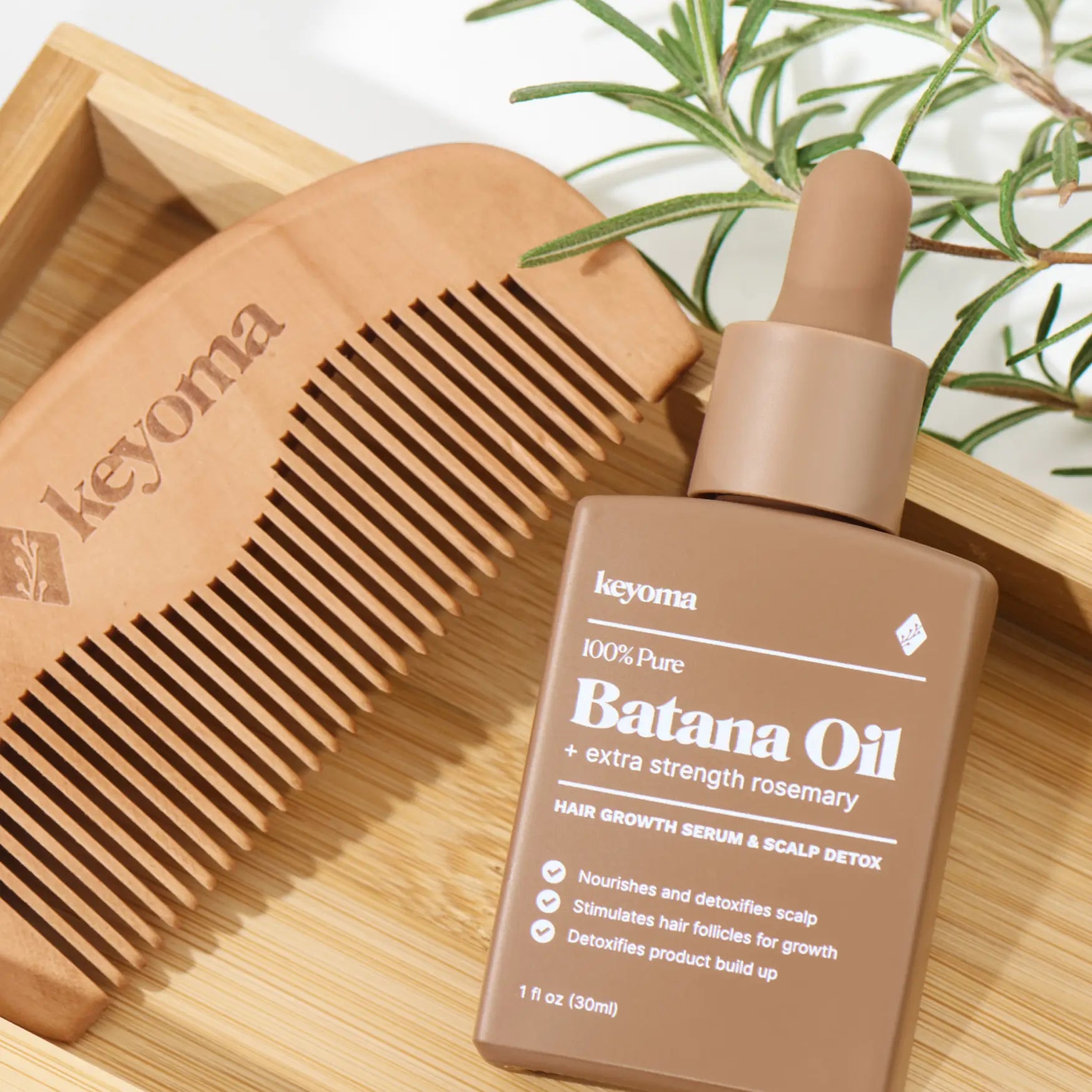
The linked Keyoma batana oil with rosemary is a two-ingredient blend, not raw batana oil alone. Its finish may differ from a jar of unrefined batana, so assess the formula by how it behaves on your hair and scalp rather than assuming every batana product has the same weight.
Can You Use Batana and Babassu Oil Together?
Yes, you can mix batana and babassu oil, but combining them does not guarantee a better result. Babassu may make batana easier to spread, while batana adds more richness than babassu provides alone.
Mix only enough for one application in your palm rather than preparing a large bottle before you know how your hair responds. Use more babassu for a lighter finish or more batana for a pre-wash treatment. There is no universal ratio because strand thickness, density, and product tolerance vary widely.
How to Prevent Grease, Buildup, and Scalp Irritation
Grease usually comes from applying more oil than the hair can hold, layering oil over old residue, or using a rich formula too close to the roots. A controlled application makes both oils easier to evaluate.
Apply Oil After Water-Based Conditioning
Oil should seal or soften, not replace water. Apply it after conditioner or leave-in when the hair still has moisture to retain. Putting oil on already dry, dehydrated hair may create shine while the strand continues to feel stiff underneath.
Start With Less and Add Only if Needed
Coat your fingertips first instead of pouring oil directly onto the hair. Work through the ends and driest sections, pause, and add more only if the hair still feels rough. Fine or low-density hair generally needs far less than thick, coarse hair.
Cleanse Before Residue Becomes Buildup
If curls lose bounce, feel tacky, or remain oily after drying, reduce the amount or frequency. Regular cleansing prevents repeated layers from turning into product buildup. Batana may need a more thorough shampoo than babassu because its richer coating can be harder to remove.
Stop Scalp Oiling When Symptoms Persist
Avoid routine scalp application when oil triggers itching, redness, painful bumps, or recurring flakes. Guidance on when to stop scalp oiling can help separate normal product adjustment from signs that the scalp is not tolerating the practice.
A dermatology paper reports that scalp oils may worsen seborrheic dermatitis in some people. Stop oiling and seek professional guidance when irritation persists, rather than covering active flaking with more oil.
Choose Batana Oil vs Babassu Oil for Softer Curls
Choose babassu when your priority is light sealing, movement, and a lower risk of weighed-down curls. Choose batana when your hair tolerates richer products and benefits from a pre-wash or conditioning treatment.
Let hair behavior make the final decision. Start with a small amount, watch the dry result, and adjust the oil, placement, or frequency when softness turns into grease or buildup.
Featured Product
30% Off + 3 FREE Gifts
100% Pure Batana Oil + Rosemary


