

In this article
Scalp oiling can be helpful for some routines, but it is not the right fit for every scalp. If your roots feel greasy, coated, itchy, or heavy after oiling, the issue may not be the oil itself. The issue may be where you are applying it.
You do not have to stop using oil completely just because your scalp dislikes it. Many people get better results by moving oil away from the roots and using it only on the mid-lengths and ends, where dryness, frizz, and rough texture are more visible.
The goal is simple: keep oil where it helps and stop placing it where it creates buildup or discomfort.
Key Takeaways
-
Stop scalp oiling if your roots feel greasy, clogged, itchy, or heavy after use.
-
Dry ends may still benefit from oil even when your scalp feels oily.
-
Ends-only oiling usually needs less product than a full scalp routine.
-
Choose your routine based on how your scalp and ends respond.
When Should You Stop Oiling Your Scalp?
You should stop oiling your scalp when it consistently feels worse after oiling. A good routine should leave your hair easier to manage, not flatter, greasier, harder to wash, or more uncomfortable at the roots.
Scalp oiling may be the wrong fit if your scalp feels coated after every application, your crown loses volume quickly, or shampoo does not seem to remove the oil fully. The American Academy of Dermatology recommends washing based on how dirty or oily your hair gets and applying shampoo mainly to the scalp, where excess oil and buildup collect.
Stopping scalp oiling does not mean oil has no place in your routine. It may mean your scalp already has enough natural oil, while your ends still need softness. For a broader look at that pattern, the issue often shows up as oily scalp and dry ends, where the roots and lengths need different care.
If your scalp feels irritated, burns, flakes heavily, or stays itchy even after you stop oiling, treat that as a reason to pause experiments and consider professional guidance. A routine adjustment can help with product fit, but it should not be used to self-diagnose a scalp condition.
Signs Scalp Oiling Is Not Working for You
Scalp oiling is not failing just because your hair does not look perfect after one try. It becomes a poor fit when the same problems show up repeatedly, especially after you use a reasonable amount and wash properly.
Watch for these signs:
-
Your roots look greasy soon after oiling, even before your next wash.
-
Your scalp feels coated, clogged, itchy, or uncomfortable after oil sits on it.
-
Your hair feels flat at the crown, while the ends still look dry or frizzy.
-
Shampoo does not fully remove the oil, so your roots feel heavy after washing.
-
Your hair looks better when oil stays away from the scalp.
A heavy feeling can come from using too much product, choosing an oil that is too rich for your hair type, or applying it too close to the roots. If this keeps happening, a guide on how to know if hair oil is too heavy can help you separate product weight from placement problems.
Your scalp does not need to tolerate oil for your routine to be valid. Cleveland Clinic dermatologist Shilpi Khetarpal, MD, notes that hair oiling does not affect every hair type the same way, and fine or straight hair may feel weighed down more easily.
Why Your Ends May Need Oil More Than Your Scalp
Your scalp and ends do not have the same needs. The scalp naturally produces sebum through sebaceous glands connected to hair follicles. Cleveland Clinic explains that sebum helps protect skin from drying out, and the scalp has many sebaceous glands.
Your ends sit farthest from that natural oil source. They are also the oldest part of your hair, so they have gone through more brushing, washing, styling, friction, and weather exposure. The AAD notes that the ends are the oldest and most fragile part of the hair, which is why conditioning the ends is especially important.
That difference is why oil may feel wrong on your scalp but useful on your ends. Roots can look greasy because they are close to sebum production. Ends can still feel rough, dull, or dry because natural scalp oil does not always travel evenly down the hair shaft.
A length-focused approach works best when the dryness is mostly visible below the ears or at the tips. If your main concern is rough ends, a hair oil dry ends routine may be a better fit than applying oil directly to the scalp.
Should You Oil Your Ends Instead of Your Scalp?
Yes, you should oil your ends instead of your scalp if oil makes your roots greasy or uncomfortable but your ends still feel dry, rough, frizzy, or dull. Your routine may not need more oil overall. It may need better placement.
Ends-only oiling lets you keep the cosmetic benefits of oil without overloading the scalp. Cleveland Clinic describes hair oiling as a practice that can increase shine and moisture, and it also notes that some methods focus on the ends rather than the scalp.
This approach can be especially useful if your roots get oily quickly after washing but your lengths still need slip. A small amount of oil on the ends can make hair feel smoother without creating flat roots. For some hair types, oil placement after washing or styling may work better than a full pre-wash scalp application.
If your ends are the main problem area, pure batana oil can fit an ends-focused routine for softness, shine, and smoother-looking lengths. Keep the use cosmetic and light, especially if your hair gets weighed down easily.
How to Switch From Scalp Oiling to Ends-Only Oiling
Switching does not need to be dramatic. A clean reset usually works better than trying to correct greasy roots with more shampoo, more oil, or more frequent layering.
The goal is to pause scalp application, reduce the amount, and place oil only where your hair actually needs slip. AAD guidance on leave-in conditioner follows a similar principle: use the smallest amount that does the job to avoid a greasy look.
Step 1: Pause Scalp Oiling for a Few Washes
Stop applying oil directly to your scalp for a few washes. Use that time to observe whether your roots feel lighter, cleaner, and easier to wash.
Do not change everything at once if you can avoid it. Keep your shampoo and styling routine mostly the same, so you can tell whether removing scalp oil made the difference.
Step 2: Apply Oil Only From the Mid-Lengths Down
Start at the very ends first, then move lightly upward only if your hair still needs it. Avoid placing oil above the area where your hair naturally gets greasy.
For many people, the safest starting point is below the ears. If your hair is short, focus only on the last inch or two. If your hair is long, begin at the ends and stop before the crown starts to flatten.
Step 3: Use a Smaller Amount Than Before
Ends-only oiling usually needs less product than scalp oiling. Too much oil on the ends can still make the hair look stringy, even if you avoid the scalp.
Use these starting amounts:
-
Rice-grain amount for fine or short hair.
-
Pea-sized amount for medium, thick, curly, coily, or longer hair.
-
A tiny second layer only on very dry ends.
I usually prefer warming a tiny amount between the palms first because it spreads more evenly. Add more only after the first layer settles.
Step 4: Avoid the Crown and Roots
Keep oil away from the crown, hairline, part line, and roots. Those areas show grease fastest and can make the whole style look heavier.
If your hands still feel oily after applying product to your ends, do not smooth the leftover oil over your scalp. Wipe your hands or lightly press the excess into the lowest ends instead.
Step 5: Reassess After Styling or Sleeping
Check your hair after styling, and check it again the next morning. The right amount should make the ends feel softer without making the roots oily.
If the ends still feel dry, add a smaller second layer only to the tips. If the hair looks coated, reduce the amount next time or use oil only before washing. A pre-wash vs post-wash hair oil approach can help you choose the timing that feels cleaner for your hair.
Scalp or Ends: Which Routine Should You Choose?
Your best routine depends on how your scalp responds and where dryness shows. Try not to force a scalp routine just because it sounds more complete. A routine that fits your actual hair will usually look better than one that follows a trend too closely.
Choose a scalp routine if:
-
Your scalp feels dry and comfortable with oil.
-
Your roots do not get greasy quickly after application.
-
You prefer pre-shampoo oiling and can wash it out easily.
-
You want a scalp-focused oil routine and your scalp tolerates it well.
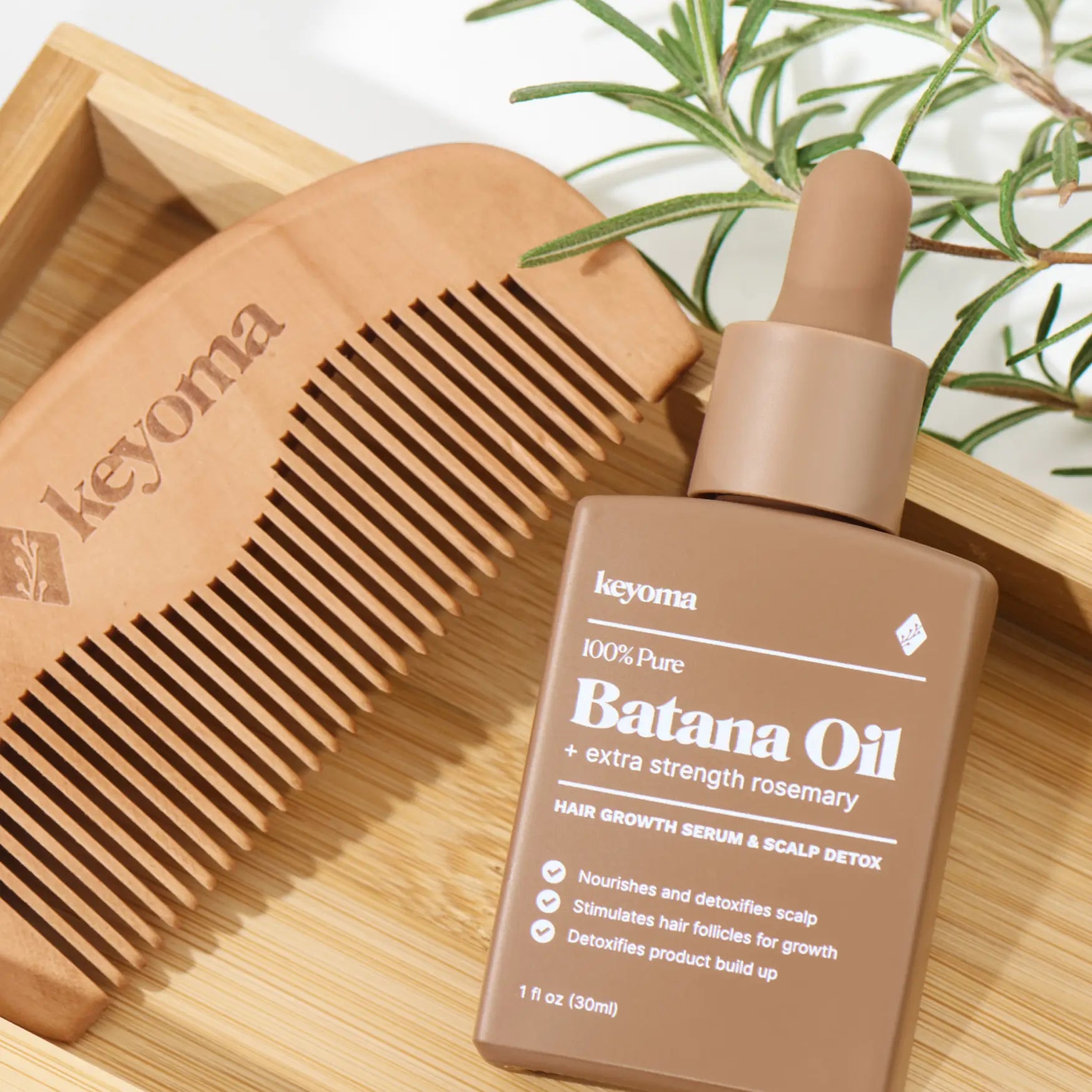
A rosemary and batana oil option fits better as a scalp-focused routine when your scalp handles oil comfortably and you prefer a pre-wash approach. Keep the amount small and avoid using it as a fix for irritation or buildup.
Choose an ends routine if:
-
Your scalp gets oily fast.
-
Your roots feel heavy after oiling.
-
Your ends are dry, rough, dull, or frizzy.
-
Your hair looks better when oil stays away from the scalp.
An ends-only batana oil routine can be the cleaner option when your scalp dislikes oil but your lengths need softness. This is often the better fit for oily roots with dry ends.
Choose both carefully if your scalp tolerates oil occasionally but your ends still need regular softness. In that case, use scalp oil before washing, use ends oil after styling, and avoid stacking oil every day. If you are comparing product lanes, pure batana oil vs batana oil with rosemary can help you separate an ends-focused choice from a scalp-focused one.
Not sure where oil fits in your routine? Choose a scalp-focused rosemary + batana oil routine if your scalp tolerates oil, or use pure batana oil on the ends when your roots feel oily but your lengths need softness.
Know When to Stop Oiling Scalp for Softer Ends
Scalp oiling is not something you have to force. If your scalp feels greasy, clogged, itchy, heavy, or harder to wash after oiling, that is enough reason to stop applying oil at the roots and reassess.
Your ends may still benefit from oil, especially if they feel dry, rough, frizzy, or dull. Moving oil from the scalp to the mid-lengths and ends can make the routine feel cleaner while keeping the part of your hair that needs softness supported.
Let your scalp and ends give you separate feedback. Clean roots and softer ends are a better goal than applying oil everywhere just because one part of your hair feels dry.
Featured Product
30% Off + 3 FREE Gifts
100% Pure Batana Oil + Rosemary


