

In this article
A silk press can look sleek at the roots while the ends begin to feel dry, rough, or dull. Adding Batana oil may restore surface shine and make those ends feel softer, but the difference between a polished finish and a heavy one often comes down to placement and restraint.
Treat Batana oil as an optional finishing product, not a required daily step. Your hair density, strand thickness, existing products, and natural oil tolerance all affect how much it can handle. If your press already moves freely and reflects light evenly, adding oil may do more harm than good.
The safest approach is to complete all heat styling first, test a minimal amount on the driest ends, and watch how the hair moves before applying more. Batana oil cannot block humidity, stop sweat, or guarantee that your natural texture will not return.
Key Takeaways
-
Apply Batana oil only after completing your heat-styling steps.
-
Begin with the ends instead of coating the roots or scalp.
-
Free movement matters more than creating the strongest possible shine.
-
Skip more oil when the hair already feels coated or stiff.
Can You Use Batana Oil After a Silk Press?
Yes, you can use Batana oil after a silk press when your goal is to soften rough ends or restore a small amount of cosmetic shine. Apply it after the flat iron, pressing comb, or other hot tools have been put away.
A successful application should be difficult to see as a separate product layer. Your ends should feel smoother, but the hair should still swing, separate, and fall naturally. If strands begin grouping into oily sections or the ends lose their airy shape, you have moved beyond the useful amount.
Batana oil tends to suit thicker or coarser straightened hair more easily than fine, low-density hair. However, texture alone does not determine the result. A thick head of hair that already contains leave-in conditioner, serum, and finishing spray may tolerate less oil than freshly styled hair with minimal product.
Post-style oiling should also remain optional. Oil is not a cure for every dull silk press. Dullness can come from residue, uneven heat styling, rough cuticles, damaged ends, or simply the way light falls across the hair. Adding more product without identifying the pattern can replace dullness with greasiness.
What Batana Oil Can and Cannot Do for a Silk Press
Batana oil can change how the surface of straightened hair looks and feels. It cannot replace conditioning, reverse heat damage, mend split ends, or control every source of reversion.
That boundary helps you decide whether oil matches the problem in front of you. Rough ends with otherwise clean, movable hair may respond well to a small finishing layer. Puffy roots after a humid commute call for a different response because coating them with oil will not remove the moisture already affecting the style.
Add Cosmetic Shine and Softness
A thin oil film can reduce the dry, rough feel that develops at the oldest part of the strand. It may also make the surface reflect light more evenly, creating a smoother finish.
Cosmetic shine is not the same as hydration. Oil does not add water to the strand. It coats the surface and may slow moisture loss, depending on the oil, hair condition, and products underneath it. If your hair repeatedly feels dry soon after styling, examine the cleansing and conditioning steps used before the press instead of relying on more finishing oil.
The ends usually provide the clearest test. If they feel rough but remain light and separated, a small amount of oil may be useful. If they look thin, forked, or visibly split, oil can temporarily soften their appearance, but it cannot permanently repair them. More targeted guidance on using hair oil for dry ends can help you distinguish surface roughness from damage that may need trimming.
Avoid Claims About Heat and Humidity Protection
Batana oil should not be treated as a heat protectant unless a specific product has verified heat-protection directions. The American Academy of Dermatology recommends limiting hot-tool use, selecting low or medium settings, and using a product made to protect hair from heat.
Apply a genuine heat protectant during the styling process according to its label. Save plain Batana oil for after the hot tools are finished. Do not add oil and pass a flat iron over the coated section to make it look shinier.
Oil also does not make a silk press humidity-proof. Water vapor, sweat, steam, and direct moisture can still encourage straightened textured hair to return toward its natural pattern. Batana oil contains no water, but that does not make it an airtight barrier against the environment.
If your roots begin expanding after exercise or a steamy shower, adding oil may make them look darker and flatter without restoring the original press. Let damp areas dry while the hair remains gently wrapped or stretched. Hairstylists Larry Sims Shorter and Michelle Gyles similarly recommend keeping post-workout hair stretched until the roots have dried completely.
How to Apply Batana Oil Without Weighing Down Your Press

The goal is not to spread oil over every strand. It is to place the smallest useful amount where the press looks or feels dry.
Your first application should function as a tolerance test. You can always add a little more, but removing excess oil often means washing the hair and ending the style earlier than planned.
Wait Until Heat Styling Is Complete
Finish blow-drying, flat ironing, curling, or shaping the hair before opening the oil. Allow the finished style to cool so you can judge its natural movement and shine without heat changing how the product behaves.
Hair that looks smooth immediately after pressing may not need anything else. Waiting also prevents Batana oil from being mistaken for the separate heat-protection product required during styling. The AAD advises using flat irons on dry hair at low or medium heat and limiting how often they are used.
Test the Smallest Amount on Your Ends
Place a minimal amount between your palms and rub them together until only a light film remains. Your hands should look softly conditioned, not visibly wet or dripping.
Touch the driest ends first using a light smoothing motion. Avoid squeezing a full section between oily palms. After applying, separate the ends with your fingers and check them from different angles.
There is no reliable universal drop count. Fine hair may show excess quickly, while dense or coarse hair may distribute the same amount across more strands. Existing serum, leave-in conditioner, and styling spray also change how much additional oil the hair can tolerate. Keyoma’s guidance on how much Batana oil to use offers a broader framework for adjusting the amount by hair needs.
Keep Oil Away From the Roots
Fresh silk-press roots often receive natural scalp oil before the ends do. Applying Batana oil there can reduce volume, darken the part, and make clean hair appear overdue for washing.
Keep your first pass below the mid-lengths. Move higher only when a specific area looks dry and the scalp remains clean. Root puffiness caused by moisture is not a signal to add oil.
Repeated scalp applications can also contribute to residue when you are trying to extend the time between washes. If the roots feel coated, itchy, or unusually waxy, examine whether hair oil scalp buildup has become part of the problem.
Check Movement Before Adding More
Wait several minutes, then turn your head or lift a small section and release it. Properly finished hair should fall back into place without clinging together.
Look for separation at the ends, bounce through the lengths, and a clean part near the roots. Strong shine paired with stiff movement is not a better result. It usually signals that the surface has received more product than the style can carry.
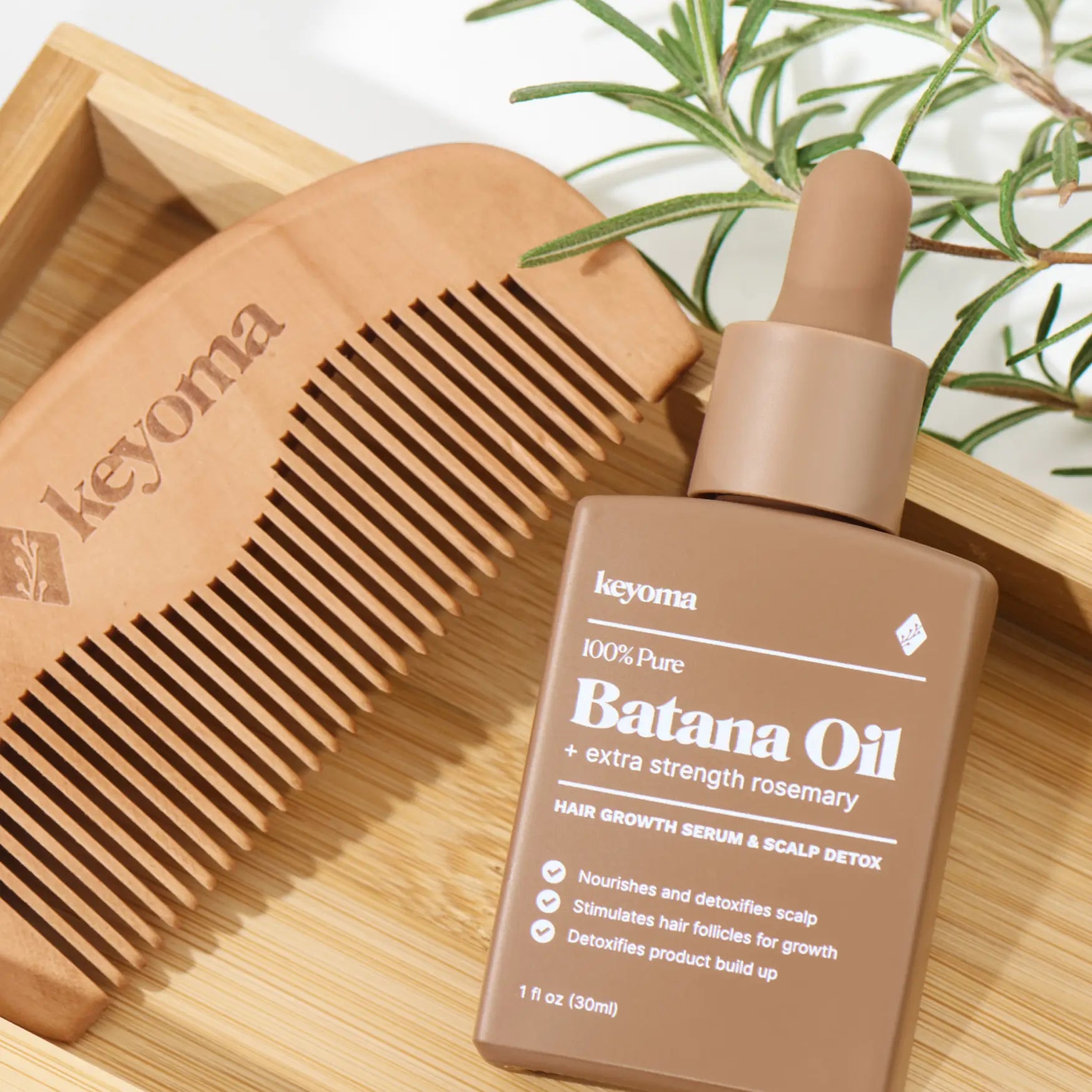
If your hair still feels rough but already looks heavy, stop applying oil. The roughness may reflect damaged ends or residue underneath the new layer rather than a lack of oil. Keyoma Batana Oil with Rosemary can serve as a controlled finishing option when your straightened hair tolerates richer oils, but it should still be introduced sparingly.
When Your Silk Press Needs Oil and When It Does Not
Use both sight and movement to make the decision. Shine alone can mislead you because oily hair may appear glossy while feeling coated, and healthy movement can remain even when the finish is not mirror-bright.
Compare the visible pattern with the appropriate response:
|
What You Notice |
What It May Indicate |
Best Next Step |
|
Rough, dull ends with clean roots |
The oldest lengths need light surface conditioning |
Test a minimal amount on the ends |
|
Dull lengths that still feel soft |
Uneven light reflection rather than severe dryness |
Smooth with clean hands before adding product |
|
Greasy roots with dry-looking ends |
Uneven oil distribution or layered buildup |
Avoid the roots and reassess after washing |
|
Stiff movement or separated oily sections |
Too much product or too many layers |
Stop adding oil and avoid repeated brushing |
|
Visible flakes or waxy residue |
Scalp or product buildup |
Cleanse rather than covering it with more oil |
When the press feels coated, the next step is not to balance it with another styling product. Leave it alone if the heaviness is mild. If the hair looks stringy, transfers oil to your hands, or will not move normally, washing may provide a cleaner reset.
Review the broader signs your hair oil is too heavy before assuming that dry-feeling ends need another layer. A coated strand can feel stiff even when plenty of product is already present.
Build a Low-Product Silk Press Maintenance Routine

A silk press often lasts better when each maintenance step has one clear purpose. Night protection limits friction. Moisture management reduces avoidable reversion. A small amount of oil addresses dry ends. Layering multiple products every morning makes it harder to identify which step is helping.
Check the style before reaching for anything. If the roots are clean, the ends feel smooth, and the hair moves freely, your best product decision may be to add nothing.
Protect the Style at Night
Wrap straight hair around the head, cross-wrap it, or use loose pin curls based on the shape you want to preserve. Cover it with a satin or silk scarf or bonnet that stays secure without pulling tightly at the hairline.
Night protection reduces rubbing and helps the lengths remain organized while you sleep. It also limits the temptation to use heat each morning. Explore other ways to protect hair during sleep if your scarf slips or your ends still rub against bedding.
Limit Moisture and Product Layering
Use a shower cap in humid bathrooms and keep the hair away from direct steam. After workouts, let damp roots dry while the hair remains gently stretched rather than immediately adding oil or using a flat iron.
Avoid stacking oil over cream, serum, dry shampoo, edge products, and holding spray without considering their combined weight. Even individually lightweight products can create visible buildup when layered over several days.
If your hair needs moisture rather than surface shine, address that during your next wash and conditioning session. Some leave-in conditioners can support heat-styled hair, but the AAD notes that heat-protection claims should appear on the product label. Do not assume every conditioner, serum, or oil provides that function.
Avoid Repeated Heat Touch-Ups
A puffy section can make another flat-iron pass feel like the fastest fix. Repeated heat, however, adds another exposure to hair that has already been blow-dried and pressed.
Try wrapping, pinning, or restyling the hair without heat. If reversion has spread through the roots or lengths, accepting a softer shape or washing the style out is safer than repeatedly pressing over product-coated hair.
Heat damage can eventually change how the natural pattern returns after washing. If your curls remain unusually straight, limp, or irregular, review the signs associated with heat-damaged hair before scheduling another press.
Use Batana Oil for Silk Press Shine and Movement
Judge Batana oil by what your silk press needs, not by a fixed schedule. Rough ends with clean roots and free movement support a careful ends-first application. Greasy roots, stiff lengths, or visible residue call for less product, not more.
Complete your heat styling, leave only a light film across your palms, and test the ends. Stop as soon as they feel smoother. The best finish is not the glossiest one. It is the one that adds softness without taking away the movement that makes a silk press look polished.
Featured Product
30% Off + 3 FREE Gifts
100% Pure Batana Oil + Rosemary


