

In this article
Medicated dandruff shampoo and hair oil can fit into the same routine, but they should have separate jobs. The shampoo treats your scalp according to its label or your doctor’s directions. Hair oil supports dry-feeling mid-lengths and ends.
The simplest approach is to keep your scalp free from oil before applying medicated shampoo. After rinsing, you can condition your lengths and use a small amount of oil where your hair still feels dry.
Do not mix oil into medicated shampoo or use oil as a replacement for dandruff treatment. If your prescription or product label gives different instructions, follow those directions first.
Key Takeaways
-
Apply medicated dandruff shampoo directly to your scalp according to its instructions.
-
Reserve hair oil mainly for dry mid-lengths and ends, not irritated skin.
-
Avoid heavy pre-wash oiling when it prevents even shampoo contact with your scalp.
-
Reduce or separate oil use if buildup, redness, or itching increases.
Give the Shampoo and Hair Oil Different Jobs
Medicated shampoo and hair oil serve different areas of your routine.
Dandruff shampoo is designed to place an active ingredient on the scalp. Depending on the product, that ingredient may help control yeast, reduce scale, or manage other factors behind flaking. The shampoo needs direct and even scalp contact to perform its intended job.
Hair oil is cosmetic care. It can add slip, reduce friction, and soften hair that feels rough after washing. These benefits relate mainly to the hair strands, not the scalp condition being treated.
Think of your routine as two zones:
-
Scalp zone: Medicated shampoo and any treatment prescribed by your doctor
-
Hair zone: Conditioner and a small amount of oil on the mid-lengths and ends
This separation matters when your dandruff shampoo helps control flakes but leaves long, curly, coily, coarse, color-treated, or dryness-prone hair harder to manage.
Oil may make the lengths feel better, but it does not replace the shampoo’s active ingredient. Batana oil has also not been proven to treat dandruff. The guide to batana oil and dandruff explains this distinction in more detail.
Use Medicated Dandruff Shampoo on the Scalp First
There is no single application method for every medicated shampoo. Contact time, frequency, and rinsing instructions can change based on the active ingredient, formulation, and condition being treated.
The American Academy of Dermatology advises applying dandruff shampoo to the scalp and following the instructions on the bottle. Some formulas must remain on the scalp for five to 10 minutes before rinsing, while others have different requirements.
Use this general sequence unless your label or doctor gives you another one:
-
Read the shampoo label before getting into the shower.
-
Wet your scalp and hair as directed.
-
Apply the shampoo mainly to the scalp.
-
Gently work it into a lather without scratching.
-
Leave it on for the stated contact time.
-
Rinse your scalp and hair thoroughly.
-
Apply conditioner to the lengths if the directions permit it.
Avoid concentrating the medicated shampoo on your ends. The lengths will still come into contact with the lather as you rinse, but the treatment area is your scalp.
Follow the Directions for Your Exact Shampoo
Ketoconazole is one example of why product-specific instructions matter.
The NHS instructions for ketoconazole shampoo tell users to massage the shampoo into the scalp, create a lather, leave it for three to five minutes, and rinse. Other strengths and formulations may provide different directions.
Do not assume that the same timing applies to selenium sulfide, salicylic acid, coal tar, sulfur, zinc pyrithione, or prescription combination products. Read the label every time you change formulas.
If a dermatologist prescribed the shampoo, do not reduce its frequency to make room for an oiling routine. Ask the dermatologist or pharmacist how to arrange the products if their timing feels difficult to manage.
Choose the Safest Place for Hair Oil in the Routine

You have three main options: use oil on the lengths before washing, apply it after washing, or move it to another wash day.
The best option is the one that keeps the scalp accessible, follows the medication directions, and does not require repeated shampooing to remove excess oil.
Before Washing
A lengths-only pre-wash application can help reduce tangling and friction during shampooing. This is different from saturating your entire scalp and hair with oil.
Place a small amount on the driest sections below the scalp. Depending on your length, this may mean applying from the ears downward or only to the ends. Tie or clip the treated sections loosely while keeping oil away from the roots.
When it is time to wash, apply the medicated shampoo to the scalp according to its directions. Rinse it through the lengths without aggressively scrubbing the oiled ends.
Skip this approach when:
-
The oil spreads onto your roots
-
Your hair requires several shampoo applications to feel clean
-
The medicated shampoo does not lather evenly
-
Your label requires a clean, product-free scalp
-
Your doctor has asked you to avoid additional products
Heavy pre-wash oiling may make it harder to distribute medicated shampoo evenly across the scalp. This does not mean every trace of oil cancels the medication. It means the treatment should not have to compete with a thick cosmetic coating.
After Washing
Post-wash application is often the easiest way to keep the products separate.
After rinsing your shampoo and conditioner, place one or two drops of oil between your palms. Spread it thinly across your hands, then press it into the mid-lengths and ends. Start with less than you think you need.
Fine or straight hair may only need oil on the last few inches. Coarse, curly, or coily hair may tolerate a slightly wider application area. Even then, adding more at once can leave the hair heavy and make the next medicated wash harder.
Keep the oil away from an actively itchy, red, greasy, or heavily scaling scalp. The goal is to support the lengths without adding another scalp variable while you evaluate the treatment.
On a Different Wash Day
Separate wash days can work when oil is difficult to rinse out or your medicated shampoo has strict instructions.
For example, you might use the medicated shampoo on its assigned days and reserve a lengths-only oil treatment for a wash with a gentle, non-medicated shampoo. The American Academy of Dermatology notes that people using medicated shampoo for scalp psoriasis may alternate it with a gentle shampoo to reduce dryness. That advice is condition-specific, so it should not replace the schedule given for dandruff or another diagnosed scalp condition.
Do not move, skip, or delay prescribed treatment without approval. If the routine becomes too complicated, ask your doctor or pharmacist which step has priority.
Adjust the Routine by What You Notice
Your hair and scalp provide useful feedback after washing. Look at where the problem appears rather than changing the whole routine at once.
|
What You Notice |
What to Adjust |
|
Dry ends with a comfortable scalp |
Add a small amount of oil only to the ends |
|
Greasy roots after washing |
Use less oil and keep it farther from the scalp |
|
Shampoo does not spread across the scalp |
Skip pre-wash scalp oil and reduce oil near the roots |
|
Hair needs repeated washing to remove oil |
Reduce the amount or use it on another wash day |
|
Lengths feel tangled or rough |
Use conditioner if permitted before adding more oil |
|
Redness, burning, or itching increases |
Stop applying oil to the scalp and reassess the routine |
|
Flakes appear heavier or stickier |
Avoid adding scalp oil and follow the treatment directions |
Change one element at a time. If you cut back on oil, switch shampoo, add a scalp serum, and change your wash schedule together, you will not know which adjustment helped or caused irritation.
Buildup is another reason to keep the amount controlled. If you are concerned about the relationship between oil and flakes, read whether hair oil can worsen dandruff.
When to Skip Hair Oil on the Scalp
A flaky scalp is not always simple dandruff. Psoriasis, eczema, contact dermatitis, fungal infections, and other conditions can share symptoms. Appearance alone is not enough to identify the cause.
Skip scalp oil while seeking appropriate guidance if you notice:
-
Burning or strong stinging
-
Swelling or increasing tenderness
-
Open sores or broken skin
-
Weeping, bleeding, or crusting
-
Thick or firmly attached scale
-
Sudden or spreading redness
-
Patchy hair loss
-
A rash extending beyond your scalp
-
Symptoms that become worse after oiling
Stop using a new oil if it causes redness, itching, swelling, or discomfort. The guide to redness after scalp oiling covers the warning signs that deserve more attention.
The AAD also recommends telling your dermatologist if a scalp treatment feels too harsh or if hair loss continues. Strong scratching, forceful scale removal, and inflammation can all place additional stress on the hair and scalp.
Seek medical care for severe pain, spreading symptoms, signs of infection, or sudden hair loss. Arrange a dermatologist visit if consistent dandruff treatment does not improve your symptoms.
Keep Batana Oil in a Supporting Role
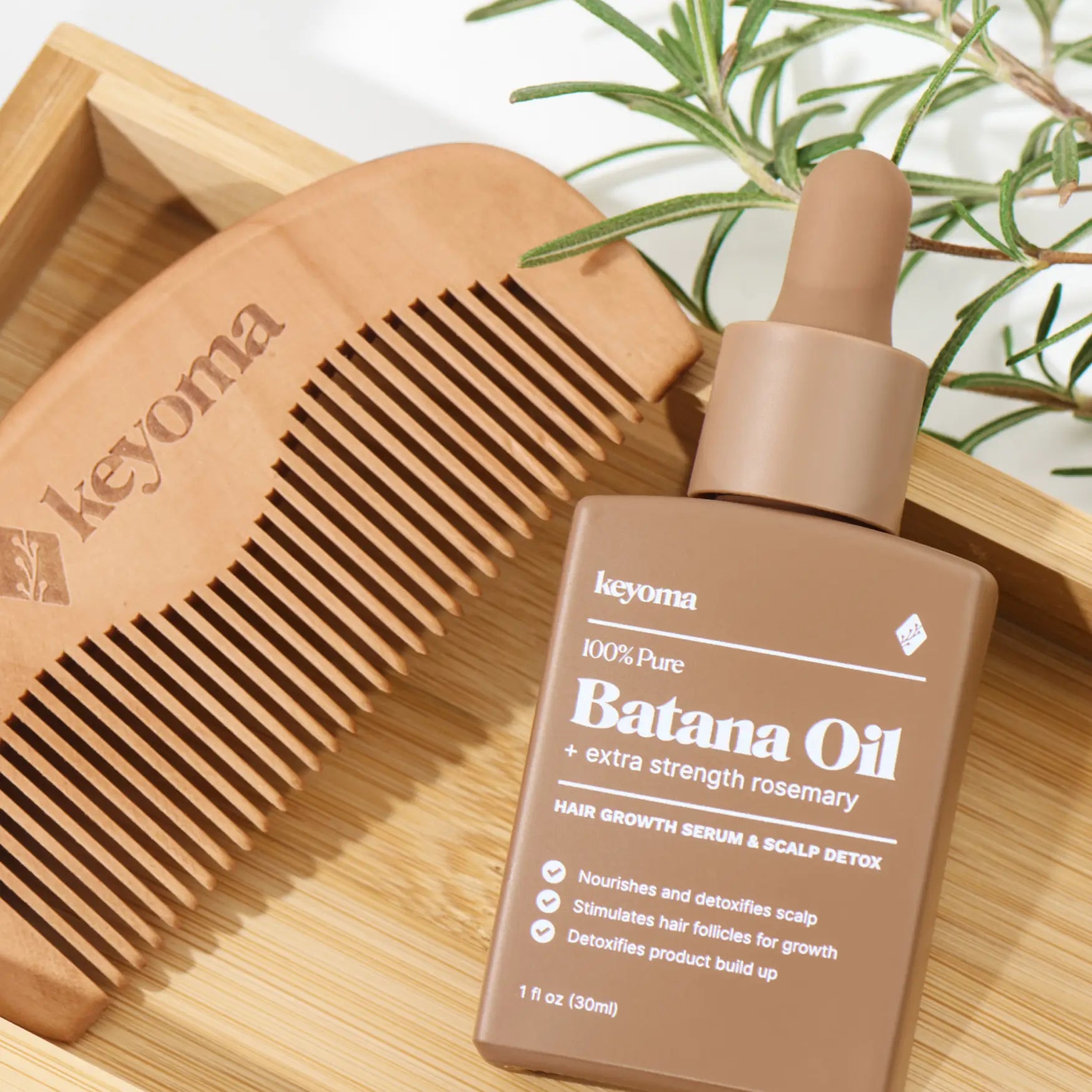
If medicated shampoo leaves your lengths dry, Keyoma Batana Oil can serve as a separate strand-care step.
After washing, spread a small amount across your palms and apply it to the mid-lengths and ends. Keep the application light enough that your hair remains manageable and your next scalp wash does not require repeated cleansing.
You can also use a small amount before washing, but keep it below the scalp and away from inflamed skin. Patch test the oil before broader use if your skin is sensitive or you have reacted to hair products before.
Keyoma Batana Oil should not be mixed into medicated shampoo, applied over a prescribed scalp treatment, or presented as a dandruff remedy. Its role in this routine is to condition dry-feeling hair while the medicated product handles scalp care.
Protect Your Lengths While Prioritizing Scalp Treatment
You do not need to choose between following a dandruff treatment routine and caring for dry hair. The solution is to give each product a clear area and purpose.
Apply medicated shampoo directly to your scalp and follow its exact directions. Condition your lengths when permitted. If the ends still feel dry, add a small amount of oil without coating the treatment area.
For a focused final step, use Keyoma Batana Oil on dry mid-lengths and ends while keeping your medicated scalp routine unchanged.
Featured Product
30% Off + 3 FREE Gifts
100% Pure Batana Oil + Rosemary


