

In this article
Batana oil is not a proven dandruff treatment. It may temporarily soften a scalp that feels dry or tight, but that cosmetic relief does not show that it controls dandruff, reduces the factors behind it, or keeps flakes from returning.
The decision depends less on the presence of flakes and more on what your scalp is like underneath them. A dry-feeling scalp without oiliness or inflammation may tolerate a cautious, short-contact test. An oily, itchy, red, or sticky scalp is more likely to feel coated or congested after a rich oil is added.
You do not have to stop using batana oil altogether when scalp application is unsuitable. For many people with dandruff-prone roots and dry hair, the better option is to keep the oil on the mid-lengths and ends while using dandruff-focused care on the scalp.
Key Takeaways
-
Batana oil has not been proven to treat or control dandruff.
-
It may briefly soften a dry-feeling scalp without addressing dandruff itself.
-
Rich oil can increase buildup when flakes are oily, sticky, or inflamed.
-
Dry hair can still benefit when batana stays on the lengths.
Does Batana Oil Help With Dandruff?

Batana oil may make a dry-feeling scalp feel softer for a short time, but there is no direct clinical evidence that it controls dandruff. Its fatty acids, vitamin E, or antioxidant content should not be treated as proof of antifungal, anti-inflammatory, or sebum-balancing activity.
Dermatologist Dr. Melanie Palm notes that research supporting batana oil's hair and scalp benefits remains limited, and she advises caution with prolonged oil use when dandruff or seborrheic dermatitis is present. on between dryness and dandruff is important.
A scalp can flake because it has lost moisture, while dandruff often occurs in a more oil-rich environment. The difference between dandruff and dry scalp can be difficult to judge from flakes alone, but oiliness, sticky scale, recurring itch, and redness make direct oiling less suitable. Cleveland Clinic’s dry scalp guidance likewise separates moisture-related dryness from dandruff associated with excess oil and skin-cell buildup. involves more than dryness.
A major clinical review of dandruff and seborrheic dermatitis describes these conditions as shaped by sebaceous secretions, fungal colonization, individual susceptibility, and interactions among those factors. Batana oil has not been shown to change that process in a reliable way. It should be viewed as an optional cosmetic oil, not as a substitute for a dandruff treatment.
Batana oil's possible value is narrow and indirect. It may improve how a dry-feeling scalp or dry hair feels, even though it does not treat the condition responsible for true dandruff. Keeping that limit clear prevents temporary softness from being mistaken for medical improvement.
Temporarily Soften a Dry-Feeling Scalp
A thin layer of oil can reduce the tight, rough feeling that comes with surface dryness. Batana's richer texture may be especially noticeable because it forms a more substantial coating than many lightweight serums. For a scalp that feels dry but is not oily, red, sore, or covered with sticky flakes, a brief pre-wash application may feel comforting.
That effect is temporary. Oil can slow moisture loss and make the surface feel smoother, but it does not confirm that the flakes were dandruff or that the underlying problem has been corrected. If the scalp repeatedly needs oil to feel comfortable, consider whether shampoo residue, harsh cleansing, contact irritation, or another scalp condition may be contributing.
Reduce Roughness Around Dry Roots
Batana oil can coat rough hair close to the scalp, which may reduce friction during detangling or washing. This can make dry roots feel smoother without requiring the scalp itself to be saturated. Apply carefully to the hair rather than massaging a thick layer across the skin.
This distinction is useful when the roots feel coarse but the scalp is dandruff-prone. You can support the hair fiber while avoiding the extra occlusion that comes with full scalp oiling.
Make Dry Hair Feel More Flexible
Dandruff and dry hair can occur at the same time. A dandruff-focused shampoo may also leave some hair types feeling rough, especially when the product is applied beyond the scalp. A small amount of batana oil on dry areas can add slip and shine, helping the hair feel more flexible after washing.
The American Academy of Dermatology’s dandruff guidance recommends applying dandruff shampoo to the scalp, particularly for curly or coily hair, because active ingredients may dry the lengths. That scalp-only approach leaves room for a separate conditioning step on the hair itself. he Lengths Without Treating the Scalp
Using batana below the roots is often the most practical compromise. The oil can soften dry mid-lengths and ends while the scalp remains free for cleansing or clinician-directed treatment. Keyoma's comparison of scalp oiling versus hair-length oiling explains why the best application zone depends on whether your concern is the skin or the strand.
This use does not reduce dandruff, but it can make the overall routine easier to tolerate. Hair softness and scalp control do not have to come from the same product or the same application method.
Can Batana Oil Make Dandruff Worse?
Yes, it can make flakes look or feel worse on some scalps. Batana is a rich oil, so it may mix with sebum, dead skin, sweat, and styling residue. The result can be a heavier coating at the roots, more visible clumping, and flakes that feel sticky rather than loose. The broader issue of how hair oil can worsen dandruff is especially relevant when the scalp already feels greasy or congested.
Cleveland Clinic’s hair-oiling guidance advises people prone to dandruff to avoid applying oils directly to the scalp because scalp oiling may raise the risk of seborrheic dermatitis or make it harder to manage. That warning does not prove every oil will cause a flare, but it supports a conservative approach with batana's heavier texture. delay recognition that the scalp needs a different type of care.
If flakes return quickly, itch persists, or the scalp becomes red and inflamed, adding more batana can mask dryness for a few hours while the underlying problem continues. Dandruff shampoo or clinician-directed treatment targets the scalp concern more directly. Dermatology guidance for seborrheic dermatitis notes that dandruff shampoos are used to reduce itch, scale, and irritation in mild to moderate scalp disease.
|
Situation |
Is Batana Suitable? |
Best Use |
|
Dry-feeling scalp without inflammation |
Possibly |
Small pre-wash test |
|
Oily or sticky dandruff |
Usually not |
Avoid scalp application |
|
Dandruff with dry hair lengths |
Yes, with limits |
Mid-lengths and ends |
|
Scalp worsens after oiling |
No |
Stop direct scalp use |
|
Red, sore, or crusted scalp |
No cosmetic testing |
Seek professional advice |
How to Use Batana Oil Without Worsening Flakes

Conservative use is safer than treating batana like an overnight dandruff mask. Check the scalp first, test a small area, keep the contact time short, and wash thoroughly. Stop if itching, oiliness, redness, or flaking increases.
Check Whether the Scalp Is Dry or Oily
Look at how the scalp feels before adding oil. A dry-feeling scalp without redness, soreness, or greasy scale may be reasonable to test. Avoid direct application when the roots are already oily, the flakes stick together, or the skin feels inflamed.
Do not rely only on flake color or size to diagnose yourself. Persistent or severe symptoms can overlap with seborrheic dermatitis, psoriasis, eczema, contact dermatitis, or infection. The American Academy of Dermatology recommends seeing a dermatologist when dandruff does not improve with appropriate home care or becomes severe. t, Then Test a Small Scalp Area
A patch test for hair oil may reveal irritation or allergy before broader use. It cannot predict whether batana will increase buildup or worsen dandruff, so a second, limited scalp test is still needed.
Apply a very small amount to one dry-feeling area and keep the first contact brief. Do not begin with daily use, a full-scalp coating, or an overnight application. Check the area after washing and over the next day for increased itch, redness, bumps, greasiness, or thicker flakes.
Account for the Full Formula
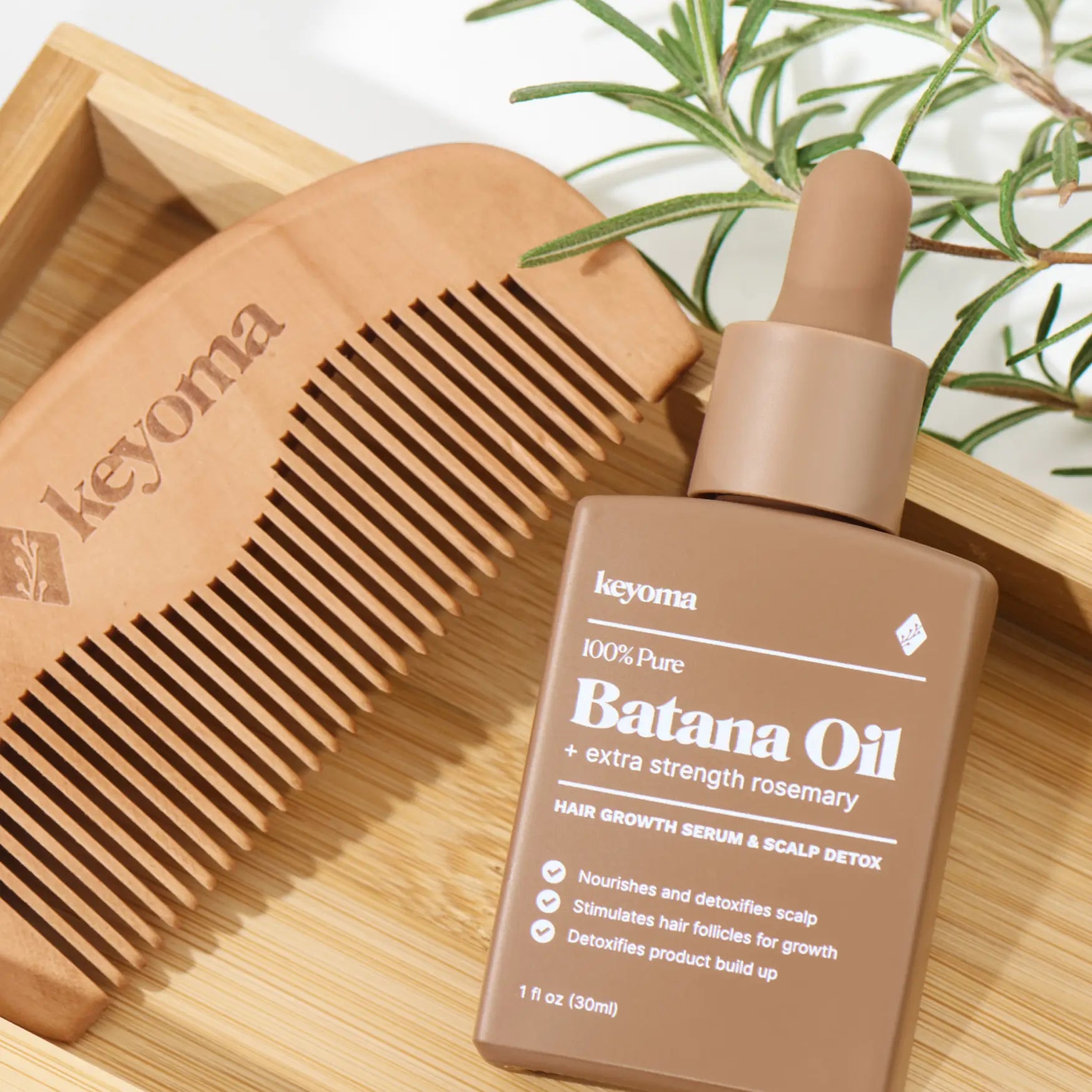
The Keyoma Batana Oil and Rosemary Serum contains both batana oil and rosemary oil. Any change in scalp comfort, irritation, or hair feel cannot be attributed to batana alone because both ingredients contact the skin and hair.
The product page identifies it as a two-ingredient formula. mula as a cosmetic hair and scalp oil, not as scientific evidence that batana treats dandruff. Readers with a dandruff-prone scalp should depart from broad oiling advice and use the more cautious test described here.
Wash Thoroughly or Keep It on the Lengths
Use enough cleanser to remove the oil film without aggressive scratching. Thick oil left at the roots can combine with existing residue and make the scalp feel coated. The steps for washing out thick hair oil can help you cleanse more evenly while limiting repeated, harsh shampooing.
When the scalp does not tolerate batana, apply a small amount to dry mid-lengths and ends instead. Keep it below the roots, distribute it lightly, and adjust based on how easily your hair becomes weighed down.
Batana Oil Decision Box
-
Dry-feeling scalp without oily flakes: Test cautiously.
-
Oily or sticky flakes: Avoid adding scalp oil.
-
Itching or flakes worsen after oiling: Stop using it on the scalp.
-
Dry hair with a dandruff-prone scalp: Use batana on the lengths only.
-
Red, painful, crusted, or persistent symptoms: Seek professional advice.
Use Batana Oil for Dandruff Without Worsening Flakes
Batana oil may have a place in a dandruff-prone hair routine, but not as a dandruff treatment. A dry-feeling, noninflamed scalp may tolerate a small short-contact test, while an oily, itchy, sticky, or irritated scalp is better left unoiled.
The safer option for many readers is to separate scalp care from hair care. Use dandruff-focused products or clinician-directed treatment on the scalp, and reserve batana oil for dry mid-lengths and ends. Stop direct scalp use when flakes, itching, redness, or buildup increase.
Featured Product
30% Off + 3 FREE Gifts
100% Pure Batana Oil + Rosemary


