

In this article

Regretting a short haircut is frustrating, but the good news is that you can make the grow-out phase look better. You cannot force instant inches, but you can support healthy growth from the scalp and reduce breakage so your hair keeps more of the length it grows.
Cutting hair does not make it grow faster because growth starts inside follicles under the scalp. The hair that gets cut is already formed fiber. Your best path is to protect the scalp, feed the body well, reduce damage, and keep the ends from snapping before progress shows.
A realistic routine can still make a big difference. If your hair looks stuck after a haircut, the issue is often not that it stopped growing. It may be breaking, splitting, drying out, or getting trimmed too often while you are trying to grow it out.
Key Takeaways
-
Cutting hair does not speed follicle growth.
-
Most hair grows slowly and needs patience.
-
Length retention makes growth look faster.
-
Oils can support softness, not instant inches.
Can You Make Hair Grow Faster After a Haircut?
You cannot make hair grow dramatically faster just because you cut it. Hair growth happens below the scalp, so trimming the visible hair does not change how active the follicle is. The Guardian quotes dermatological science professor Desmond Tobin explaining that cutting hair above the surface does not affect the follicle below it. He also notes that hair grows at a genetically set rate of about 1 cm per month.
That can feel disappointing if you regret cutting hair short, but it also gives you a clearer plan. You do not need extreme hacks. You need fewer obstacles between your natural growth rate and visible length.
Most people gain visible length slowly. Your rate can vary with genetics, age, health, hormones, nutrition, stress, and hair cycle. If your hair suddenly feels like it is not growing at all, or you notice shedding, thinning, bald patches, scalp pain, or a widening part, the issue may not be a haircut. It may be worth reviewing hair growth or breakage before changing your whole routine.
What Actually Helps Hair Grow Longer After Cutting It?

The best hair growth tips after haircut regret focus on two goals. First, support the scalp and body so hair can grow normally. Second, protect the ends so the length you gain does not break off.
Cleveland Clinic notes that balanced nutrition, enough protein, iron, vitamins, omega-3 fatty acids, vitamin D, and zinc can support healthy hair growth, and it advises speaking with a healthcare provider before adding supplements. That matters because supplements are not a guaranteed shortcut, especially if you do not have a deficiency.
Scalp Health
Healthy-looking hair starts with the scalp, but scalp care should be gentle. A clean, comfortable scalp supports a better environment for growth and makes it easier to notice irritation, buildup, or shedding.
You do not need aggressive scrubs or daily oiling to support scalp health. Wash as needed, avoid scratching, and keep heavy products from building up at the roots. If you use scalp massage, use light pressure with the pads of your fingers.
Enough Protein and Nutrients
Hair is made mostly of protein, so low protein intake can affect how strong your hair feels over time. Restrictive dieting, fast weight loss, low iron, and poor nutrition may also make shedding or breakage worse.
Focus on steady meals before supplements. Include protein, fruits, vegetables, whole grains, healthy fats, and iron-rich foods. If you suspect low iron, thyroid issues, vitamin D deficiency, or another health problem, testing is safer than guessing.
Less Heat Damage
Heat can make growing out short hair harder because it weakens the strand. Blow-dryers, flat irons, curling irons, hot brushes, and repeated high heat can make hair drier and more likely to split.
The American Academy of Dermatology recommends limiting blow-drying and hot tools, using low or medium heat, and using a heat protectant when you do use heat. If you want faster-looking progress, fewer broken ends usually help more than another growth product.
Fewer Chemical Treatments
Bleach, color, relaxers, perms, and harsh chemical services can make the grow-out phase harder. The hair may still grow from the scalp, but the ends can become weaker and break before they add visible length.
Try to stretch chemical services when possible and avoid overlapping bleach or strong treatments on already-processed hair. If your hair is fragile, let it recover before adding another chemical step.
Better Length Retention
Length retention is the part many people miss. Your hair may be growing, but damage at the ends can make progress disappear. Breakage, split ends, rough brushing, tight styles, and dry ends can all make hair seem stuck.
For that reason, growing out a short haircut is not only about the scalp. It is also about protecting the last inch of hair you have now, even if your hair is still short.
How to Grow Out Short Hair Without Losing Progress

Growing out short hair is partly patience and partly shape control. Short hair can pass through awkward stages where the ends flip, the sides feel bulky, or the layers sit unevenly. That does not mean you need to keep cutting it back.
A smart grow-out plan protects length while keeping the hair wearable. You may need styling adjustments, small shaping trims, and better conditioning, but you do not need frequent major cuts if your goal is longer hair.
Protect the Ends
The ends are the oldest and weakest part of your hair. Even after a short haircut, your ends still face washing, brushing, styling, friction, sun, and heat.
Use conditioner after shampooing and detangle gently. If your ends feel rough or dry, best oils for dry ends can help support softness and reduce friction, especially when used lightly.
Trim Only When Needed
Trims do not speed scalp growth, but they can help with length retention when split ends are present. Hims explains that trimming does not make hair grow faster because growth starts at the scalp, but trims can reduce breakage and help hair look healthier while you keep length.
Avoid trimming on autopilot if your ends are healthy. Ask for dusting, micro-trims, or shape cleanup rather than removing large amounts. Tell your stylist you are growing your hair out so the cut supports that goal.
Use Gentle Wash Habits
How you wash matters when you are trying to keep length. Shampoo should focus on the scalp, where oil and buildup collect. The ends usually need less direct shampoo and more conditioning.
The AAD recommends applying shampoo to the scalp instead of the full hair length and using conditioner after washing. This can help clean the roots without stripping the ends.
Avoid Tight Styles
Tight buns, ponytails, braids, clips, and slicked styles can stress the same areas over and over. That can cause breakage near the hairline, crown, or nape, especially during the awkward grow-out phase.
Choose looser styles when possible. Soft scrunchies, low-tension clips, and gentle part changes can help you style short layers without pulling fragile areas too hard.
Track Monthly Growth
Daily measuring usually makes growth feel slower. Monthly photos are more useful. Take photos in the same lighting, with the same part, and similar styling.
Track the front, sides, back, and any awkward layers. You may see more progress in photos than you notice in the mirror. If shedding or thinning appears instead of normal length gain, consider whether you need a dermatologist rather than more faster hair growth tips.
Can Batana Oil Help After Cutting Hair Short?
Batana oil can help after cutting hair short by supporting softness, scalp massage, and dry-end care. It should not be treated as a magic growth fix or a way to force hair to grow inches faster.
Oils work best as support. They can make hair feel smoother, reduce friction, and help brittle ends feel more manageable. They cannot change your genetic growth rate or replace medical treatment if slow growth is actually shedding or hair loss.
Scalp Massage Support
Scalp massage can make a routine feel calming and help distribute oil across the scalp when used carefully. Use light pressure and avoid scratching with your nails.
If you use Keyoma Batana Oil with Rosemary, keep the application small and comfortable. Rosemary oil has some promising evidence, and the results can depend on the cause of thinning.
Softer Ends
Short hair can still have dry ends, especially if it was colored, heat-styled, or cut from longer damaged hair. Oil can help the ends feel softer and less rough.
Pure batana oil can fit as a richer option for dry-feeling ends or pre-wash care. Use a small amount first, especially if your hair is fine or gets oily quickly.
Less Breakage
Less breakage helps hair look like it is gaining length faster. Oil can support breakage control by adding slip, reducing friction, and making detangling easier.
It works best with conditioner, gentle brushing, and less heat. For timing, when to oil hair before shampooing can help you use oil without making short hair greasy or flat.
What Oil Cannot Do
Oil cannot change the growth rate inside your follicles. It cannot repair split ends permanently, reverse medical hair loss, or make hair grow overnight.
If you are using rosemary oil, patch test first and watch for irritation. Side effects of rosemary oil on hair are worth understanding because essential oils can bother sensitive scalps. If your issue is shedding, thinning, bald patches, or scalp pain, see a professional instead of adding more oil.
How to Make Hair Grow Faster After Cutting It Visibly
How to make hair grow faster after cutting it comes down to supporting normal growth and keeping the length you gain. You cannot make a haircut trigger faster follicle activity, but you can create better conditions for visible progress.
Eat enough, care for your scalp gently, reduce heat, avoid harsh chemical overlap, protect your ends, and trim only when damage needs it. Keyoma oils can support scalp massage, softer ends, and breakage-prone hair, but they work best as part of a realistic grow-out routine, not as an instant growth fix.
Featured Product
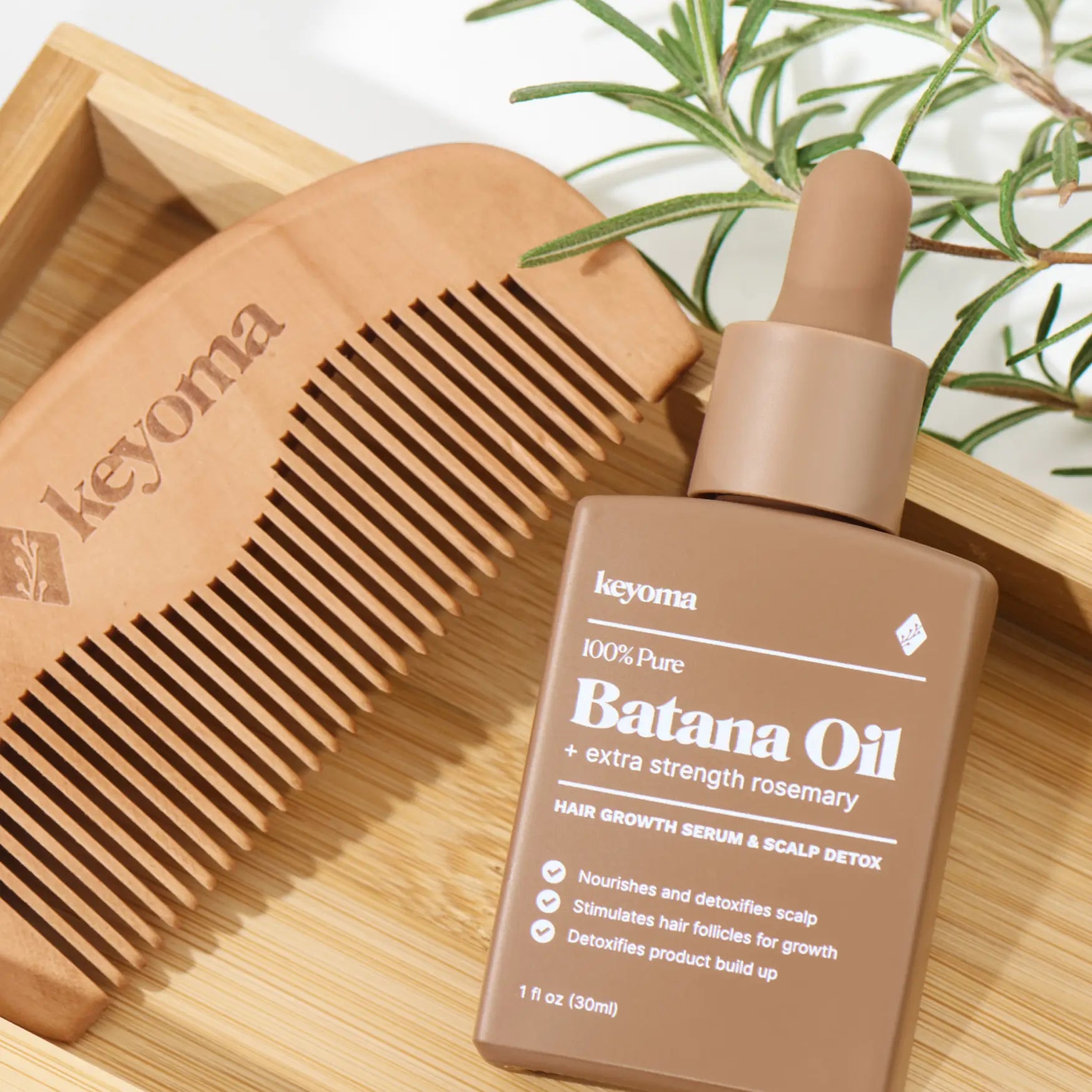
30% Off + 3 FREE Gifts
100% Pure Batana Oil + Rosemary


