

In this article
Applying hair oil before swimming may help your strands feel softer and less tangled afterward, but oil is not a chlorine-proof shield. Its most realistic role is to add a thin conditioning layer that reduces friction and limits the rough, stripped feeling that pool water can leave behind.
Better protection comes from combining four actions: wet your hair with fresh water, apply a light coating to vulnerable lengths, cover it with a swim cap, and rinse promptly after leaving the pool. Each step manages a different part of the exposure. Oil alone cannot do all four jobs.
The right amount also matters. Hair should feel lightly coated, not saturated. If your cap keeps sliding, oil transfers onto your neck, or your hair needs repeated shampooing afterward, the coating was heavier than necessary.
Key Takeaways
-
Hair oil may condition strands but cannot completely block chlorine.
-
Wet your hair before applying a thin layer of oil.
-
Focus oil on dry mid-lengths and ends, not the scalp.
-
Rinse promptly and handle wet hair gently after swimming.
Can Hair Oil Protect Your Hair From Chlorine?
Hair oil may provide limited cosmetic protection by leaving a water-resistant film across the strand. That film can reduce friction between hairs and help dry ends retain softness. It does not seal every opening in the cuticle or prevent all contact with pool water.
Chlorine exposure can leave hair drier, rougher, more porous, and easier to tangle, particularly when the hair is already bleached or damaged. UAB dermatologist Rachel Falkner, MD, explains how chlorine affects hair texture and porosity, while emphasizing pre-wetting, protective styles, caps, and prompt cleansing.
Evidence for oil needs narrower wording. A laboratory study indexed in PubMed found that coconut oil reduced protein loss when used as a pre-wash or post-wash grooming treatment. The study did not test chlorinated pools, and its findings do not prove that batana, argan, jojoba, or every blended oil prevents chlorine damage.
Think of pre-swim oil as one optional layer within a broader hair oiling routine. It has done enough when the ends feel smoother and easier to contain under a cap. Adding more after that point mainly raises the risk of buildup and slippage.
How to Oil Your Hair Before Swimming

Order matters more than coating your hair heavily. Fresh water goes first, oil goes over the damp lengths, and the cap goes on last. This approach limits pool-water contact without turning a short swim into a difficult wash day.
Wet Your Hair With Fresh Water
Rinse your hair thoroughly under a shower or tap before entering the pool. Damp strands have less capacity to take up chlorinated water than completely dry strands.
U.S. Masters Swimming recommends pre-wetting, coating, capping, and rinsing as a combined protection strategy. A cap reduces exposure but usually does not keep hair completely dry, so pre-wetting still serves a purpose.
Squeeze out dripping water before adding oil. The hair should remain damp enough to spread a thin film evenly without diluting it immediately.
Apply Oil to the Mid-Lengths and Ends
Warm a small amount between your palms, then smooth it over the parts that become rough first. For most people, that means the lower half of the hair and the ends. Avoid pouring oil directly onto one section because uneven application leaves some strands bare and others oversaturated.
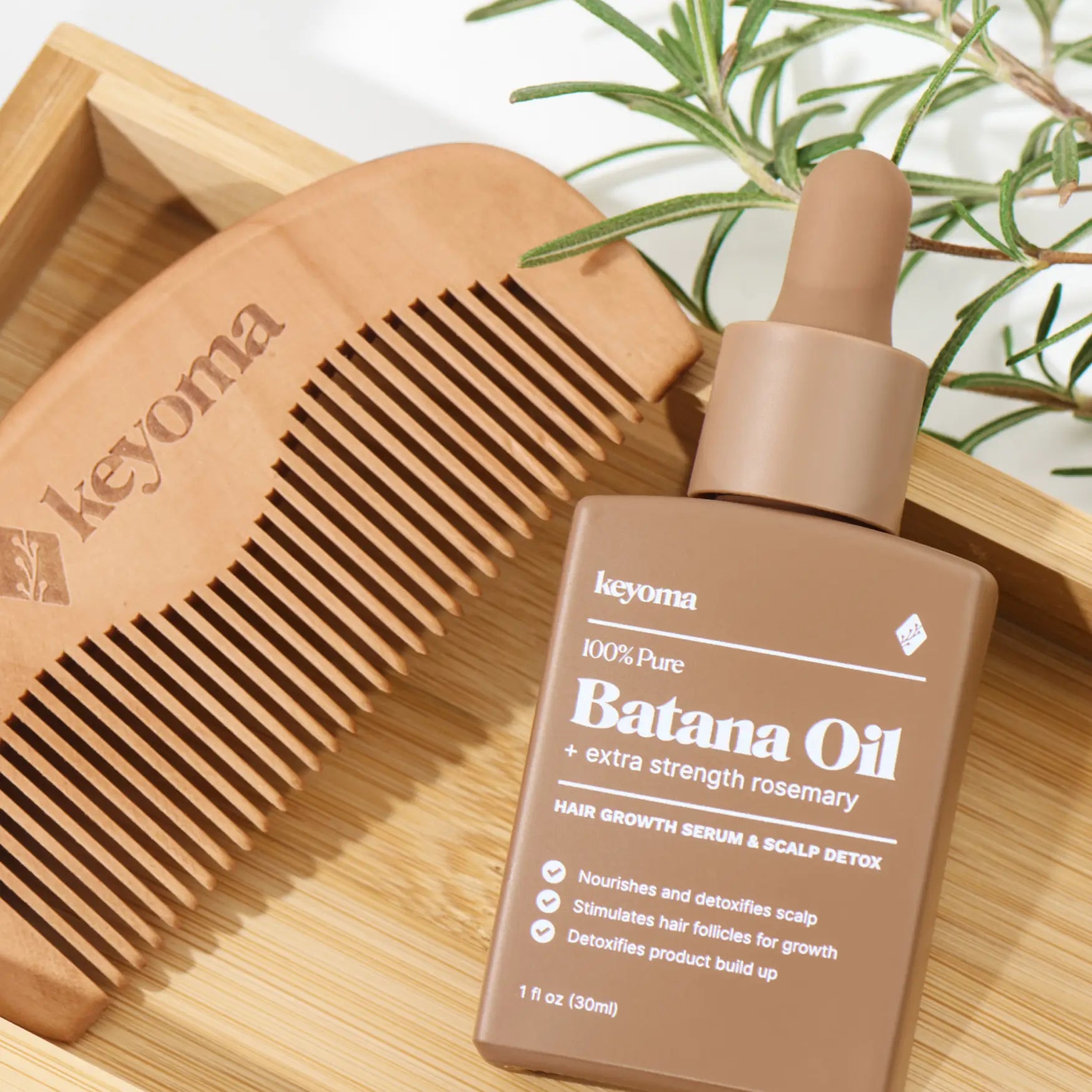
Use feel rather than a fixed drop count. Stop when your fingers move across the hair with less drag but the strands still separate naturally. Keyoma’s two-ingredient batana and rosemary formula can serve as an optional conditioning layer when the pool permits hair products and your skin tolerates rosemary. Its role before swimming is softness and slip, not clinically proven chlorine protection.
Keep the coating away from an irritated scalp. A pre-swim application also does not need the same scalp coverage or waiting period used for a separate oil treatment.
Secure Your Hair and Add a Swim Cap
Gather long hair into a low bun, loose braid, or compact twist that fits beneath the cap without pulling at the edges. Sharp clips and bulky knots can create pressure points or tear the cap.
Place the cap over the secured hair slowly. If it slides backward immediately, blot away excess oil rather than tightening the hairstyle. The goal is less water exchange around the hair, not a painfully tight seal.
Choose the Right Amount for Your Hair
Hair length alone does not determine how much oil you need. Density, strand thickness, porosity, existing damage, and the oil’s texture all change how quickly a coating becomes too heavy.
Use the finished feel as your measure. Keyoma’s application amount guide offers more detail for adjusting oil without relying on a universal drop count.
|
Hair Pattern |
Suggested Coating |
Main Application Area |
Buildup Risk |
Cap Consideration |
|
Fine or straight |
Barely perceptible film |
Last third and ends |
High |
Excess oil can make the cap slide |
|
Thick, curly, or coily |
Light, even coating |
Mid-lengths and ends |
Moderate |
Section hair before securing it |
|
Bleached or damaged |
Thin film over porous areas |
Rough sections and ends |
Moderate to high |
Prioritize pre-wetting and gentle placement |
Fine or Easily Weighed-Down Hair
Fine hair often needs less than expected. Smooth lightly oiled palms over the ends once, then assess the result. If strands group into shiny sections before you reach the pool, remove some product with a damp towel.
A lightweight application should improve slip without flattening the roots. Leave the scalp and upper lengths mostly untouched unless those areas are unusually dry.
Thick, Curly, Coily, or Dry Hair
Dense and textured hair may need more coverage, but it still benefits from thin layers. Divide the hair into a few sections and smooth oil through each one rather than adding a large amount to the surface.
Pay attention to the nape and ends, where tangling often increases under a cap. You are aiming for even coverage, not a deep-conditioning treatment that must remain in place for hours.
Bleached, Colored, or Already Damaged Hair
Porous hair can become rough quickly after repeated pool exposure. Apply a controlled layer to the most processed sections, then rely on the cap to reduce water movement around them.
Do not compensate for severe dryness by saturating the hair. Too much oil can make cleansing harder, and repeated aggressive shampooing may add another source of stress. Bleached hair that remains gummy when wet, brittle when dry, or increasingly difficult to detangle needs reduced exposure and gentler handling, not a thicker coating.
What to Do as Soon as You Leave the Pool
Rinse your hair with fresh water before the pool water dries. Prompt rinsing reduces the time chlorine and dissolved minerals remain in contact with the strands. Regular swimmers can find broader prevention and cleansing options in Keyoma’s swimmer’s hair care plan.
Use shampoo according to how the hair feels. A gentle shampoo may be enough after occasional swims. Persistent coating, odor, stiffness, or discoloration may call for a swimmer’s, clarifying, or chelating formula. The American Academy of Dermatology’s swimmer recommendations include wearing a cap, rinsing immediately, using an appropriate swimmer’s shampoo, and following with conditioner.
Green or brassy tones deserve a different response from ordinary dryness. Medical literature describes green hair, or chlorotrichosis, as copper deposition from external water sources, rather than chlorine acting as a green dye. Chlorine can make porous hair more receptive to metals already present in the water.
A chelating product may help lift metal deposits. For a deeper look at how minerals affect texture and color, see Keyoma’s explanation of mineral buildup on hair.
Condition after cleansing, then detangle from the ends upward with a wide-tooth comb. AAD wet-hair care guidance recommends gentle combing and absorbing moisture with a towel or T-shirt instead of rubbing. If strands keep snapping despite gentler pool care, shift from prevention to managing hair breakage.
Common Pre-Swim Oiling Mistakes

Most problems come from treating oil as the entire protection plan or applying enough to create a visible, greasy layer. The best coating is easy to spread, stays mainly on the lengths, and washes out without repeated scrubbing.
Applying a Heavy Layer to the Scalp
Scalp oil is unnecessary for chlorine protection when the main concern is dry lengths. Heavy coverage may trap sweat, contribute to buildup, or make the hair harder to secure beneath a cap.
Keep oil away from active irritation, scratches, tenderness, or inflamed areas. Rinse the scalp after swimming and stop using a product if it causes burning, redness, or persistent itching.
Skipping Fresh Water and Relying on Oil Alone
Oil does not replace pre-wetting. Applying it to completely dry hair leaves more opportunity for pool water to enter areas the coating missed.
A useful sequence is easy to remember: fresh water first, a thin coating second, cap third, and a thorough rinse last. Removing any one step makes the other layers work harder.
Using Too Much Oil Under a Swim Cap
More oil does not automatically produce more protection. A slippery cap, oily neck, separated clumps, or shampoo that will not lather after one normal wash all point toward excess.
Review the signs of hair oil overuse before increasing the amount. Reducing the coating is usually more effective than adding stronger shampoo later.
Ignoring the Pool’s Product Rules
Check the facility’s posted rules before applying oil, conditioner, or a leave-in product. Some pools restrict pre-swim products to limit residue in the water.
When products are not allowed, use the other protective steps. Wet the hair thoroughly, secure it under a well-fitting cap, rinse immediately afterward, and condition during your post-swim wash.
Use Hair Oil Before Swimming for Softer, Easier Detangling
Use pre-swim oil when your lengths benefit from added slip, but judge it by how your hair behaves rather than how glossy it looks. A light film should make the ends easier to contain and detangle without loosening the cap or requiring harsh cleansing.
For reliable chlorine damage prevention, keep oil in its proper place. Fresh water reduces initial uptake, the cap limits exposure, and prompt rinsing removes residue. Oil supports those steps by conditioning vulnerable strands. It does not replace them.
Featured Product
30% Off + 3 FREE Gifts
100% Pure Batana Oil + Rosemary


