

In this article
Your hair can take on a huge range of shapes, thicknesses, colors, and textures, from straight to coily, light to dark, and fine to dense. So why does it look so different from one person to another?
Whatever your hair looks like, the same core biology shapes how your body makes it. That may sound like a science class, but it matters if you want healthier hair growth and a routine that actually fits your strands.
Keep reading to build the basic follicle-level understanding you need to care for your hair more effectively.
Key Takeaways
-
Hair starts in follicles, and the bulb helps shape growth, color, and curl pattern.
-
The hair shaft you can see is made of keratin, a tough structural protein.
-
Each strand has cuticle, cortex, and sometimes medulla arranged in layered rings.
-
When the cuticle gets damaged, it can expose the cortex and lead to frizz, dullness, and breakage.
The Hair Bulb
Every single hair grows from its own follicle. At the base of that follicle sits the hair bulb, which holds the growing hair cells. These cells keep dividing and moving upward, where they slowly harden.
As they reach the upper area of the bulb, they organize into six concentric layers. The inner three layers become the hair itself, including the cuticle, cortex, and medulla, although the medulla is not always present, especially in finer hairs. The outer three layers form the follicle lining.
Specialized cells in the hair bulb, called melanocytes, produce the melanin that gives your hair its color. The shape of the follicle also affects the shape of your hair, including whether it grows in straight, wavy, or curly.
In simple terms, the bulb is where it all starts, from growth to color to curl pattern. It creates the base for how your hair looks and behaves once it comes through the scalp.
Read more: Club Hair With White Bulbs When Shedding Is Normal
The Hair Root
The hair root is a larger structure that contains and manages the ongoing development of the hair shaft before it comes out through the skin. In the root, cells made in the hair matrix keep dividing, hardening, and eventually dying through a process called keratinization.
Those dead cells stack on top of each other and fuse together, forming strong structures called keratin filaments. These filaments later make up the different layers of the hair shaft.
Outside the hair follicle, you also have two other important parts of hair anatomy:
-
Arrector Pili Muscle: This small muscle attaches to the hair follicle and reacts to cold temperatures or emotional stress. When it pulls on the follicle, your hair stands up and causes goosebumps.
-
Sebaceous Gland: This gland connects to each follicle and releases sebum, an oily substance that helps condition both the hair and the nearby surface of your skin.
The Hair Shaft
The hair shaft is the part of your hair you can see above the scalp. It is made from a protein called keratin, the same material found in nails, hooves, feathers, and claws, packed tightly together and fused.
Keratin is an unusually strong protein that resists everyday wear. It stays together mainly through two types of bonds: disulfide bonds and hydrogen bonds. Disulfide bonds are especially durable. In fact, they are among the strongest naturally occurring bonds in the world. When you perm or relax your hair, these disulfide bonds break and then reset into a different shape.
That is what lets you permanently alter the shape of your hair. Hydrogen bonds are weaker, but you have many more of them. They help give your hair flexibility. When your hair gets wet, these bonds break easily and can temporarily reset with heat until the hair gets wet again, whether from water or humidity. That is why you can style your hair with dryers and hot tools after washing.
So, the hair shaft is the visible part you wash, style, color, and handle every day. Its structure helps explain why your strands can feel strong and flexible while still being easy to damage with heat, chemicals, or environmental stress.
The Anatomy of the Hair Shaft

Hair shafts, or individual hair strands, are made of keratin, a very strong and durable protein that also appears in your nails and in animal claws, hooves, and feathers.
Each strand has several concentric layers, which gives hair its tube-like structure. These keratinized cells organize into three layers that make up the shaft:
-
The medulla
-
The cortex
-
The cuticle
The Medulla
The medulla is a soft, springy inner core that usually appears only in the thickest hair strands. It consists of transparent cells and pockets of air.
The Cortex
The cortex makes up most of each hair shaft. It contains several layers of compressed cells that get their color, or pigment, from the melanocytes in the bulb. The cortex also helps determine your hair’s strength and texture. Still, the cortex can get damaged.
When the cortex breaks down, split ends can form. Chemical processing changes this area too. Relaxers, bleach, hair dye, and perms work by altering the disulfide bonds in the cortex.
The Cuticle
The cuticle is the outermost layer of the hair shaft. It is thin and made of transparent keratinized cells, and “it also contains fatty acids, ceramides and cholesterol.
This layer plays a major role in the shaft’s overall structure. For one thing, the cuticle protects the cortex. It also controls how moisture moves in and out of the cortex, which helps your hair keep its hydration and flexibility.
The cuticle is built a lot like roof shingles. In healthy hair, those cells lie flat and smooth. Heat styling, chemical treatments, and regular wear can damage the cuticle, lift those cells, and expose the cortex underneath. Once that outer layer is damaged, you may notice frizz, dullness, and breakage.
Understand Hair Structure to Make Smarter Hair Care Choices
Your hair gets stronger when you work with its structure instead of reacting to every symptom. The cuticle does more than cover the strand. It helps manage how moisture moves in and out, which is why many hair issues start to feel less overwhelming when that outer layer stays smoother and more intact. I noticed my hair felt easier to handle when I focused on reducing roughness first. That gives you a more useful way to think about daily care.
Shine, softness, and manageability often reflect structural balance rather than separate targets you need to chase one at a time. When you protect the outer layer of the strand, the rest of your routine tends to work better with less effort and less guesswork. Explore the Keyoma Hair Care blog for more clear, science-backed hair care guidance.
Featured Product
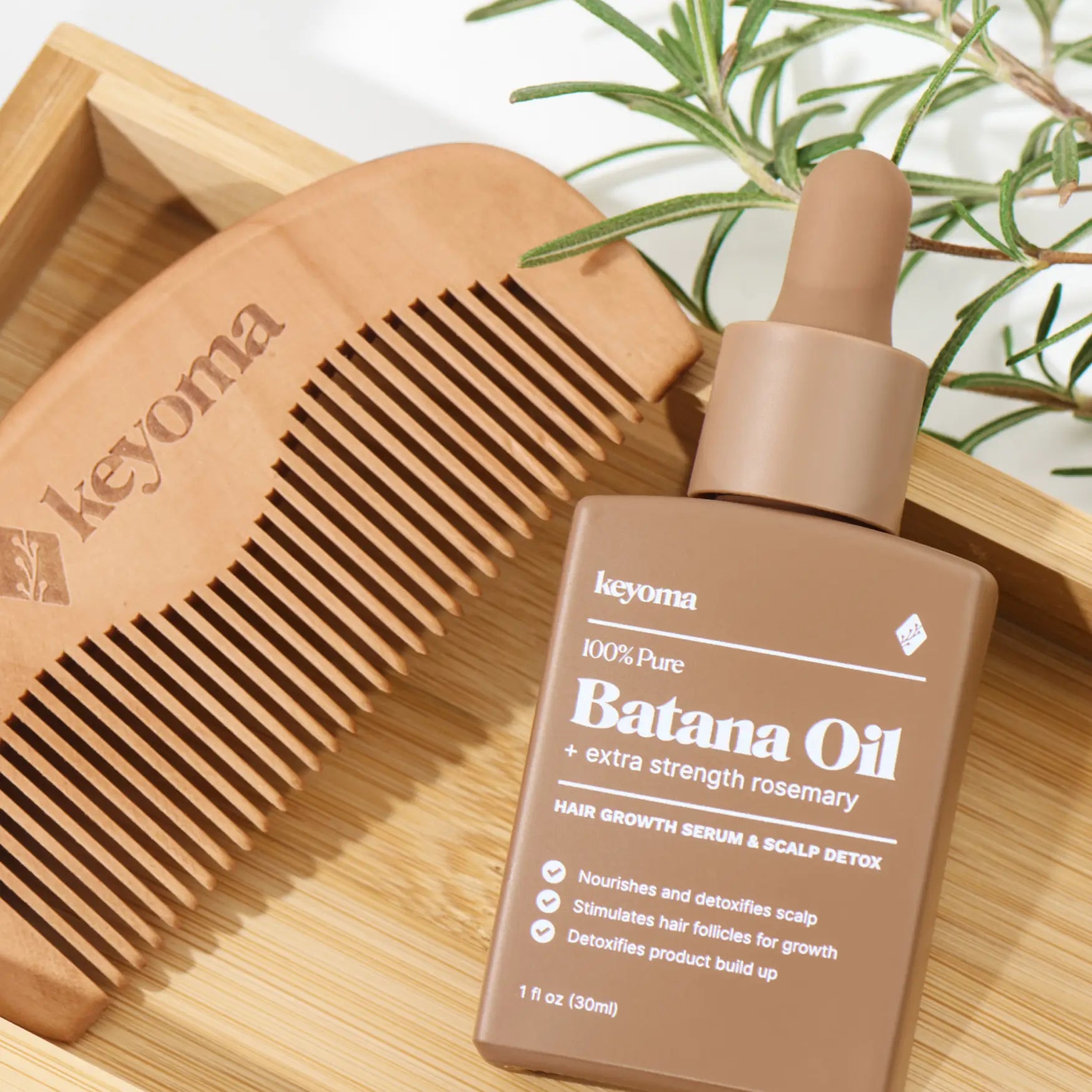
30% Off + 3 FREE Gifts
100% Pure Batana Oil + Rosemary


