

In this article
Bubble hair is an acquired hair shaft abnormality in which air-filled cavities form inside the cortex, the strand’s main structural layer. Each cavity leaves less solid material around it, creating a weak point where hair can bend or snap.
You usually cannot see the bubbles without magnification. Instead, you may notice a rough patch, short broken pieces, uneven lengths, or sudden breakage after using a dryer, flat iron, curling iron, or hot brush.
The goal is to stop the damaging heat pattern, reduce friction on weakened lengths, and protect new growth. Conditioners and oils may improve softness and manageability, but they cannot remove cavities already formed inside the shaft.
Key Takeaways
-
Bubble hair is microscopic thermal damage inside the hair shaft.
-
Damp hair can be especially vulnerable, but excessive heat is the main trigger.
-
Existing cavities cannot be permanently repaired with cosmetic products.
-
Lower heat, shorter contact, and gentler handling help prevent more breakage.
What Is Bubble Hair?
A normal hair shaft has an outer cuticle surrounding the cortex. Bubble hair develops when heat creates gas-filled spaces within that cortex. According to DermNet’s overview of hair shaft defects, these cavities thin the surrounding structure and can cause the strand to break. It affects the existing fiber, not the follicle, and it is not contagious.
A case report on bubble hair after hot ironing described brittle hair with multiple internal cavities visible under microscopy after direct heat was used on wet strands. Heat is the defining trigger, although chemical processing and repeated wear may leave hair less tolerant of it.
Suggested diagram: Label the outer cuticle, inner cortex, and an air-filled cavity narrowing the surrounding cortex.
What Does Bubble Hair Look and Feel Like?
Suspected bubble hair may feel stiff, rough, dry, or unusually easy to snap. You may see flyaways, short fragments, kinked sections, or localized unevenness. Those signs overlap with the broader signs of heat-damaged hair, so appearance alone cannot confirm bubble hair.
Trichoscopy or light microscopy can reveal the characteristic irregular cavities within affected shafts. A review of bubble hair diagnosis with trichoscopy supports magnified examination as a practical way to distinguish it from ordinary dryness and other shaft defects.
Breakage also differs from root-level shedding. Broken hairs are often shorter and lack the bulb seen on a naturally shed strand. A closer comparison of hair breakage versus hair loss may help you describe what you see, but persistent patches or unexplained thinning need professional assessment.
How Heat Creates Bubbles Inside the Hair Shaft

Hair contains keratin, small internal spaces, and water associated with the fiber. When a section is heated intensely enough, internal moisture and gas can expand rapidly. Pressure and protein damage may then leave a cavity behind.
Hair Contains Water Even When It Feels Dry
Hair retains some water after the surface feels dry. Research on heat-stressed fibers has documented tiny vapor bubbles and cracks when internal water meets intense heat. Dampness adds more available moisture, but visibly wet hair is not the only possible setting for thermal damage.
Fully drying hair before direct-contact styling lowers a major risk. Temperature, contact time, repeated passes, tool performance, and the strand’s condition still influence damage.
Damp Hair Raises the Risk
Water absorbed during washing swells the fiber. When a flat iron or similar tool touches hair before that moisture escapes, water inside can heat and expand quickly. Published cases frequently involve damp hair exposed to dryers, curlers, or irons.
No single temperature is safe for everyone. Exposure varies with tool accuracy, pass speed, hair thickness, chemical processing, and prior damage.
Direct Contact Creates Local Hot Spots
Flat irons and curling tools press heat against a small area. Holding them in place or repeatedly passing over one section concentrates thermal stress. An overheating dryer can also cause bubble hair when held too close or aimed at one spot. One clinical study found that sufficient heat could reproducibly create gas-filled cavities.
A laboratory dryer study found more surface damage as temperature increased. Keeping the dryer about 15 centimeters away and moving it continuously reduced damage compared with closer, hotter exposure.
Cavities Turn Into Breakage Points
A cavity interrupts the cortex that gives the strand much of its strength. The thinner material around it must carry normal bending, combing, and styling forces, making fracture more likely.
Breakage may continue after the original heat event because brushing, tight styles, rough towel drying, and more heat keep stressing the weak point.
Can Bubble Hair Be Repaired?
Once a cavity forms, masks, oils, protein treatments, and bond products cannot rebuild the missing cortex. They may coat rough areas, reduce friction, add shine, or ease detangling. Those are useful cosmetic effects, not permanent structural repair.
The affected length must grow outward and eventually be trimmed. New hair can grow normally from an undamaged follicle once the damaging practice stops. Use a focused response plan:
-
Stop the tool, setting, or technique linked to the breakage.
-
Avoid direct-contact heat on damp hair.
-
Condition after washing and detangle with minimal pulling.
-
Ask a stylist whether badly frayed ends should be trimmed.
-
Follow ways to reduce further hair breakage while healthier length grows.
See a dermatologist if breakage persists, appears in unexplained patches, or comes with scalp pain, redness, scaling, inflammation, or apparent shedding from the root. The American Academy of Dermatology also recommends evaluation when gentler care does not improve ongoing breakage or thinning.
How to Prevent Bubble Hair and Support Fragile Strands

Prevention depends on controlling heat rather than finding a product that promises reversal. Fragile lengths also benefit from less friction and more slip while damaged sections grow out.
Stop the Suspected Heat Technique
Pause the tool associated with the sudden change. When you reintroduce heat, change the technique: dry hair first, use manageable sections, avoid pausing on one area, and do not keep reheating a section that failed to style on the first pass.
Air-drying partway can reduce dryer time when your texture tolerates it. These tips for air-drying hair with less damage offer a broader no-heat option.
Follow a Compact Heat Reset Checklist
-
Fully dry hair before using a flat iron or curling iron.
-
Choose the lowest setting that gives the result you need.
-
Limit contact time, repeated passes, and styling frequency.
-
Keep a blow-dryer moving and away from one fixed area.
-
Follow the label directions on a tested heat protectant.
The American Academy of Dermatology’s heat-damage advice also recommends lower settings, shorter contact, less frequent tool use, and air-drying when practical.
Condition for Slip and Handle Gently
Rinse-out conditioner helps reduce tangling after shampooing. A leave-in product can add more slip to rough lengths and ends, making them easier to comb without repeated pulling.
Some leave-ins are labeled as heat protectants, but not all are. The AAD’s leave-in conditioner guidance advises checking the packaging for a specific heat-protection claim rather than assuming any conditioner or oil provides thermal protection.
Use Batana Oil as Surface Care
Batana oil may be used sparingly on rough lengths and ends for cosmetic softness, shine, and lubrication. A small amount on dry hair after styling or on no-heat days may reduce snagging during handling if your hair tolerates richer oils. Hair-care research supports oils as lubricants that increase slip, but a surface oil cannot remove a cavity already formed in the cortex.
Keep its role narrow. Batana oil is not a bubble hair treatment, structural repair, or substitute for a tested heat protectant. Guidance on using batana oil after heat styling places it in the safer position: after heat, not as permission to use more heat.
Prevent Bubble Hair and Protect Fragile Lengths
Bubble hair is specific internal thermal damage, not a label for every rough or frizzy strand. Microscopy can confirm the cavities, but localized breakage after intense heat is enough reason to change your styling habits.
Stop the suspected exposure, reduce friction, condition for manageability, and let damaged sections grow out or be trimmed. Oils can make fragile hair feel better, but preventing another high-heat event protects the existing strand and the new length growing behind it.
Featured Product
30% Off + 3 FREE Gifts
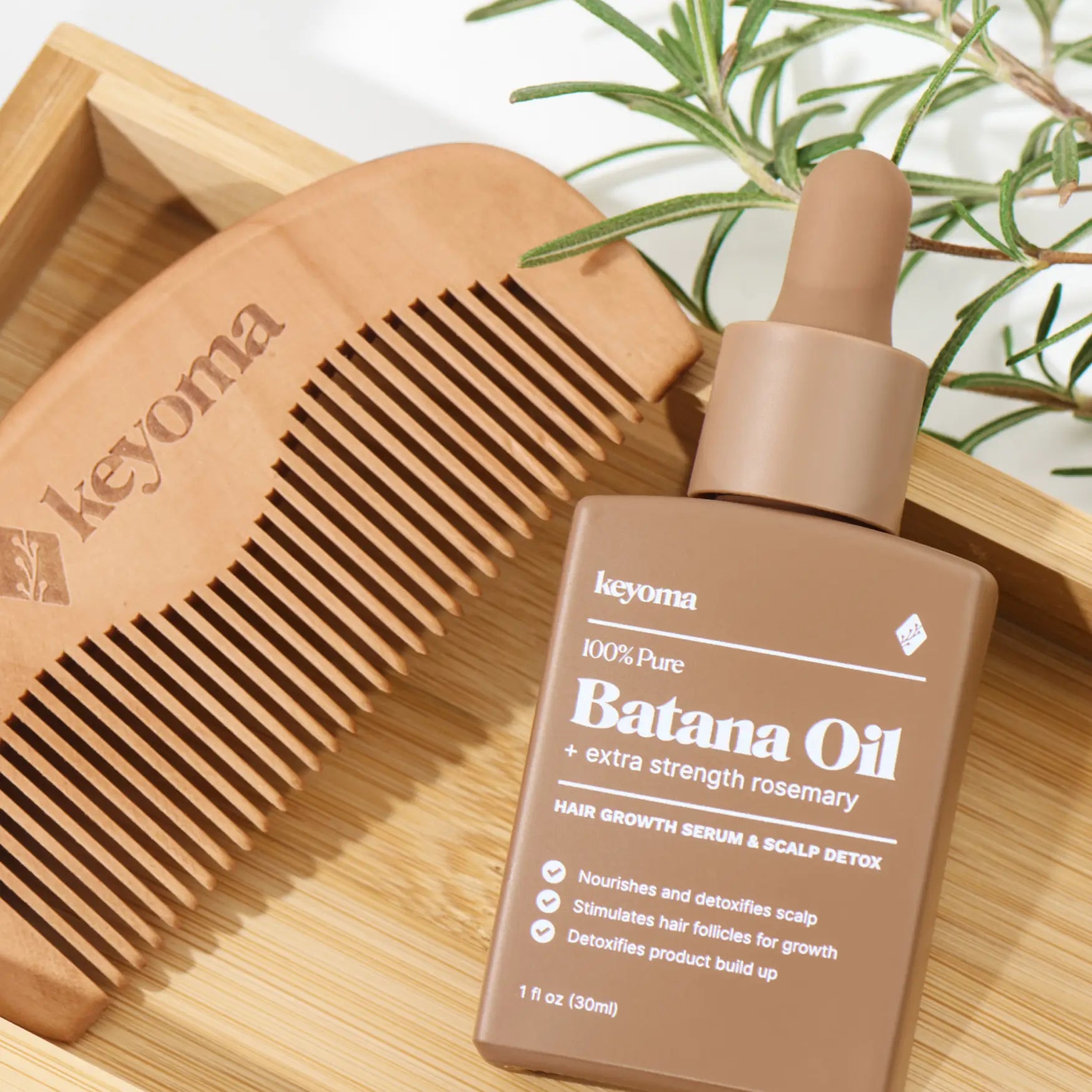
100% Pure Batana Oil + Rosemary


