

In this article
Yes, hair oil can contribute to scalp acne or breakouts along the hairline in some people. Oil may clog pores directly, mix with sweat and residue, or move from the hair onto the forehead, temples, ears, neck, and fabrics that repeatedly touch the skin.
Hair oil is not the only possible cause of scalp bumps. Ordinary acne, folliculitis, contact dermatitis, cysts, and other scalp conditions can look similar. Location and timing may help you spot a product-related pattern, but they cannot confirm a diagnosis.
The most useful first step is usually to reduce exposure to one suspected product while keeping the rest of your routine stable. Track where the bumps appear, how they feel, and whether new ones continue to form. Seek medical care when symptoms are painful, spreading, draining, crusted, persistent, or associated with fever, scarring, or hair loss around affected areas.
Key Takeaways
-
Hair oil may trigger acne-like bumps where oil repeatedly contacts the skin.
-
Location and timing can suggest a product trigger but cannot confirm one.
-
Folliculitis and contact dermatitis may resemble scalp or hairline acne.
-
Painful, spreading, draining, or persistent bumps need medical assessment.
Can Hair Oil Cause Scalp Acne?
Hair oil can contribute to acne when oily residue reaches pores on the scalp or nearby skin. The American Academy of Dermatology explains that oil-containing hair products can move onto the skin, clog pores, and cause acne cosmetica, which often appears as whiteheads or small flesh-colored bumps along the hairline, forehead, or back of the neck.
The relationship is not automatic. A product’s effect depends on the full formulation, amount, contact area, wear time, cleansing habits, and your skin. One person may tolerate the same oil that triggers repeated hairline bumps in another.
Scalp acne also has causes unrelated to hair oil. Cleveland Clinic notes that clogged follicles may involve product residue, sweat, natural oil, dead skin cells, microorganisms, hormones, friction, stress, or medication reactions. A breakout that begins after a new oil is suspicious, but it is not proof that the oil is solely responsible.
How Hair Oil Can Trigger Scalp and Hairline Breakouts

Hair oil does not need to be poured directly onto the scalp to affect it. A small amount can spread through the roots, collect around the hairline, transfer from strands to skin, or remain on objects that touch your head. Repeated low-level exposure may be enough to sustain bumps in a concentrated area.
Direct Contact With the Scalp and Pores
Applying oil to the scalp places the formula close to hair follicles and oil glands. If the product leaves a persistent film, it may combine with sebum, dead skin cells, sweat, and other products. For acne-prone skin, that combination can contribute to clogged pores and inflamed bumps.
Using more oil than the hair can hold does not necessarily provide more benefit. It often increases residue and makes complete removal harder. If your roots remain coated after washing, review whether hair oil overuse is part of the pattern and try a smaller amount rather than harsher cleansing.
Transfer to the Hairline, Face, Ears, and Neck
Oil applied to the roots or lengths can move as the hair shifts during the day. Strands may rest against the forehead, temples, cheeks, ears, or neck. Sweat and humidity can make the transfer more noticeable, especially after exercise or under warm headwear.
Product-related breakouts often appear where contact repeats. A cluster along the temples may match where oiled hair rests. Bumps on the back of the neck may line up with long hair, collars, or a helmet edge. This pattern can support your investigation, but similar placement can occur for other reasons.
Residue on Pillowcases and Headwear
Pillowcases, bonnets, scarves, hats, helmets, and headbands can collect oil from the hair and return it to the skin. The AAD recommends washing items that the head touches because hair-product residue can remain on fabrics and contribute to ongoing exposure.
A clean application can still lead to repeated contact if you sleep with heavily oiled hair or reuse unwashed headwear. Protecting a pillow with the same oil-coated scarf night after night does not remove the exposure. The fabric itself becomes another source of residue.
Why Comedogenic Ratings Have Limits
Online lists often assign oils a numerical “comedogenic” score, but these ratings should not be treated as a precise forecast for your scalp. Testing methods, concentrations, formulations, and skin responses differ. A human study indexed in PubMed found that finished cosmetic products containing ingredients considered comedogenic were not necessarily comedogenic as complete formulas.
A rating may offer limited background information, but it cannot account for how much product you apply, whether it stays on for hours, what else is layered with it, or how well it is removed. Avoid declaring coconut, castor, olive, jojoba, or any other oil universally acne-safe or pore-clogging based on one number.
Signs Your Hair Oil May Be Causing Breakouts

No single sign proves that a hair product is responsible. A stronger pattern emerges when several clues line up, such as a recent product change, bumps concentrated in contact areas, and improvement after exposure stops. Keep your observations specific instead of labeling every scalp bump as acne.
Bumps Appear Where Oil or Oily Hair Touches
Hairline acne from oil often appears around the forehead, temples, ears, or back of the neck. Small whiteheads or closely packed flesh-colored bumps are common descriptions of acne cosmetica. On the scalp, you may notice tender or itchy bumps while washing, brushing, or parting the hair.
The location should match a plausible exposure route. Bumps under a tight headband may involve product, friction, trapped sweat, or a combination. Breakouts across areas that never touch the oil weaken a simple contact explanation.
The Timing Follows a New or Heavier Oiling Habit
Look back at changes made before the bumps started. A new formula, more frequent application, larger amounts, longer contact time, or overnight use may be relevant. Layering oil over leave-in conditioner, styling wax, dry shampoo, or scalp serum may also increase the total residue even when no single product caused problems before.
Compare the timing with your usual hair oiling frequency. A diary can help if the reaction is inconsistent. Record oiling days, sweating, headwear, wash days, and breakout locations without changing several variables at once.
New Bumps Slow After the Suspected Product Is Paused
A practical elimination test is more useful than guessing from an ingredient list. Pause one suspected non-prescribed product and keep the rest of your routine as steady as possible. Note whether fewer new bumps form in the same areas.
Do not expect immediate clearing. The AAD states that product-related acne may take several weeks to clear after the triggering product stops, although the timeline needs medical review before publication. Existing bumps may remain while fewer new ones form.
If symptoms continue unchanged, worsen, or return without any connection to oiling, another trigger or condition may be involved. That is a reason to reconsider the assumption rather than testing several new products at once.
Scalp Acne vs Folliculitis vs Irritation

Scalp acne, folliculitis, and contact dermatitis can overlap in appearance. Photos and symptom lists cannot reliably separate them, especially when hair hides redness, scale, or crusting. A clinician may need to examine the scalp and review your products and symptoms.
Scalp or Hairline Acne
Acne develops when follicles become plugged with oil and dead skin cells. It may include whiteheads, inflamed papules, pustules, or deeper painful lesions. Mayo Clinic’s acne overview explains that acne can affect people of any age and may persist or recur.
When hair products are involved, small bumps may cluster along the areas receiving the most residue. Still, an oily scalp does not mean poor hygiene, and washing more aggressively can irritate the skin without addressing the true cause.
Scalp Folliculitis
Folliculitis is a separate condition involving inflamed hair follicles. The American Academy of Dermatology notes that damaged follicles can allow germs to enter, and symptoms may include itching or pain. Heat, moisture, rubbing, and tight equipment can increase follicle damage.
Folliculitis may look like small pimples around individual hairs. Some forms are infectious, while others have different causes. Mayo Clinic advises medical evaluation for widespread or persistent symptoms and urgent care for rapidly increasing redness or pain, fever, chills, or feeling unwell.
Irritant or Allergic Contact Dermatitis
Contact dermatitis is a rash caused by direct irritation or an allergic reaction. According to the American Academy of Dermatology, itching often appears early, followed by a rash that may include swelling or blisters. Allergic reactions can develop hours or days after contact, which can make the responsible product harder to identify.
Burning, stinging, marked itching, diffuse redness, scaling, or swelling may point away from simple clogged pores, although conditions can coexist. A “natural,” organic, cold-pressed, or essential-oil formula can still irritate skin or trigger an allergy.
Hair Habits That May Increase the Risk of Scalp Acne

Breakouts usually reflect a combination of exposure and individual susceptibility rather than one universal mistake. Amount, frequency, contact time, sweat, friction, cleansing, and product layering can all change how much residue reaches the scalp and nearby skin.
Applying More Oil Than the Hair Needs
Heavy saturation increases the chance that oil will spread beyond the intended area. It may drip toward the forehead, coat the neck, or remain at the roots after washing. A smaller amount applied deliberately is easier to control and remove.
If you repeatedly notice a coated or clogged scalp feeling after hair oil, treat that as useful routine feedback. It does not confirm blocked follicles, but it may signal that the amount, formula, or removal method is not working well for you.
Leaving Oil on for Long Periods
Longer contact creates more time for transfer to skin, bedding, and headwear. It may also expose the scalp to a dense mixture of oil, sweat, sebum, and layered products. Overnight use is not automatically harmful, but it may be a poor fit if bumps repeatedly follow it.
Consider whether the scalp needs oil at all for your goal. If you are trying to soften dry ends or reduce friction through the lengths, ends-only hair oiling may provide a more targeted approach with less scalp contact.
Combining Oil With Sweat, Heat, and Friction
Exercise, hot weather, helmets, caps, wigs, scarves, and tight headbands can trap heat and moisture while rubbing the skin. Cleveland Clinic lists sweat, product buildup, and friction from headwear among factors associated with scalp pimples.
The combination may matter more than any factor alone. Oil on an uncovered scalp may behave differently under a tight helmet during a humid workout.
Layering Several Leave-In Products
Oil may be only one part of the residue. Leave-in conditioner, edge control, wax, gel, spray, dry shampoo, and scalp treatments can accumulate together. When several products touch the same area, product buildup may be more relevant than one ingredient score.
Review the broader possible side effects of hair oiling when buildup, irritation, washing difficulty, or other symptoms appear alongside bumps. For this troubleshooting process, change one nonessential product at a time so the result remains interpretable.
How to Prevent Scalp and Hairline Acne From Hair Oil

Prevention does not require assuming every oil is unsafe. The goal is to reduce unnecessary skin exposure, control residue, and notice whether your routine consistently matches the location and timing of breakouts.
Pause One Suspected Product and Track the Pattern
Choose the product most closely linked to the change, especially one added recently or used more heavily. Pause it while keeping shampoo, conditioner, styling, and skin care as stable as practical. Do not stop a prescribed scalp treatment without speaking with the healthcare professional who recommended it.
Track where new bumps appear, what they look and feel like, and when they form after oiling. Changing several products together will not show which exposure mattered.
Persistent symptoms deserve reassessment. Guidance on when to stop scalp oiling can help you recognize when a routine experiment should end rather than continuing through worsening pain, irritation, or repeated breakouts.
Apply Oil Mainly to the Lengths and Ends When Appropriate
Scalp application is unnecessary for many cosmetic goals. For shine, softness, or reduced friction through dry lengths, start away from the roots and use a small amount. Keep oiled strands off the forehead, temples, ears, and neck.
Avoid treating a visibly irritated or actively broken-out scalp as a surface that simply needs more oil. More product can blur the pattern and may delay appropriate assessment if the bumps are folliculitis, dermatitis, or another condition.
Remove Residue Without Scrubbing the Bumps
Wash according to your scalp’s needs, especially after heavy sweating or when roots remain greasy. Focus on removing product from the scalp, hairline, ears, and neck without scratching, squeezing, or using harsh physical exfoliation.
Very thick formulas may require a more deliberate wash process. Use a method designed to wash out thick hair oil rather than repeatedly scraping the scalp or using excessive force. Aggressive scrubbing can damage the skin barrier and make tenderness or inflammation worse.
Also wash pillowcases, sheets, bonnets, scarves, hats, helmet liners, and headbands that contact oiled hair. Tie or wrap the hair in a clean way that keeps it from resting against the face, but avoid tight, friction-heavy styles.
Know What a Patch Test Can and Cannot Show
A small-area test mainly screens for irritation or allergic reactions. The American Academy of Dermatology’s product-testing guidance describes repeated application to a small area to watch for redness, itching, swelling, or another negative reaction.
A successful test does not prove that repeated scalp use will never contribute to clogged pores. Acne can depend on dose, contact area, layering, sweat, and time. Follow a careful process for how to patch test hair oil, but treat the result as an irritation check rather than a guarantee of acne safety.
Seek Care When the Pattern Is Not Mild or Improving
Do not squeeze, scratch, lance, or aggressively scrub scalp bumps. Seek qualified medical care for severe pain, rapidly spreading redness, drainage, fever, crusting, significant swelling, recurrent pus-filled bumps, scarring, or hair loss around affected areas.
Medical assessment is also appropriate when the bumps continue despite removing a suspected product, keep returning, or do not match a clear contact pattern. The correct treatment depends on whether the underlying issue is acne, folliculitis, dermatitis, or another scalp condition. Avoid self-treating a suspected infection with random medicated products.
Use Hair Oil Without Any Worry
Hair oil may contribute to scalp or hairline breakouts, especially when residue repeatedly reaches the same skin. A clear product relationship is more likely when the location, timing, and recurrence match your oiling habits and fewer new bumps appear after one suspected product is paused.
Do not rely on appearance alone. Painful, itchy, pus-filled, spreading, crusted, persistent, or scarring bumps may reflect folliculitis, dermatitis, or another condition that needs professional assessment. Reduce unnecessary exposure, keep fabrics and contact areas clean, and let the pattern guide your next step rather than assuming every bump has the same cause.
Featured Product
30% Off + 3 FREE Gifts
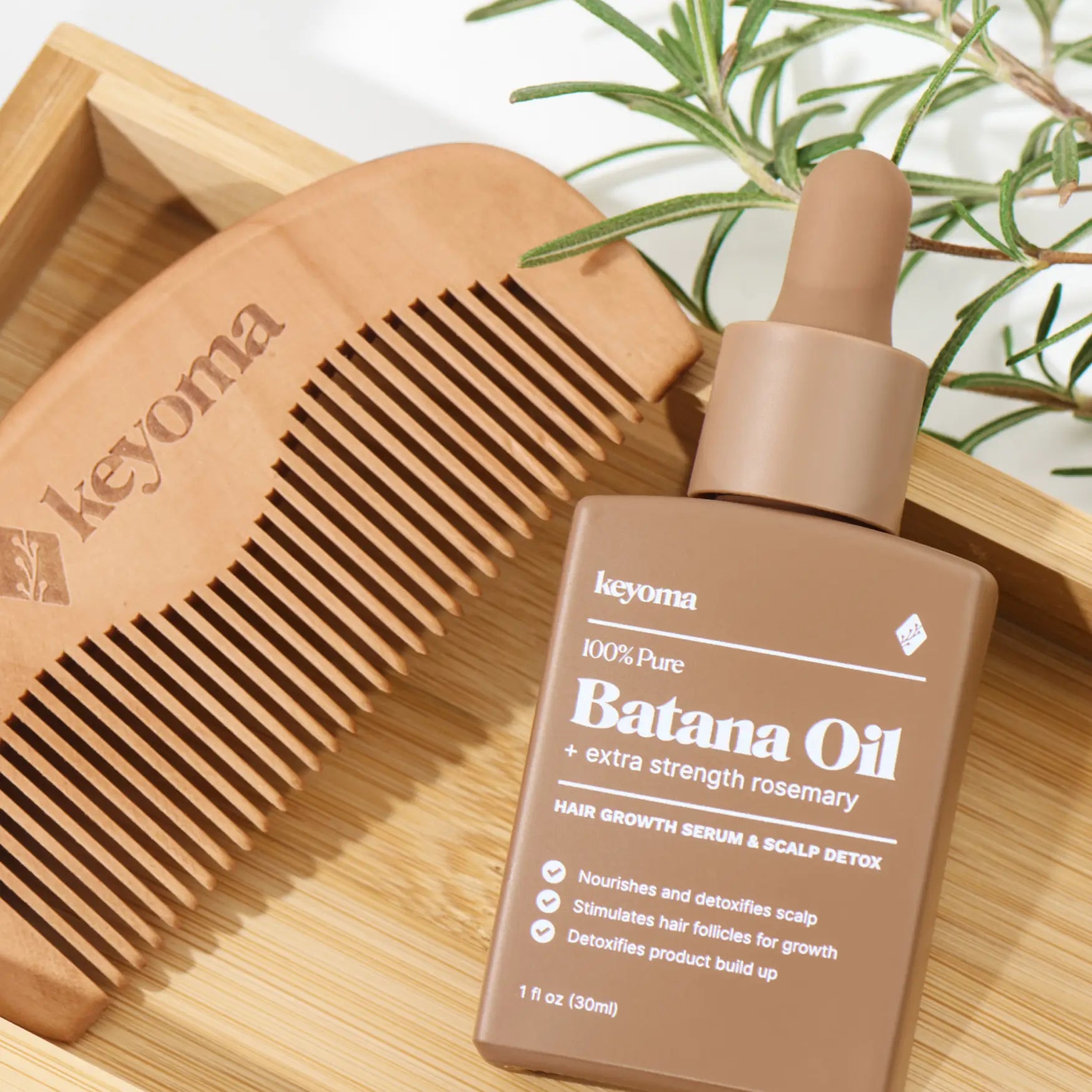
100% Pure Batana Oil + Rosemary


