

In this article
An itchy, burning, or swollen scalp after hair oil does not automatically mean allergy. The reaction may come from direct irritation, a delayed allergy to one ingredient, buildup, or another scalp condition that flared after oiling.
Hair oil allergy vs irritation is difficult to separate by appearance alone. Timing, sensation, and rash location may offer clues, but they cannot confirm the cause without the full product formula, exposure history, and sometimes a medical assessment.
The safest first step is usually to stop the suspected cosmetic product and avoid retesting it on inflamed skin. Here is how the patterns differ, what to record, and when symptoms need prompt care.
Key Takeaways
-
Irritation damages the skin directly, while allergy involves a delayed immune response.
-
Itching, burning, swelling, or scaling can occur with either reaction.
-
Stop the suspected product instead of reapplying it to confirm the cause.
-
Severe swelling or breathing difficulty requires immediate emergency care.
Hair Oil Allergy vs Irritation: What Is the Difference?
Irritant contact dermatitis develops when a substance directly disrupts the skin barrier. A strong irritant may act quickly, while repeated contact with a milder irritant can gradually cause dryness and inflammation. DermNet explains that irritant contact dermatitis can follow one intense exposure or the cumulative effect of repeated exposure.
Allergic contact dermatitis is a delayed immune reaction to a particular ingredient. Your immune system must first become sensitized, so an allergy can appear after earlier trouble-free use. The table shows common patterns, not diagnostic rules.
|
Comparison Point |
Irritation |
Allergy |
|
Cause |
Direct skin barrier damage |
Immune response to an allergen |
|
Immune involvement |
Not required |
Yes, usually delayed |
|
Usual timing |
Fast or gradual after repeated exposure |
Often hours to days later |
|
Common sensations |
Burning, stinging, soreness, tenderness |
Itching is often prominent |
|
Typical distribution |
Often strongest at contact sites |
May extend beyond contact sites |
|
Previous exposure |
First or repeated use |
May follow earlier safe use |
|
Testing method |
No test proves irritation |
Medical patch testing may find allergens |
|
Next steps |
Stop exposure and monitor |
Stop exposure and seek assessment if needed |
Either reaction may cause itching, burning, dryness, bumps, blisters, swelling, scaling, tenderness, or oozing. Inflammation may look red, purple, gray, darker, or lighter than nearby skin, depending on skin tone. Cleveland Clinic describes the broad overlap in contact dermatitis symptoms.
Can Hair Oil Cause a Skin Reaction?
Yes, but the main oil named on the label may not be responsible. Finished formulas can include carrier oils, essential oils, fragrances, preservatives, plant extracts, silicones, and other additives. The complete ingredient list matters more than claims such as “natural,” “pure,” “organic,” “plant-based,” or “unscented.”
Fragrances, preservatives, and botanical ingredients are recognized causes of reactions to hair products. A 2024 review of hair product allergy identifies fragrances among common hair-product allergens. Irritation and allergy may also occur together.
High concentrations of essential oils can irritate the scalp, while some components can cause delayed allergic contact dermatitis. When evaluating a scalp reaction to an essential oil blend, consider every ingredient, its concentration, and the full mixture.
Signs That May Suggest a Hair Oil Allergy

Allergic contact dermatitis is often very itchy, but itch does not prove allergy. Consider when symptoms began, whether they spread, and whether they followed earlier exposure to the same formula.
Delayed Itching With Scaling or Swelling
Symptoms beginning hours or days after oiling may suggest a delayed allergic response. The skin may become intensely itchy, scaly, swollen, bumpy, blistered, or weepy. Delayed irritation is also possible, so timing remains only a clue.
Rash Beyond the Exact Application Area
Allergic contact dermatitis may affect the hairline, ears, neck, face, hands, or pillow-contact areas after oil transfers. DermNet notes that allergic contact dermatitis from essential oils can extend beyond the original contact site, although distribution cannot confirm the cause.
Reaction After Earlier Trouble-Free Use
Previous tolerance does not rule out allergy. Sensitization may develop after repeated exposure, and a later use can produce a rash without any formula change.
Signs That May Suggest Scalp Irritation

Scalp irritation from oil may feel more painful than itchy at first. Burning, stinging, soreness, or tenderness may stand out after a concentrated formula, long contact time, aggressive massage, or use on already inflamed skin.
Burning, Stinging, or Tenderness
Rapid burning or stinging may suggest direct irritation. Strong exposures can cause swelling, bumps, or blisters. Allergic reactions can also burn or hurt, so sensation is not a one-step test.
Symptoms Focused Where the Product Touched
Irritation is often strongest where the formula made direct contact. Oil transferred to the forehead, ears, neck, or hands can widen the pattern, making location less reliable than it seems.
Dryness or Scaling After Repeated Exposure
Milder irritation may build gradually. Repeated oiling, friction, heat, vigorous scrubbing, or frequent washing to remove residue can weaken the skin barrier. Dryness, tightness, tenderness, scaling, and later itching may follow.
Why Symptoms Alone Cannot Confirm the Difference?
Allergic and irritant contact dermatitis can look alike and can occur together. Diagnosis may require an exposure history, examination, and allergy testing. There is no patch test that proves irritant contact dermatitis. Medical patch testing mainly investigates delayed allergy.
An itchy scalp after oiling may instead involve residue, seborrheic dermatitis, psoriasis, folliculitis, another product, or an existing condition. Reviewing other possible side effects of hair oiling keeps this comparison focused without overlooking buildup, breakouts, or greasiness.
Flaking may also be mistaken for an allergic reaction. Compare the episode with your normal symptoms and consider whether hair oil can worsen dandruff in your routine. Persistent or recurrent itchy scalp symptoms deserve assessment rather than repeated product experiments.
What to Do After a Reaction to Hair Oil

Keep your response simple. Do not try to neutralize the oil with apple cider vinegar, baking soda, lemon juice, more essential oils, or harsh clarifying products. They can add irritation and make the trigger harder to identify.
Stop Using the Suspected Product
Stop the cosmetic product and do not reapply it to confirm the reaction. If it was prescribed or recommended as medical care, contact the healthcare professional before changing the treatment plan.
Gently Remove the Remaining Product
Remove remaining oil according to normal product directions. Use lukewarm water, gentle handling, and your usual mild cleanser if tolerated. Avoid hot water, rough scalp tools, aggressive scratching, or repeated clarifying washes. The American Academy of Dermatology advises gently washing off a product when a test area reacts.
Record the Product, Ingredients, and Reaction Timing
Save the packaging or photograph the full ingredient list. Note where symptoms appeared, how long they took to begin, how they changed, and how long they lasted. Photos in consistent lighting may help a clinician assess color changes, scaling, bumps, or swelling.
Avoid Adding New Oils or Home Remedies
Keep the routine minimal while the scalp is inflamed. Adding another oil, fragranced product, or DIY remedy introduces more possible triggers and can delay recovery.
Seek medical care for reactions that are severe, spreading, blistering, painful, draining, infected-looking, persistent, or involve the eyes or face. Rapid hives or swelling may represent an immediate allergic reaction rather than delayed contact dermatitis.
Difficulty breathing or swelling of the lips, tongue, mouth, or throat requires immediate emergency care. NHS guidance lists mouth, throat, or tongue swelling and breathing difficulty among signs of a severe allergic reaction.
How to Reduce the Risk of Future Reactions

Reduce unnecessary exposure and change one product at a time. No label claim or negative home test can guarantee tolerance after repeated, wider, or longer use.
Read the Full Ingredient List
Check the complete formula instead of focusing only on the advertised oil. Fragrance, essential oils, preservatives, and extracts may be relevant. Keep ingredient photos from products that caused problems for later comparison.
Avoid Undiluted Essential Oils
Do not apply neat essential oils directly to the scalp. Concentration affects irritation risk, and some essential oils can sensitize the skin. After recovery, choose formulas suited to oils for a sensitive scalp rather than assuming botanical products are gentle.
Once your scalp has fully settled, review the complete formula before introducing another product. Explore Keyoma Pure Batana Oil & Rosemary Oil, and patch test the finished blend before applying it more widely.
Test New Products Cautiously
A cautious home use test may reveal a visible reaction to the finished product. It cannot reliably separate allergy from irritation, identify the exact ingredient, or guarantee future scalp tolerance. Follow a complete method for how to patch test a hair oil rather than testing on active skin.
Medical patch testing is different. A dermatologist applies selected allergens under patches and checks for delayed reactions over several visits. It mainly investigates allergic contact dermatitis, not irritation. The American Academy of Dermatology explains that clinical patch testing differs from a skin-prick test for immediate reactions.
Change One Product at a Time
Keep the rest of your routine stable when introducing a new formula. A simple scalp care routine makes exposure patterns easier to trace. Seek professional guidance when reactions recur despite careful product selection.
Use Hair Oil More Safely After a Reaction
Hair oil reactions rarely fit a perfect checklist. Irritation may begin quickly or build after repeated exposure, while allergic contact dermatitis often appears later and can develop after previous safe use. Symptoms overlap too much for reliable self-diagnosis.
Stop the suspected product, remove residue gently, document the formula and timing, and avoid new remedies on inflamed skin. Medical assessment is the safer next step when symptoms are severe, persistent, recurrent, spreading, or difficult to explain.
Featured Product
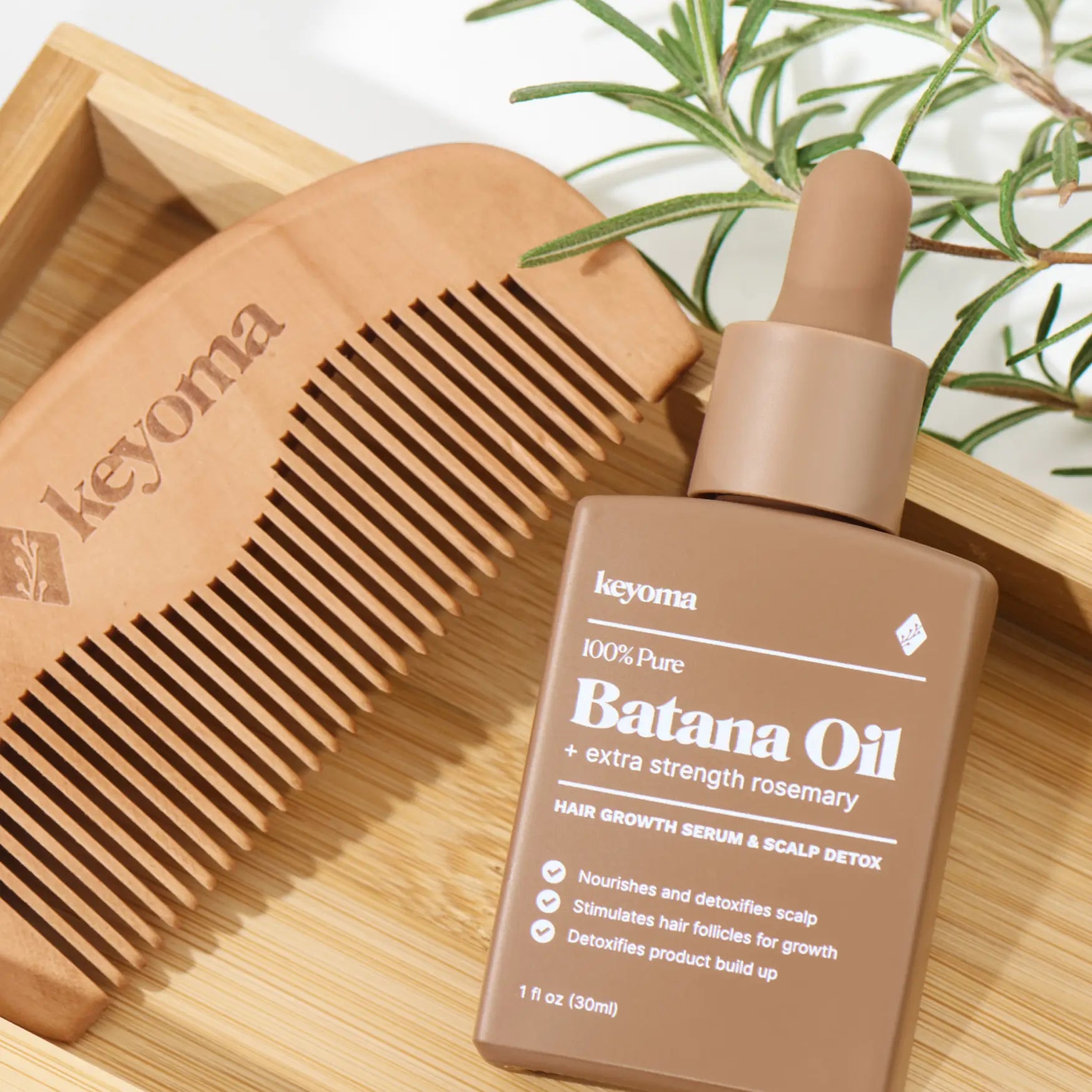
30% Off + 3 FREE Gifts
100% Pure Batana Oil + Rosemary


