

In this article
Hair oil usually goes before hair fibers, but only when you keep it away from the roots and other areas where the fibers need to attach. Apply a small amount of oil to the mid-lengths and ends, let your hair dry completely, finish styling, and add the fibers last.
Scalp oil requires a different routine. Use it as a separate pre-shampoo treatment, rinse it out thoroughly, and dry your hair before applying fibers.
The most important distinction is not only which product goes first. It is whether the oil and fibers will occupy the same part of your hair.
Key Takeaways
-
Apply hair fibers last to completely dry, styled hair for stronger attachment.
-
Keep oil away from roots and strands where fibers need to settle.
-
Use scalp oil separately, then wash and dry hair before applying fibers.
-
Remove existing fibers before starting another scalp or hair oiling routine.
Use the Application Zone to Choose the Right Order

Hair-building fibers temporarily attach to existing strands and make thinning areas appear denser. They usually sit around the roots, part, crown, temples, or hairline.
These areas are your fiber attachment zones. Oil can make the strands in these zones slick or cause them to gather together. That leaves fewer separated hairs for the fibers to settle around.
The existing Keyoma guide explains more about how hair-building fibers work. When you want to combine fibers with oil, divide your hair into two practical zones before applying either product.
Oil Is Going on the Mid-Lengths and Ends
Oil can go first if it stays on the mid-lengths and ends, away from the thinning area you plan to cover.
This approach suits hair that feels rough or dry below the roots but still needs cosmetic coverage around the crown or part. Start with a small amount and work upward from the ends. Stop before reaching the strands that will hold the fibers.
The separation needs to remain clear. Oil can travel farther than expected when you use too much, brush it through the entire head, or touch your roots with coated hands.
If you are unsure where to place it, this guide to oiling different hair zones explains why dry ends do not always mean the scalp needs oil too.
Oil Is Going on the Scalp or Roots
Do not apply fibers directly over scalp oil or freshly oiled roots. Instead, use the oil as a separate pre-shampoo treatment.
Apply the treatment according to its directions, leave it on for the recommended time, and rinse it out thoroughly. Your hair should then be dried and styled before you add fibers.
This order takes longer, but it gives each product a clear role. The oil belongs to the treatment stage. The fibers belong to the final cosmetic stage.
If you want to oil your scalp overnight, wait until the fibers have been washed out. Applying scalp oil over existing fibers can create uneven residue and make the next cleanup more difficult.
Fiber Brand Allows a Styling Product
Fiber formulas and application systems are not identical. Some manufacturers allow gels, mousses, pastes, or serums before fiber application as long as the hair becomes completely dry.
For example, Toppik’s current directions say to use styling products before the fibers, let those products dry, and apply the fibers after using styling tools. The company warns that applying serums and similar products after the fibers may shift the coverage.
Treat this as brand-specific guidance, not a universal rule. Check the label or official directions for the exact fibers you use.
Layer Hair Oil and Hair Fibers in One Styling Session
You can use oil and fibers during the same styling session when they remain in separate zones. Follow this sequence:
-
Start with clean hair. Remove previous fibers, excess oil, and styling residue according to the product directions.
-
Identify the attachment zones. Decide where the fibers will go, such as the crown, part, temples, or hairline.
-
Apply oil below those zones. Coat your palms lightly and smooth the oil over the mid-lengths and ends.
-
Clean your hands. Wash or wipe away the remaining oil before touching your roots.
-
Let your hair dry completely. Pay attention to both the oiled lengths and the untreated attachment zones.
-
Complete your styling. Brush, part, curl, straighten, or position the hair before applying the fibers.
-
Add fibers gradually. Apply a light layer, assess the coverage, and build only where needed.
-
Set the fibers as directed. Pat, blend, or use a compatible holding spray based on the manufacturer’s instructions.
Hair oil on dry strands gives you more control over placement and shine. If you need help choosing your timing, read about using hair oil on damp or dry hair.
Keep Oil From Reaching the Fiber Attachment Zones
A small application mistake can transfer oil to the roots even when you intended to coat only the ends. A controlled technique helps maintain separation.
Dispense the oil into your palm instead of dropping it directly over your head. Rub your hands together to create a thin coating, then begin at the oldest and driest ends.
Work upward only as far as needed. You do not need to distribute every remaining trace of oil through your roots.
For longer hair, clips can separate the lower sections from the crown while you apply the oil. Afterward, wash your hands before removing the clips or arranging your part.
Check the attachment zones under bright light. The roots should not look wet, shiny, grouped together, or coated. If they do, do not hide the residue beneath more fibers.
There is no universal number of oil drops for this routine. Hair length, density, porosity, texture, and the weight of the oil all affect how much the strands can hold without looking greasy. Begin with less than you would use for a full treatment.
What to Do When Your Roots Already Feel Oily
Hair fibers may distribute unevenly when the roots are oily, damp, or coated with styling residue. Some areas may collect too much product while others remain exposed.
Do not keep adding fibers to compensate. Heavy application often makes the coverage look more powdery without addressing the oily base underneath.
Instead, check whether the attachment area can be cleaned and dried without disrupting the rest of your style. If not, washing and restyling may give you a more even result.
Follow this reset process:
-
Remove the fibers according to the manufacturer’s directions.
-
Clean the oily attachment zones without scratching the scalp.
-
Dry the hair completely, including the roots and part.
-
Restyle the hair before adding a fresh, light layer of fibers.
-
Move future oil applications lower down the hair or to another wash day.
Dry shampoo is not a guaranteed fix. It adds another product layer and may leave visible residue when combined with certain fibers. Use it only when its directions and the fiber maker’s guidance support the combination.
Remove Hair Fibers Before Your Next Oil Treatment
Hair fibers are temporary cosmetic concealers. Many are designed to remain until the next shampoo, so wash them out before beginning another scalp-oiling routine.
Avoid pouring or massaging oil directly over the fibers. Oil is not a general-purpose fiber remover, and rubbing the mixture through your roots can spread pigment and residue across the scalp.
Instead, follow a clean sequence:
-
Shampoo out the fibers according to their directions.
-
Rinse until no visible residue remains.
-
Dry or prepare the hair for your planned oil treatment.
-
Apply the oil according to its own instructions.
-
Rinse the oil out when required.
-
Dry and style your hair before applying fresh fibers.
Use gentle fingertip movements during cleansing. Scratching with your nails or scrubbing harder does not guarantee a cleaner result and may leave the scalp uncomfortable.
Use Keyoma Batana Oil Without Disrupting Fiber Coverage
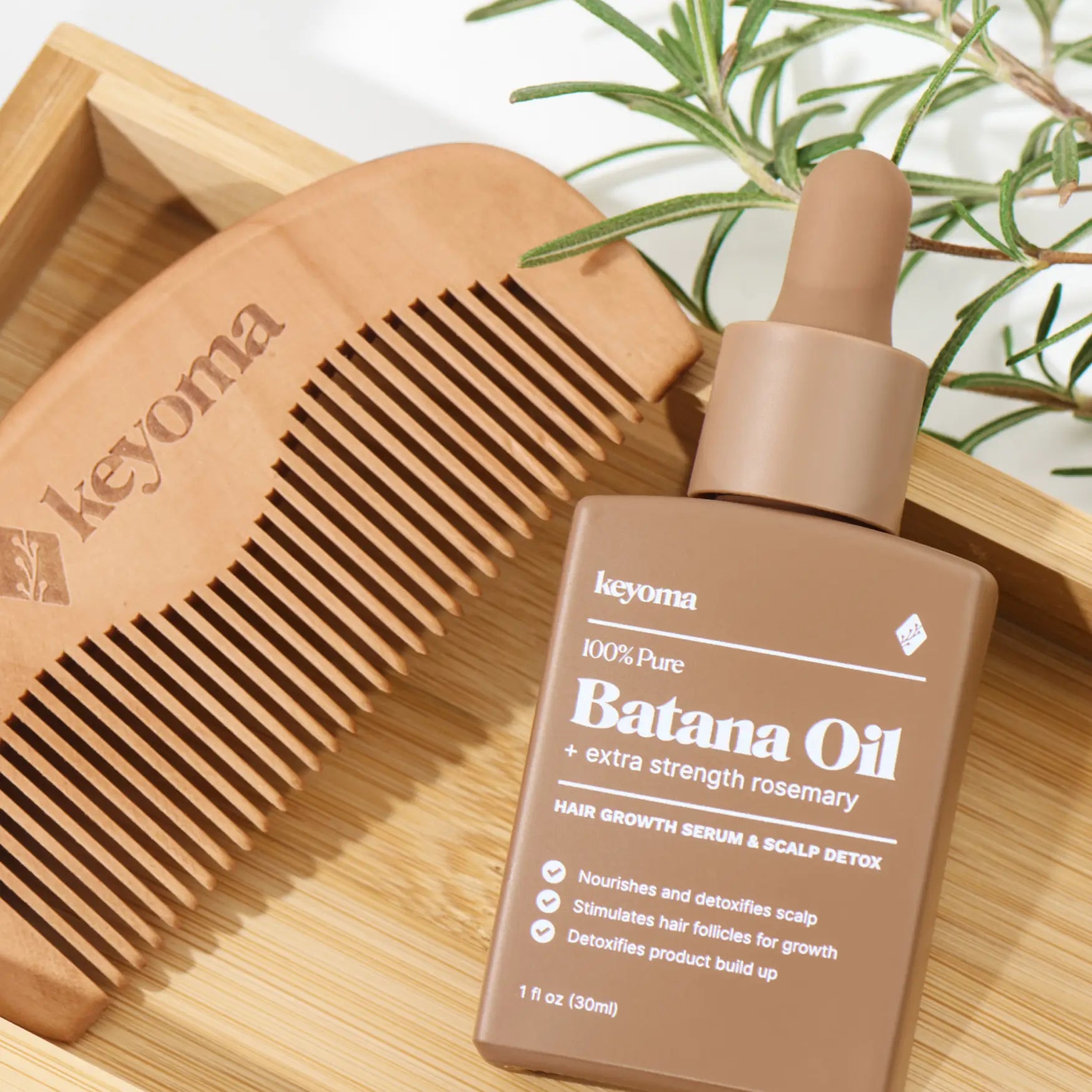
Keyoma Batana Oil with Rosemary works best in this routine as a separate scalp-focused treatment. Apply it according to the product directions, allow it to sit for the recommended period, and rinse it out before preparing your hair for fibers.
Once the oil has been removed, dry and style your hair completely. The fibers can then go onto clean attachment zones without competing with a fresh layer of scalp oil.
If your lengths need softness on a fiber-wearing day, use a controlled amount of oil below the covered areas. Keep the product off the part, crown, temples, hairline, and surrounding strands that support the fibers.
Frequently Asked Questions
Can I put hair fibers over hair oil?
Do not put fibers directly over oily roots or coated attachment strands. If the oil stays on the mid-lengths and ends, you may apply fibers afterward to separate, fully dry areas. Follow the fiber manufacturer’s directions.
Can I apply serum before hair fibers?
Some manufacturers allow serum and other styling products before fibers if the products dry completely. Keep oil-based serum away from the attachment zones unless the fiber maker specifically permits that use.
Why do hair fibers clump on oily hair?
Oil can cause individual hairs to group together and may interfere with even fiber distribution. The fibers may collect in patches instead of settling across separated strands.
Can I apply oil after hair fibers?
Avoid applying oil through or near the covered area. The added residue and hand movements may shift the fibers. If needed, smooth a small amount over clearly separated ends without touching the roots.
Should I use hair fibers on an irritated scalp?
Do not apply fibers over broken, inflamed, or irritated skin. Stop using a product if it causes discomfort. Seek appropriate care if the irritation is severe, spreads, or does not improve.
Protect Dry Lengths Without Sacrificing Fiber Coverage
Hair oil and hair fibers can fit into the same routine, but they should not compete for the same strands. Keep fibers on clean, dry attachment zones and reserve finishing oil for the mid-lengths and ends.
For scalp oiling, separate the two routines. Remove the fibers, apply Keyoma Batana Oil with Rosemary as directed, rinse thoroughly, and wait until your hair is completely dry before restoring your cosmetic coverage.
Featured Product
30% Off + 3 FREE Gifts
100% Pure Batana Oil + Rosemary


