

In this article
Apply hair oil before steaming when you want a pre-shampoo softening treatment. Steam with conditioner when conditioning is your main goal. Apply a small amount of oil after steaming when your ends need extra smoothing.
There is no single order that works for every routine. Oil before a hair steamer must usually be washed out, while oil applied after a steam treatment works as a lightweight finishing layer. Choosing one purpose helps you avoid using more product than your hair needs.
Key Takeaways
-
Use oil before steaming when you plan to shampoo it out afterward.
-
Steam with conditioner when softness and easier detangling are your main goals.
-
Apply minimal oil after rinsing when dry ends need lightweight finishing.
-
Compare residue, softness, volume, and washout before repeating either order.
Choose the Order Based on What You Want the Oil to Do
The right hair steaming and oil order depends on the result you want. Before reaching for both products, decide whether you are preparing your hair for washing, supporting a conditioning treatment, or finishing your style.
|
Routine Goal |
Oil Placement |
Steaming Stage |
What Happens Next |
Main Risk |
|
Pre-shampoo softening |
Before steaming |
Steam over lightly oiled lengths |
Shampoo and condition |
Heavy residue |
|
Conditioning support |
Separate from steaming |
Steam with conditioner |
Rinse thoroughly |
Overloading the hair |
|
Lightweight finishing |
After steaming and rinsing |
No oil under the steamer |
Smooth a small amount over the ends |
Flat or greasy hair |
Steam brings warm moisture into the routine. Oil does not add water to your hair, but it can coat the strands, reduce friction, and improve slip. That distinction matters because steaming over more oil does not automatically produce softer or healthier-looking hair.
If your hair is fine, straight, or easily weighed down, the after-steaming option gives you more control. Dry, coarse, curly, or coily hair may tolerate a pre-shampoo oil treatment more comfortably. However, texture alone does not determine the answer. Density, porosity, previous chemical processing, and the amount of oil also affect the result.
Apply Oil Before Steaming for a Pre-Shampoo Treatment

Using oil before a hair steamer makes the most sense when you plan to shampoo afterward. This sequence treats oiling as a temporary softening step rather than a layer that must remain in your finished hair.
The goal is not to saturate every strand. You want enough oil to reduce friction and make rough sections easier to handle during washing.
Use a Small Amount on the Lengths and Ends
Begin with detangled hair. It can be dry or lightly damp, depending on your usual oiling method, but it should not be dripping wet.
Place a small amount of oil in your palms and spread it thinly before touching your hair. Start at the ends, where weathering, brushing, and heat styling tend to leave the most wear. Move upward only if the middle lengths also feel rough.
Cleveland Clinic advises starting slowly with hair oil and notes that a small amount may be enough. It also recommends focusing oil on the middle lengths and ends, especially when scalp oiling leads to buildup or does not suit your hair type. Cleveland Clinic
Avoid using the steaming session as a reason to pour on extra oil. Excess product may make shampooing harder without improving the final result.
Steam Briefly, Then Shampoo Thoroughly
Set up the steamer according to its manufacturer’s directions. The steam should feel comfortably warm rather than intense. Keep your scalp far enough from the heat source to prevent stinging, burning, or persistent redness.
After steaming, shampoo the oil out. Focus the shampoo on your scalp and roots, then let the lather move through the lengths as you rinse. If you use a richer oil or applied too much, follow a careful method for washing out thick hair oil instead of scrubbing the lengths repeatedly.
Use comfortably lukewarm water. Water that feels painfully hot will not remove oil more effectively, and it may leave the scalp uncomfortable. This guide to choosing a water temperature for rinsing oil explains how to balance cleansing with comfort.
Judge the Result After Your Hair Dries
Wet hair can feel slippery from remaining water, conditioner, or oil. Wait until your hair is fully dry before deciding whether the order worked.
A successful pre-shampoo routine may leave you with:
-
Easier detangling during washing
-
Less pulling through rough sections
-
Soft lengths without an oily film
-
Clean roots after shampooing
If your roots look limp, the ends feel sticky, or shampooing takes longer than usual, reduce the amount of oil during your next session. If the hair feels coated rather than soft, applying more oil will likely make the problem worse.
Steam With Conditioner When Conditioning Is the Main Goal

If your main goal is softer, more manageable hair, place the conditioner at the center of the steaming session. Cleanse first, apply your conditioner as directed, and use the steamer only when the conditioner label and device instructions allow it.
This gives each step a clear job. Shampoo cleanses, conditioner supports slip and manageability, and steam adds warm moisture to the process.
Keep Oil Separate During the First Test
Do not add oil to the conditioner during your first test. Combining both products under the steamer makes it harder to identify what caused the result.
For example, soft hair with flat roots may mean you used too much conditioner, too much oil, or both. Testing conditioner without added oil gives you a useful baseline.
After rinsing, let your hair settle before deciding whether it needs another product. Hair that already feels smooth and balanced does not need a finishing layer by default.
More Layers Do Not Always Mean More Moisture
A longer product list does not guarantee better conditioning. Hair can feel dry because it needs water and conditioning, but it can also feel rough or dull when residue has collected on the surface.
Adding oil before steaming, mixing it into conditioner, and applying it again afterward creates three chances for buildup in one routine. This is especially noticeable on fine, low-density, or easily coated hair.
Use the least complicated sequence that gives you the result you want. If conditioner and gentle steam leave your hair soft, stop there.
Apply Oil After Steaming for Lightweight Finishing

Hair oil after a steam treatment works best as a finishing step. It can smooth dry ends, reduce the look of frizz, and add shine without requiring another wash.
The amount matters more here because the oil remains on your hair.
Let Excess Water Leave the Hair First
After steaming with conditioner, rinse thoroughly. Blot your hair with a soft towel or cotton shirt instead of rubbing it.
Wait until your hair is no longer dripping. Applying oil to soaking-wet hair makes distribution difficult because the product may slide unevenly over the surface. Applying it when the hair is damp gives you more control over placement.
If you are deciding whether to wait until the hair dries completely, follow the separate guide to using oil on damp or dry hair. That choice depends on whether you want broader coverage or targeted smoothing.
Start at the Ends With the Smallest Useful Amount
Spread a small amount of oil between your palms until they have a light sheen. Press or smooth it over the ends, then use what remains on the driest parts of your lengths.
Keep the first application away from the roots if your hair loses volume easily. You can add another small amount, but removing excess oil usually requires washing again.
Oil at this stage supports slip and shine. It does not replace conditioner, restore split ends, or add water to dehydrated hair.
Test Both Orders Without Changing the Rest of Your Routine
Online advice about whether to apply hair oil before or after steaming often treats personal preference as a fixed rule. A controlled test gives you a more reliable answer for your own hair.
Use two wash days to compare the orders:
-
Keep your shampoo, conditioner, steamer setting, steaming time, and styling method consistent.
-
On the first wash day, apply oil before steaming and shampoo it out afterward.
-
On the second wash day, steam with conditioner and apply minimal oil after rinsing.
-
Wait until your hair is fully dry before recording the result.
Score each routine from one to five in these areas:
|
Outcome |
Before-Steaming Score |
After-Steaming Score |
|
Detangling ease |
||
|
Softness |
||
|
Root volume |
||
|
Frizz control |
||
|
Residue |
||
|
Washout effort |
||
|
Next-day feel |
Do not change the oil amount, conditioner, or styling products halfway through the comparison. Otherwise, you will not know whether the order or another variable changed the result.
The better order is the one that provides the softness and manageability you want without creating residue, flatness, or extra washing.
Adjust the Routine When Hair Feels Heavy or Dry
An unsatisfying result does not always mean hair oil and steaming are incompatible. The placement, quantity, or number of product layers may need adjustment.
|
Result |
Likely Routine Issue |
Next Adjustment |
|
Greasy or limp after drying |
Too much oil or oil in both stages |
Use less and choose one placement |
|
Soft but coated |
Treatment was not rinsed thoroughly |
Rinse longer or reduce the oil |
|
Ends still rough |
Oil stayed near the roots |
Move the finishing amount to the ends |
|
Tangling during shampoo |
Oil was unevenly distributed |
Apply it more evenly to rough lengths |
|
Scalp feels hot or irritated |
Steam was too hot or the scalp was sensitive |
Stop steaming and let the scalp recover |
Change one detail at a time. If you cut the steaming time, change the conditioner, and reduce the oil during the same session, you will have no clear way to identify what helped.
Use Steam and Hair Oil Safely
A hair steamer uses moist heat, so it still requires careful handling. The American Academy of Dermatology warns that excessive heat can damage hair and recommends limiting heat exposure. American Academy of Dermatology
Follow these precautions:
-
Read and follow the steamer manufacturer’s directions.
-
Keep the heat comfortably warm and avoid concentrated steam on one area.
-
Stop if your scalp burns, stings, hurts, or becomes unusually red.
-
Do not steam an irritated, scratched, inflamed, or sunburned scalp.
-
Delay steaming after a chemical service if your scalp feels tender.
-
Keep water away from electrical cords, plugs, and controls.
-
Do not treat ordinary hair oil as a heat protectant unless its label says so.
People experiencing active hair loss or unusually fragile hair should be more cautious with heated oil treatments. A dermatologist can assess whether heat, tension, scalp inflammation, or another factor is contributing to the problem.
Steam also does not “open” scalp pores or hair follicles. Avoid using intense heat based on the belief that hotter steam forces nutrients deeper into the scalp.
Choose One Purpose for Your Next Steam Day
Before your next session, decide what you want the oil to accomplish.
Apply oil before steaming if you want a pre-shampoo softening step. Steam with conditioner if conditioning support is the priority. Apply a small amount of oil after rinsing if your dry ends need lightweight smoothing.
Avoid using oil at every stage until you know your hair handles the added weight. One clear purpose makes the result easier to assess and the routine easier to adjust.
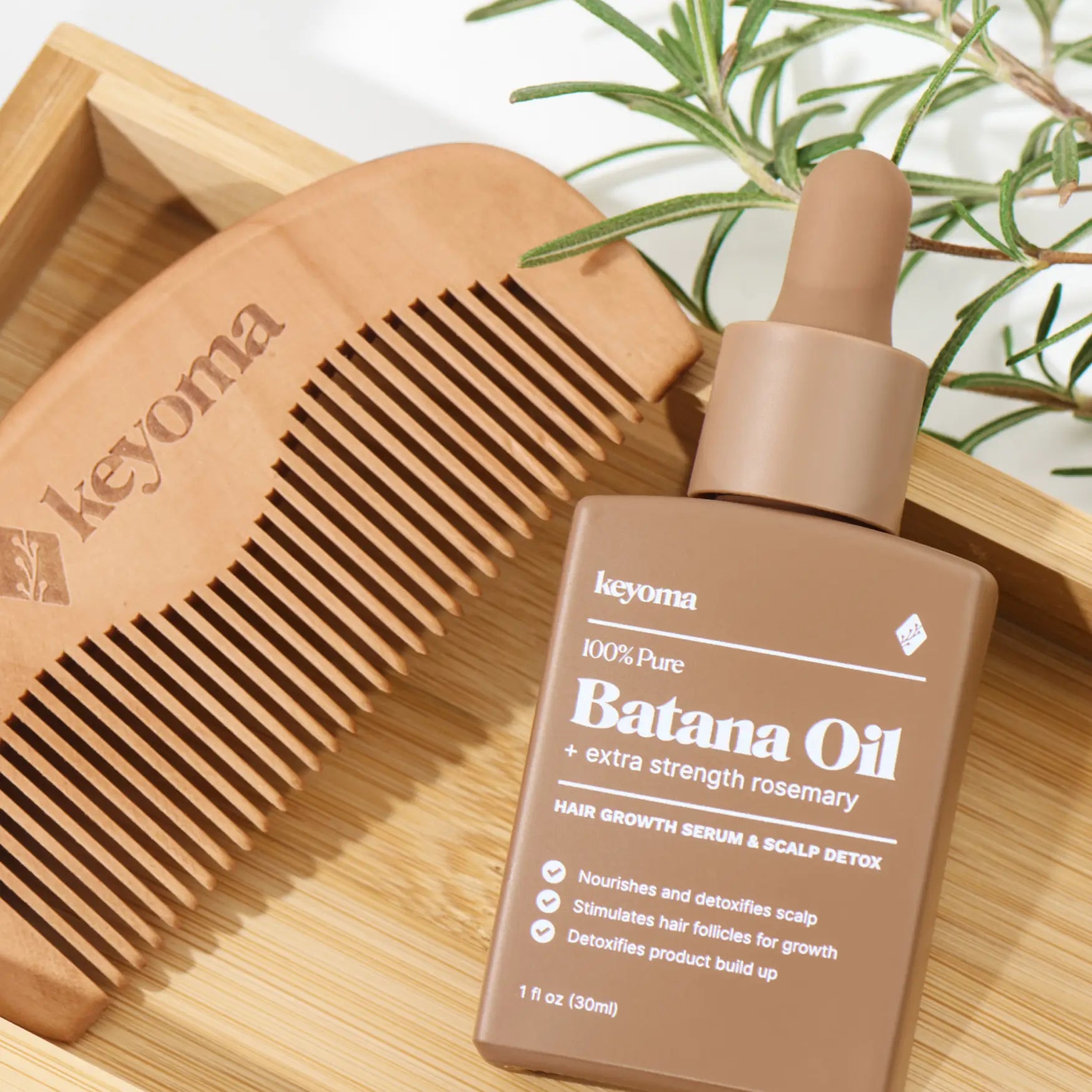
For a measured pre-shampoo or finishing step, Keyoma Batana Oil pairs Batana oil with rosemary in a concentrated formula. Begin with a small amount and judge the result after your hair dries before increasing the application.
Frequently Asked Questions
Should I oil my hair before using a hair steamer?
Apply oil before steaming when you are using it as a pre-shampoo treatment. Start with a small amount on the lengths and ends, steam according to the device instructions, then shampoo thoroughly.
Can I apply hair oil after steaming?
Yes. Rinse out your conditioning treatment, remove excess water, and smooth a minimal amount of oil over the ends. Keep it away from the roots if your hair becomes flat easily.
Should I use oil and conditioner together under a steamer?
Test them separately first. Using both at once makes it harder to identify whether the routine improved softness or created buildup. Steam with conditioner, rinse, then decide whether your ends still need oil.
Can I steam my scalp after applying oil?
Use caution because oil does not protect the scalp from heat. Follow the device directions and stop if you feel burning, stinging, or pain. Do not steam an irritated or inflamed scalp.
Featured Product
30% Off + 3 FREE Gifts
100% Pure Batana Oil + Rosemary


