

In this article
Do not apply hair oil immediately after scalp microneedling based on a fixed online timeline. The right time depends on the treatment depth, your scalp’s response, the formula you want to use, and your provider’s aftercare instructions.
Wait while your scalp has active bleeding, burning, swelling, marked redness, or unusual tenderness. If a professional performed the procedure, follow their product restrictions even when your scalp looks calm.
Microneedling temporarily changes how the skin responds to topical products. An oil that felt comfortable before treatment may sting or irritate recently treated skin. This is one reason the safest decision depends on scalp readiness, not the number of hours on a clock.
Key Takeaways
-
Your provider’s aftercare instructions take priority over any general online waiting period.
-
Active irritation means your scalp is not ready for hair oil yet.
-
Needle depth and oil ingredients can affect your risk of a reaction.
-
Resume oil cautiously and stop if discomfort or inflammation starts to develop.
Do Not Apply Oil While Your Scalp Is Still Reacting
Microneedling uses small needles to create controlled punctures in the skin. Redness, tightness, itching, peeling, and minor discomfort can occur afterward. These reactions often settle as the skin recovers, but applying an oil too early may add irritation.
The FDA’s microneedling safety guidance notes that some people experience stinging or itching when skincare products are applied after microneedling. It also lists infection among the less common risks.
Your scalp needs more recovery time if you notice:
-
Active pinpoint bleeding
-
Strong burning or stinging
-
Significant redness or warmth
-
Swelling
-
Increasing soreness or tenderness
-
Oozing, pus, or unusual crusting
-
A new or spreading rash
-
Skin that still appears open or broken
Do not try to cover discomfort with oil. A formula can make the scalp feel coated without addressing why it remains painful, warm, or inflamed.
Mild redness that steadily improves is different from redness that spreads or becomes more painful. If your symptoms are getting worse instead of settling, pause your routine and contact the professional who performed the procedure.
Why There Is No Universal Waiting Period

Advice to wait a set number of hours sounds simple, but it leaves out the factors that determine how your scalp recovers. A shallow cosmetic roller and a professional procedure that penetrates living skin do not create the same level of exposure.
Needle Depth and Procedure Type Matter
Professional microneedling devices may penetrate the skin at controlled depths selected for a specific treatment plan. Some procedures also use motorized devices or radiofrequency energy. These are different from rollers with short, blunt projections designed mainly for surface exfoliation.
You may not know the true penetration depth of an at-home device, especially when the labeling is unclear or pressure changes between passes. That uncertainty is a reason to use more caution, not a reason to assume the procedure was mild.
The FDA has not cleared microneedling devices for treating hair loss. It also states that authorized aesthetic microneedling devices are not cleared to deliver cosmetics, drugs, or biological products into the skin.
The American Academy of Dermatology recommends speaking with a dermatologist before trying microneedling for hair loss. Microneedling can worsen some conditions, and choosing the right device matters.
Scalp’s Response Matters More Than the Clock
Two people can have different reactions after similar procedures. One scalp may settle quickly, while another remains warm, sore, or irritated for longer.
Your usual skin sensitivity, treatment intensity, existing scalp conditions, and products used during the procedure can influence recovery. Recent sun exposure, scratching, or an unclean device may also complicate the situation.
A waiting period is only one part of the decision. Your scalp should also look and feel ready.
Provider’s Instructions Come First
If a dermatologist or another licensed professional performed your procedure, their aftercare plan should control when you resume topical products.
Ask the provider when you can restart:
-
Cosmetic scalp oils
-
Essential-oil blends
-
Minoxidil
-
Prescription scalp medication
-
Medicated shampoo
-
Exfoliating scalp treatments
-
Styling products applied near the roots
Do not assume that instructions for minoxidil also apply to rosemary oil or batana oil. Each formula has different ingredients and a different purpose.
Check the Formula Before It Touches Your Scalp

“Natural” does not mean a product belongs on freshly microneedled skin. Plant-based ingredients, fragrances, and essential oils can still cause irritation or an allergic reaction.
Recently treated skin may also respond differently to a formula you used without problems in the past.
Avoid Strong or Unfamiliar Ingredients
Do not make the first days after microneedling the time to test a new scalp blend. A reaction becomes harder to interpret when the procedure and the product are both new.
Be cautious with formulas containing:
-
Undiluted essential oils
-
Added fragrance
-
High amounts of drying alcohol
-
Several botanical extracts
-
Strong cooling or warming ingredients
-
Ingredients that caused itching or burning before
A carrier oil can dilute an essential oil, but dilution does not prove that the blend is appropriate for recently treated skin. The scalp still needs to recover first.
If you plan to use batana oil later, review the possible side effects of batana oil before restarting it. Redness, itching, bumps, or discomfort are reasons to stop rather than push through the reaction.
Rosemary Oil Requires Extra Caution
Rosemary essential oil is concentrated. It should not be applied undiluted to the scalp, especially when the skin is irritated or recovering from microneedling.
Even a properly diluted formula is not automatically suitable right after the procedure. Dilution addresses the concentration of the essential oil. It does not confirm that the scalp barrier has recovered enough for topical use.
General guidance on using diluted rosemary oil should apply only after your provider’s restricted period has passed and your scalp no longer shows warning signs.
Do Not Use Microneedling to Boost Oil Absorption
Greater absorption is often presented as a benefit of combining microneedling with scalp products. That framing leaves out an important safety issue.
When the skin barrier has been disrupted, greater exposure can also increase stinging, inflammation, or sensitivity. A product designed for routine use on intact skin is not automatically appropriate for application over fresh microchannels.
Hair oil should not be treated as a microneedling enhancer, wound-care product, or substitute for professional aftercare.
Check Whether Your Scalp Is Ready for Oil
Before restarting hair oil, look at the whole recovery picture. Do not rely on one sign alone.
Your scalp may be ready for a cautious return when:
-
Your provider’s restricted period has passed
-
All bleeding has stopped
-
Redness and warmth have settled
-
The scalp does not burn or sting at rest
-
Light touch does not cause unusual pain
-
There is no swelling, rash, drainage, or broken skin
-
The formula does not contain unfamiliar ingredients
-
Your provider has not told you to avoid that product
Passing this checklist does not override medical instructions. A scalp can look calm while still requiring a longer break from topical products based on the treatment performed.
If you had microneedling for a diagnosed condition or alongside another hair-loss treatment, ask the treating professional before changing the routine.
Resume Hair Oil Without Overloading Your Scalp
Once your scalp has recovered and you are cleared to restart oil, keep the first application simple.
Use a small amount on a limited area. Avoid vigorous massage, scratching, or repeated passes with a dropper. Pressure that feels normal during a regular oiling routine may feel uncomfortable on recently treated skin.
Do not combine several oils, serums, and medications during the same trial. Using one product at a time makes it easier to identify what caused a reaction.
Watch the area for:
-
Burning
-
Persistent stinging
-
New itching
-
Increased redness
-
Swelling
-
Tender bumps
-
A spreading rash
If one of these reactions begins, wash the product off gently and stop using it. Avoid applying another product to counteract the first one unless a medical professional recommends it.
Do not begin with an overnight oil treatment. A shorter, controlled application gives you more opportunity to notice discomfort and remove the product.
A previous patch test does not guarantee that freshly treated skin will respond the same way. Microneedling changes the condition of the application area, so cautious reintroduction still matters.
Know When to Contact a Medical Professional
Some post-treatment discomfort can occur, but worsening symptoms need attention. Do not diagnose the reaction from photos or its location alone.
Contact your provider if you notice:
-
Pain, redness, or swelling that continues to increase
-
Pus, drainage, or unusual crusting
-
A rash spreading beyond the treated area
-
Skin that is not healing as expected
-
A flare of eczema, psoriasis, folliculitis, or another scalp condition
-
Ongoing burning after washing off a product
-
New symptoms after combining oil with scalp medication
Facial swelling, widespread hives, trouble breathing, or throat tightness require urgent medical care.
It can also be difficult to tell whether a reaction is irritation, an allergy, or part of the procedure’s normal recovery. This guide to hair oil allergy or irritation can help you organize your symptoms, but a medical professional should assess severe, spreading, or persistent reactions.
Ask your provider before combining post-microneedling oil with minoxidil, corticosteroids, or another medication. Separating application times without professional guidance does not remove every interaction or absorption concern.
Return to Scalp Oiling When Your Skin Is Ready
Missing an oiling session is safer than applying a formula to a scalp that is still bleeding, burning, swollen, or tender. Your recovery signs and provider’s instructions matter more than maintaining a schedule.
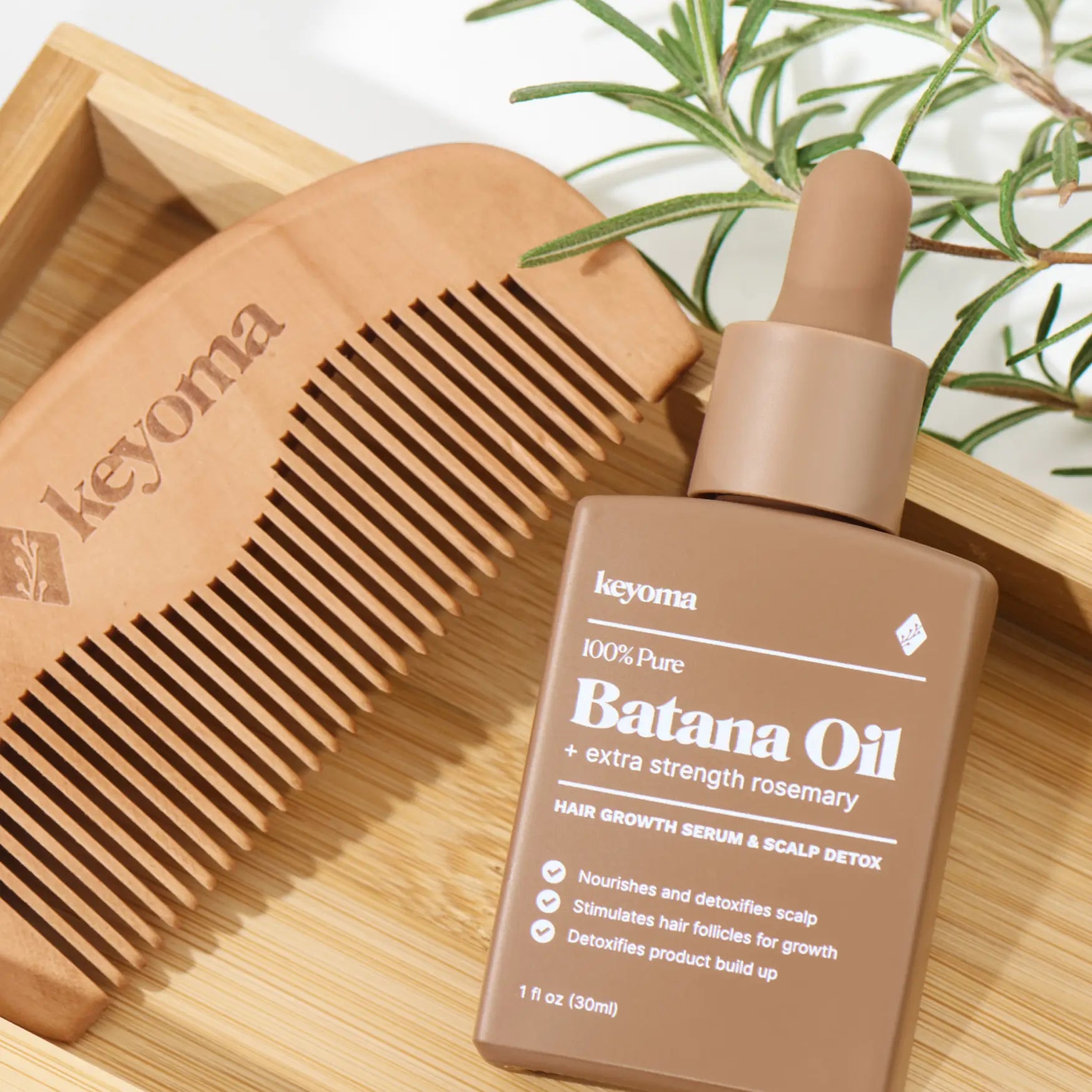
When your scalp has settled and your provider allows cosmetic oils again, you can consider returning to Keyoma Batana Oil with Rosemary using a small, controlled application. Stop if it causes burning, itching, swelling, or increased redness.
The goal is not to use oil as soon as possible. It is to return to your routine without interfering with your scalp’s recovery.
Featured Product
30% Off + 3 FREE Gifts
100% Pure Batana Oil + Rosemary


