

In this article
A perm can leave you with a defined curl pattern but ends that feel much drier than the rest of your hair. Those ends have lived through more washing, styling, friction, and chemical processing, so they often need more support without weighing down the curls above them.
The best oils for permed hair include argan, jojoba, grapeseed, coconut, and batana oil. Argan, jojoba, and grapeseed oils provide lighter finishing options. Coconut and batana oils offer richer pre-wash care for coarse or persistently rough lengths.
The right choice depends less on which oil sounds most nourishing and more on how your perm responds after application. A helpful oil should make the ends feel smoother while allowing the curl pattern to move freely. It cannot reconnect chemical bonds or return processed hair to its untreated condition.
Key Takeaways
-
Lightweight oils help fine perms retain movement when richer formulas flatten curls.
-
Richer oils suit coarse strands with widespread dryness or persistently rough ends.
-
Pre-wash and finishing applications address different problems in chemically curled hair.
-
Oil improves softness and slip but cannot reverse structural chemical damage.
What Permed Hair Needs From an Oil
Perming uses chemical processing to change the structure of your hair and establish a lasting curl or wave. The process can leave strands more vulnerable to dryness, tangling, and breakage, especially when the hair was already colored or heat-damaged.
Oil can support permed hair by lubricating the strand and reducing friction during styling. This extra slip is useful around fragile ends that catch against clothing, brushes, or neighboring strands.
However, oil does not hydrate hair by adding water. Conditioner and water-based leave-in products handle that part of the routine. Oil works best as a supporting layer that improves softness, reduces roughness, and slows moisture loss.
The right oil should provide enough surface coverage to make the ends easier to handle without causing the curls to:
-
Look wet or greasy
-
Separate into stringy sections
-
Lose volume near the roots
-
Feel stiff after the oil dries
-
Collect residue from other styling products
Your existing routine also matters. A perm styled with leave-in conditioner, mousse, gel, and curl cream already has several product layers. Adding a rich oil across the entire length can create buildup even when the oil works well on its own.
The Best Oils for Permed Hair Compared
The best oil is not the richest one or the one with the longest ingredient list. Match the oil’s weight to your strand thickness, dryness pattern, and intended application.
|
Oil |
Relative Weight |
Best Use |
Main Limitation |
|
Argan oil |
Light to medium |
Daily finishing and frizz control |
Fine hair can look oily when overapplied |
|
Jojoba oil |
Light |
Fine perms and targeted dry ends |
May feel insufficient on coarse ends |
|
Grapeseed oil |
Light |
Curls that flatten easily |
Provides less cushioning for rough lengths |
|
Coconut oil |
Medium |
Controlled pre-wash treatment |
Can leave some hair stiff or coated |
|
Batana oil |
Rich |
Coarse, porous, persistently rough ends |
Heavy application can reduce curl volume |
1. Argan Oil for Lightweight Softness and Shine
Argan oil offers a useful middle ground between an extra-light finishing oil and a dense pre-wash treatment. It spreads easily across the ends and can soften surface roughness without saturating the entire curl.
It often suits fine-to-medium strands when the ends look dull or feel dry but the rest of the hair remains manageable. Warm one or two drops between your palms, then press the oil into the bottom few inches. Avoid dragging oily hands down every curl because this can separate the pattern and make individual sections look stringy.
Argan oil is more appropriate for cosmetic finishing than structural repair. It can improve shine, slip, and the way rough ends feel. Its vitamin E or fatty acid content does not prove that it repairs the chemical changes caused by a perm.
Choose argan oil when you want:
-
A light finishing layer on dry ends
-
Extra shine after the hair has dried
-
Less friction without a full pre-wash treatment
-
An oil that feels richer than grapeseed but lighter than batana
Reduce the amount if your curls begin clumping into oily sections or lose their natural bounce.
2. Jojoba Oil for Fine Perms That Lose Volume Easily
Jojoba oil is a practical starting point when most oils make your perm look flat. Its lighter feel allows you to target individual ends instead of covering the complete curl pattern.
Apply one drop to your fingertips and pinch it gently into the driest sections. This method provides more control than rubbing the oil broadly between both palms. It also helps you avoid softening the curl cast where you still want definition and hold.
Jojoba is often described as similar to the scalp’s natural sebum. That does not mean it perfectly duplicates sebum or behaves the same way on every head of hair. Its main advantage in this routine is its manageable weight.
Jojoba oil works best when:
-
Your strands are fine
-
Loose waves collapse under rich products
-
Dryness is limited to a few ends
-
You already use several styling products
-
You want surface slip without a heavy coating
It may not provide enough cushioning when coarse or highly porous ends feel rough again soon after application. In that case, use jojoba for finishing and reserve a richer oil for occasional pre-wash care.
3. Grapeseed Oil for an Extra-Light Finish
Grapeseed oil suits curls that lose shape easily after contact with oil. It creates a lighter finish than many traditional treatment oils, making it useful when your goal is to reduce surface friction rather than coat severely dry lengths.
Apply it only after your styling products have dried or formed their cast. Place one drop between your fingertips, then press it into the ends that still feel coarse. Adding it before the hair dries can dilute or disturb the styling product holding the curl pattern together.
Because grapeseed oil is light, its effect may not last as long on thick, coarse, or highly porous ends. Do not compensate by repeatedly adding more throughout the day. Several light applications can still accumulate and leave the hair limp by the next wash.
Choose grapeseed oil when:
-
Your curls look weighed down soon after oiling
-
Your hair is fine or low-density
-
You want a small amount of finishing slip
-
Your ends need polish rather than an intensive treatment
If the hair remains rough after a controlled application, switch the application method before switching products. A richer pre-wash oil may suit widespread dryness better than another finishing layer.
4. Coconut Oil for a Pre-Wash Treatment
Coconut oil is the most evidence-supported option in this list for reducing protein loss from hair. In a laboratory study comparing coconut, sunflower, and mineral oils, coconut oil reduced protein loss from damaged and undamaged hair when used before and after washing. The researchers linked this result to coconut oil’s affinity for hair proteins and its ability to enter the hair shaft. Read the study on PubMed.
For permed hair, coconut oil usually makes more sense as a controlled pre-wash treatment than as a heavy daily finisher. Apply a thin layer to dry mid-lengths and ends, leave it in place before washing, then shampoo and condition as normal.
Start with less than you think you need. Your hair does not have to look saturated for the oil to coat the vulnerable sections. Heavy application can require aggressive shampooing, which defeats the purpose of a gentle pre-wash routine.
Coconut oil does not suit every texture. Stop using it if your hair repeatedly feels stiff, waxy, or harder to style after washing. That response does not prove that your hair has “too much protein,” but it does show that the product or dose is not supporting your current routine.
Keep the treatment at room temperature. The American Academy of Dermatology advises people with fragile hair to avoid hot-oil treatments because the added heat can cause further damage. Review the AAD’s fragile-hair guidance.
5. Batana Oil for Coarse or Persistently Rough Ends
Batana oil provides a richer layer for coarse, porous, or stubbornly rough ends. It offers more cushioning than jojoba or grapeseed oil, which makes it better suited to hair that absorbs light products without staying soft.
The weight is also its main tradeoff. Applying it across fine permed hair can reduce volume or pull curls into separated sections. Keep the amount small and choose the method based on where you notice dryness.
Use batana oil as a pre-wash treatment when most of your length feels coarse or oil tends to flatten your finished style. Use a tiny amount as a finishing step when only the last few inches need extra softness.
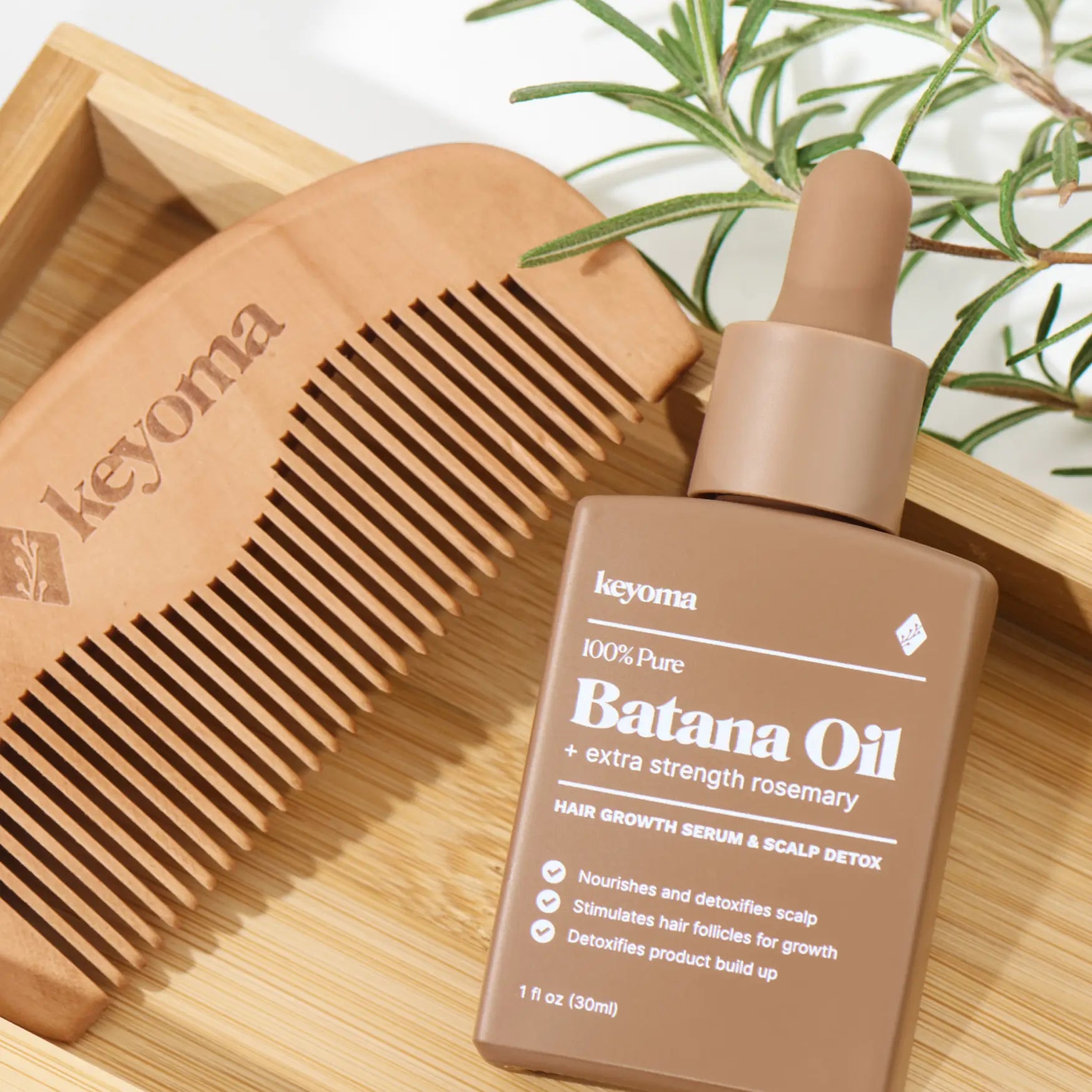
Keyoma Batana Oil with Rosemary offers a richer option for this type of targeted care. It should support the routine rather than replace conditioner, careful detangling, or appropriate trimming.
For a closer comparison of the two methods, see when to use batana oil before or after washing.
Choose an Oil Based on How Your Perm Responds

A product label cannot tell you how your curl pattern will react. Use the appearance and movement of your hair after application to guide the next adjustment.
Curls Become Flat or Separated
Switch to jojoba or grapeseed oil and use one drop at a time. Keep the oil below the mid-lengths unless dryness affects a larger area.
Flatness does not always mean the oil itself is wrong. You may be using too much, applying it before the styling products have set, or layering it over existing buildup. Test a smaller amount on one section before replacing the product.
Ends Feel Dry but the Rest Feels Soft
Treat the ends instead of oiling the complete length. Argan or jojoba oil can provide a light finishing layer. A tiny amount of batana oil can offer more cushioning when the ends are coarse.
Apply the oil after a water-based leave-in product. The leave-in helps supply and retain moisture, while the oil reduces surface friction and adds softness.
Most of Your Length Feels Rough
Widespread roughness calls for a different method. Consider coconut or batana oil as a pre-wash treatment, then shampoo it out before styling.
This keeps a rich oil from competing with mousse, gel, or curl cream. Continue using conditioner after shampooing because oil alone does not address every part of a moisture routine.
If roughness comes with frequent snapping, reduced elasticity, or tangling, review the broader signs of overprocessed hair before adding more product.
Hair Feels Stiff After Oiling
Reduce the amount first. If stiffness continues, wash away the residue and test a lighter oil on one small section.
Do not assume stiffness automatically means your hair needs more moisture or protein. Product buildup, excessive oil, chemical damage, and an unsuitable treatment can create similar results. Comparing your routine and strand behavior is more useful than assigning a cause from texture alone. This protein-moisture balance guide can help you evaluate the wider pattern.
How to Apply Oil Without Weighing Down Your Perm
A measured application keeps the oil on the sections that need it without coating healthy roots and curls.
-
Start with dry or slightly damp, detangled hair.
-
Place one or two drops in your palm.
-
Rub your hands together until the oil forms a thin film.
-
Press or scrunch it into the bottom few inches.
-
Wait several minutes before assessing the result.
-
Add another drop only if the ends still feel rough.
Use these amounts as starting points:
-
Fine or short hair: one drop
-
Medium-density hair: one to three drops
-
Thick or coarse hair: two to four drops, followed by reassessment
Bottle droppers and pump sizes vary, so these are not fixed doses. The correct amount leaves the ends softer while the curls still move freely. If the hair looks darker, wet, separated, or limp, use less during the next application.
When Oil Is Not Enough for Fragile Permed Ends
Oil can make frayed ends feel smoother for a limited time, but it cannot fuse a split strand or rebuild hair that has already snapped. Repeated coating can hide the roughness without addressing the reason it keeps returning.
Look beyond oil when you notice:
-
White points along individual strands
-
Ends that split again soon after oiling
-
Frequent snapping during gentle detangling
-
Severe matting between wash days
-
Sections that feel gummy, unusually stretchy, or weak when wet
-
Continued breakage after reducing heat and chemical services
A trim may remove ends that no longer respond to conditioning. For the remaining length, use a moisturizing conditioner, reduce heat, detangle gently, and limit friction from rough towels or tight styling.
The AAD also recommends caution with perming and other chemical services. Follow processing instructions carefully and rinse immediately if the solution causes excessive stinging or burning. See the AAD’s perming safety tips.
Seek help from a dermatologist if you develop scalp burns, sores, persistent irritation, or unusual shedding. These concerns fall outside what a hair oil can manage.
Find the Right Weight for Your Permed Ends
Start with the lightest oil that keeps your ends comfortable between washes. Jojoba and grapeseed oil suit fine curls that flatten easily. Argan oil offers a little more polish, while coconut oil fits a controlled pre-wash routine. Batana oil provides richer support when coarse or persistently rough ends need more cushioning.
Whichever option you choose, begin with a small amount and watch how your perm moves after application. Consistent conditioning, gentle handling, and fewer damaging treatments matter more than saturating fragile strands.
When your ends need a richer pre-wash or finishing option, add Keyoma Batana Oil with Rosemary to the routine in a measured amount.
Frequently Asked Questions
What is the best lightweight oil for permed hair?
Jojoba and grapeseed oil are practical starting options for fine hair or curls that flatten under richer products. Begin with one drop on the ends, then assess the curl movement before applying more.
Can I apply oil to permed hair every day?
Daily application is not necessary when your hair remains soft and manageable. The right frequency depends on your strand thickness, wash schedule, styling products, and how quickly buildup appears. Reduce the frequency if the curls become greasy, stiff, or limp.
Should I apply oil before or after curl cream?
For finishing, apply a tiny amount of oil after your water-based leave-in and curl cream. This helps preserve the styling product’s hold. A richer pre-wash oil belongs before shampooing and should be removed before you begin styling.
Can hair oil repair a damaged perm?
No. Hair oil can improve softness, shine, slip, and manageability, but it cannot reverse the structural changes caused by perming. Hair with extensive splitting or breakage may also need trimming and a gentler care routine.
Featured Product
30% Off + 3 FREE Gifts
100% Pure Batana Oil + Rosemary


