

In this article
Repairing hair oil can help dry, damaged hair feel softer, smoother, and easier to manage. It can reduce roughness, add shine, tame frizz, and support ends that snap from dryness or friction.
It cannot fully reverse severe structural damage. Once bleach, heat, rough handling, or chemical processing weakens the hair fiber, oil can improve the way hair feels and behaves, but it usually cannot rebuild broken bonds or permanently fix split ends.
The best choice depends on your hair type and the kind of damage you see. Fine hair may need a light finishing oil. Coarse, brittle, or very dry hair may do better with a richer pre-wash oil. Hair with serious breakage, gummy texture, or split ends that keep traveling may need a trim, a bond repair treatment, or professional help.
Key Takeaways
-
Hair oil can soften dry, damaged hair, but it cannot undo severe damage.
-
Rich oils work better for coarse hair, while fine hair needs lighter formulas.
-
Coconut oil has research support for reducing protein loss.
-
Split ends cannot be permanently glued back together with oil.
What Is Repairing Hair Oil?
Repairing hair oil is a hair oil sold or used to make damaged hair feel smoother, softer, shinier, and less rough. The word “repairing” can mean different things depending on the formula. Some oils mainly coat the hair surface for shine and frizz control. Others are part of bond-style or peptide-style systems that claim deeper repair benefits.
Most natural oils work by adding slip, reducing dryness, and helping the hair surface feel smoother. That can make hair look healthier even when the deeper structure is still damaged. If your main issue is rough ends, dullness, frizz, or dryness-related breakage, a hair repair oil may fit well inside a broader care plan.
Commercial repair oils also show why label reading matters. One molecular repair oil is marketed around damage repair, frizz control, shine, and heat protection, while a well-known argan oil treatment is positioned more around frizz, detangling, conditioning, and shine. Those are not the same promise. A repairing oil for hair should be judged by what it actually claims to do, not by the word “repair” alone.
For a broader damage-control approach, pair oil with gentle washing, conditioning, low heat, and careful detangling. A simple plan to reduce hair damage naturally usually does more than adding oil while keeping the same rough habits.
Can Hair Oil Really Repair Damaged Hair?
Hair oil can support damaged hair, but the repair is often cosmetic. Cosmetic repair means the hair feels softer, looks shinier, tangles less, and has fewer rough-feeling areas. Structural repair means the internal fiber is meaningfully restored. Most plain oils are better at the first job than the second.
The American Academy of Dermatology says simple changes can help prevent further hair damage, and it lists habits such as rubbing shampoo into the hair length, towel rubbing, wet brushing, frequent heat styling, chemical services, and tugging while brushing as damage triggers. Oil can help reduce friction and dryness, but it works best when those damage triggers are also controlled.
Coconut oil has stronger research support than many other natural oils for damage prevention. A PubMed-indexed study found coconut oil reduced protein loss in both undamaged and damaged hair when used before and after washing. That supports coconut oil as a protective option for some people, but it does not mean coconut oil can fully reverse bleach damage, heat damage, or split ends.
Split ends need especially realistic expectations. Oil may temporarily smooth the feel of frayed ends and reduce friction so they snag less. It cannot fuse a split hair shaft back together permanently. If splits keep moving upward, trimming the damaged ends is still the real fix.
What Causes Dry, Damaged Hair?
Dry, damaged hair usually comes from repeated stress on the hair fiber. A single blow-dry or color service may not ruin your hair, but repeated heat, bleach, tight styles, rough brushing, overwashing, and skipped conditioning can add up. Hair then starts to feel rough, frizzy, brittle, and harder to detangle.
Damage control starts with identifying the habit that keeps weakening your hair. A restorative hair oil can help with softness and slip, but it should not be used as a cover for constant heat, harsh washing, or aggressive brushing.
Heat Styling
Heat can weaken hair, especially when tools are used often or at high settings. The AAD recommends limiting blow-dryers, flat irons, curling irons, and hot combs, using lower heat settings, and using a product that protects hair from heat when heat styling is needed.
Regular oil should not be treated as a heat protectant unless the product clearly says it offers heat protection. Some oils can make hair feel smoother before styling, but that is not the same as tested heat protection. If you use hot tools, choose a labeled heat protectant and keep oil mainly for finishing or pre-wash care. For more context, compare how different tools affect heat-damaged hair.
Bleach or Color
Bleach and color can leave hair porous, dry, and more prone to breakage. The more often you process the same sections, the more fragile they can become. Oil can make color-treated hair feel smoother, but it cannot restore hair to its original, undamaged state.
If your hair feels stretchy, gummy, or breaks when wet, oil alone is probably not enough. A bond repair treatment, protein-moisture balance, and a stylist’s assessment may be more useful. For mildly dry color-treated hair, a small amount of oil on the ends can help reduce friction after styling.
Rough Brushing
Rough brushing can cause breakage, especially when hair is wet, tangled, or already weak. The AAD says hair does not need 100 brush strokes a day and recommends using a wide-tooth comb gently while avoiding pulling and tugging.
Oil helps here by adding slip. A tiny amount on dry ends can make knots easier to work apart, especially on coarse or curly hair. Still, technique matters more than quantity. Detangle from the ends upward, pause when you hit a knot, and avoid forcing the brush through. You can also review how hair friction damage builds from repeated rubbing, snagging, and tension.
Overwashing
Overwashing can leave some hair types feeling dry, especially if shampoo is worked through the lengths each time. The AAD recommends massaging shampoo into the scalp and letting it flow through the hair length while rinsing instead of rubbing shampoo into the strands.
A pre-wash oil can help if your ends feel stripped after shampooing. It gives the lengths a light protective layer before cleansing. Fine hair may need only a small amount on the last few inches, while thicker or coarse hair may tolerate more.
Split Ends and Breakage
Split ends and breakage are signs that the hair fiber is weakened. Oil can reduce the rough feel and help ends glide past each other, which may lower dryness-related snapping. It cannot permanently seal a split that has already opened.
If your ends feel rough soon after every wash, focus on prevention. Use conditioner, reduce heat, detangle gently, and protect the ends before shampooing when needed. Hair oil can support that plan, but recurring splits still need trimming. For a deeper topic match, review how oils for split ends work as prevention and smoothing support.
Best Hair Repairing Oils
The best oil for hair repair depends on weight, hair texture, and how you plan to use it. A rich oil may be perfect before washing thick, coarse, dry hair, but too heavy as a leave-in on fine hair. A lighter oil may make fine hair glossy without flattening it, but may not feel nourishing enough for brittle ends.
Think less about finding one universal best oil for hair repair and more about matching the oil to the job. Pre-wash treatments can be richer. Leave-in finishers usually need to be lighter. Dry ends support depends on how quickly your hair absorbs or shows oil.
Batana Oil
Batana oil is a rich natural hair oil that fits dry, coarse, brittle, or rough-feeling hair. It can help hair feel softer and more conditioned, especially when used on dry ends or as a pre-wash treatment.
For damaged hair, batana oil should be framed as support, not a cure. It may help reduce roughness, add shine, and make strands feel less dry. It should not be described as a bond repair treatment, a permanent split-end fix, or a way to reverse bleach damage.
If your hair is thick, textured, or very dry, batana oil for damaged hair can make sense as a richer option. If your hair is fine, start with a very small amount and keep it away from the roots.
Argan Oil
Argan oil is often used for shine, softness, frizz control, and smoother-looking ends. It is usually lighter than very rich oils, which can make it easier to use as a finisher.
It works well when hair looks dull or frizzy after styling. Apply a small amount to the palms, rub your hands together, and smooth it over the mid-lengths and ends. Too much can make fine hair look greasy, so start with less than you think you need.
Coconut Oil
Coconut oil is one of the better-studied natural oils for hair damage prevention. The strongest support is for reducing protein loss, especially when used before washing. That makes it more of a protective pre-wash option than a daily styling oil for many hair types.
Coconut oil can feel heavy, stiff, or greasy as a leave-in, especially on fine or low-density hair. Use it sparingly, focus on the lengths, and shampoo it out well. If your hair feels coated afterward, use less or switch to a lighter oil.
Jojoba Oil
Jojoba oil is a lighter option for shine and softness. It can work well for people who want a natural hair repair oil feel without the heaviness of richer oils.
Because jojoba oil is usually easier to spread, it can be useful on fine to medium hair that gets weighed down quickly. It is best used as a light finishing oil or mixed into a routine for dry ends, not as a heavy mask.
Castor Oil
Castor oil is thick, dense, and sticky compared with many other oils. It can help very dry or coarse ends feel coated, but it is easy to overuse.
For damaged hair, castor oil usually works better blended with lighter oils or used in a tiny amount. Avoid loading it onto the scalp if you are prone to buildup, itching, or clogged-feeling roots. If your goal is softness without heaviness, lightweight hair oils may be a better fit.
How to Use Repairing Hair Oil
Repairing hair treatment oil works best when the method matches your hair’s needs. The same oil can behave differently depending on whether you use it before shampoo, after styling, or only on dry ends.
Start with small amounts. You can always add more, but removing excess oil usually means washing again. Fine hair may need only one or two drops. Thick, coarse, curly, or highly porous hair may need more.
Pre-Wash Treatment
A pre-wash oil treatment helps protect dry lengths before shampooing. Apply oil to the mid-lengths and ends, let it sit long enough to soften the hair, then shampoo as usual. This method is helpful when your ends feel rough, dry, or squeaky after washing.
Use a richer oil if your hair is coarse, curly, or brittle. Use a lighter amount if your hair is fine or gets flat easily. I noticed pre-wash oil works better when the ends are coated lightly, not soaked. For product selection, best pre-wash hair oils can help you compare richer options.
Do not heat the oil unless the product directions specifically say to. Fragile hair does not need extra heat. The AAD also warns that hot-oil treatments can further damage fragile hair because they heat the hair.
Leave-In Finisher
A leave-in oil finisher is best for frizz, shine, and smoother-looking ends after washing or styling. Apply a tiny amount from the mid-lengths down. Keep it away from the scalp unless your scalp tolerates oils well.
Fine hair should use the least amount. The AAD gives similar guidance for leave-in products, noting that thick hair requires more product while fine hair needs less to avoid a greasy look.
A finishing oil can make hair look polished, but it should not replace conditioner. Conditioner helps coat strands after shampooing, while oil is usually better as a final smoothing step or targeted dryness support.
Dry Ends Support
Dry ends often need the most help because they are the oldest part of the hair. They have survived more brushing, washing, heat, friction, and weather exposure than the hair near your roots.
Use a small amount of oil on dry ends between wash days when they feel rough or tangle easily. Rub the oil between your palms first so it spreads evenly. Then press it onto the ends instead of dragging your hands down the hair.
If your ends are consistently dry but your scalp gets oily, separate scalp care from end care. You may need shampoo at the roots and oil only at the bottom few inches. A targeted hair oil for dry ends is usually more useful than coating the whole head.
Scalp Use With Caution
Scalp oiling is not wrong for everyone, but damaged lengths and scalp needs are not the same problem. A dry hair shaft may love oil, while the scalp may react with itching, buildup, flakes, or irritation.
Use caution if you have dandruff, seborrheic dermatitis, scalp acne, sores, burning, or persistent itching. Oil can make some scalp issues feel worse by trapping buildup or making cleansing harder. If you have sudden shedding, patchy hair loss, scalp pain, bleeding, or signs of infection, speak with a dermatologist instead of trying to solve it with oil.
For normal scalps, use a small amount and wash it out well. For sensitive scalps, patch test first and avoid essential oils unless properly diluted. A simple length-focused oil routine is often enough when your main concern is dry, damaged hair.
Choose Repairing Hair Oil for Softer Ends
Repairing hair oil is useful when your goal is softer, smoother, shinier hair with less friction and better control over dry ends. It is not a full reset for severe heat damage, bleach damage, chemical damage, or split ends that keep traveling.
Choose a rich oil when your hair is coarse, dry, brittle, or rough. Choose a lighter oil when your hair is fine, easily weighed down, or mainly needs shine and frizz control. Use richer oils before washing and lighter oils as finishers.
Better results come from pairing oil with gentle habits. Wash the scalp instead of scrubbing the lengths. Condition after shampooing. Reduce heat. Detangle slowly. Trim split ends when needed. With those basics in place, repairing hair oil can be a practical support step for dry, damaged hair without promising more than oil can truly do.
Featured Product
30% Off + 3 FREE Gifts
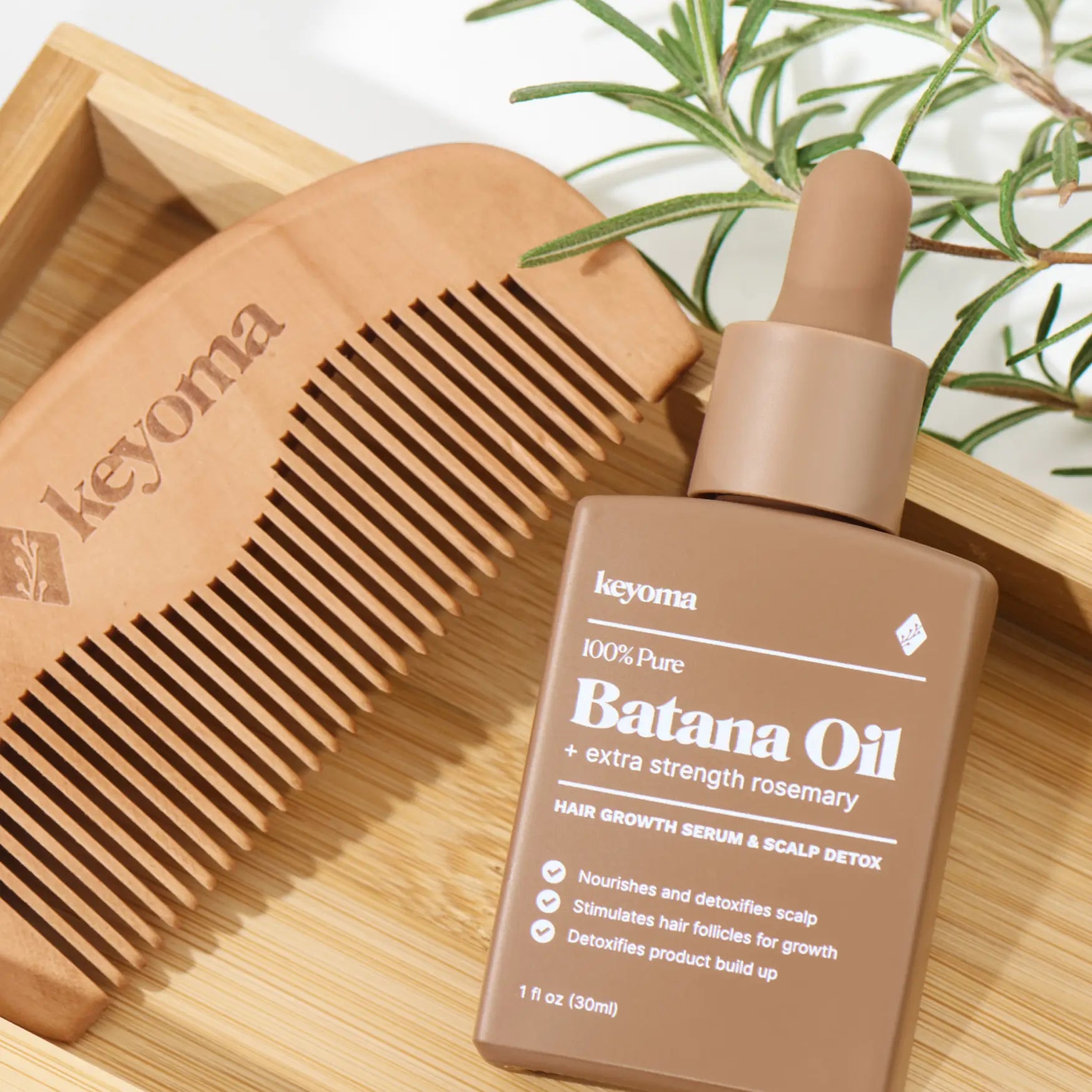
100% Pure Batana Oil + Rosemary


