

In this article
Neither oil is universally better. Batana oil usually gives hair a richer, more coating conditioning feel, while hemp seed oil is commonly easier to spread in a lighter layer. The better choice depends on your hair density, strand thickness, porosity, scalp condition, product formula, and how much you apply.
Batana oil may suit dry, coarse, curly, or chemically stressed hair that benefits from heavier sealing and slip. Hemp seed oil may be easier to control on fine or straight hair and in routines where buildup develops quickly. Those are useful starting points, not fixed rules for every head of hair.
Most importantly, cosmetic improvement is not the same as follicle regrowth. An oil can make strands smoother, reduce friction, limit breakage, and create the appearance of fuller hair without increasing the number or density of follicles.
Key Takeaways
-
Choose Batana oil when your main goal is rich pre-wash conditioning for dry, coarse, brittle, or highly textured hair.
-
Consider hemp seed oil when you prefer a more fluid oil and your hair becomes flat, stringy, or greasy under heavier products.
-
Neither oil has strong direct clinical evidence showing that topical use regrows hair.
-
Scalp dryness and recurring flakes are not always the same problem. Persistent itching, redness, scaling, pain, or sores need appropriate evaluation rather than heavier oiling.
-
Start with a small amount, then judge softness, residue, scalp comfort, and styling results after your next wash.
Batana Oil vs. Hemp Seed Oil at a Glance
|
Comparison Point |
Batana Oil |
Hemp Seed Oil |
|
Source |
Oil associated with the kernels or nuts of the American oil palm, Elaeis oleifera |
Oil pressed from Cannabis sativa seeds, distinct from CBD-rich extracts |
|
Typical texture |
Rich, dense, and sometimes butter-like, depending on processing and temperature |
More fluid and commonly described as lightweight |
|
Usual finish |
Glossy, sealing, and more noticeable on the strand |
Softer, lighter-feeling finish when used sparingly |
|
Strongest cosmetic use |
Pre-shampoo conditioning, dry ends, reduced friction, and breakage management |
Light smoothing, flexible mixing, and conservative scalp or strand application |
|
Likely hair-type fit |
Dry, coarse, curly, coily, porous, or chemically damaged hair |
Fine, straight, lower-density, or easily weighed-down hair |
|
Scalp considerations |
Can feel heavy or leave residue when overapplied |
May be easier to spread thinly but can still cause buildup or irritation |
|
Evidence for regrowth |
Direct clinical evidence is lacking |
Evidence specific to topical hemp seed oil for hair growth is limited |
The table reflects typical ingredient behavior, but the label matters. A raw oil, refined oil, serum, balm, or multi-oil blend can perform differently even when “Batana” or “hemp seed” appears prominently on the front.
How Batana and Hemp Seed Oils Differ in Texture and Performance

The most noticeable difference between these oils is how they feel and behave on the hair. Comparing their weight, finish, conditioning effect, and buildup potential can help you choose the one that fits your routine more comfortably.
Weight, Absorption, and Residue
Batana oil tends to behave like a rich conditioning oil. It spreads more slowly, leaves a more noticeable coating, and can be useful when dry strands need lubrication before shampooing. The same richness can work against fine or low-density hair, especially near the roots, where a small excess may reduce movement and volume.
Hemp seed oil generally has a more fluid feel, so it is easier to distribute in a thin layer. That does not make it residue-free. Applying too much, layering it over leave-in products, or repeatedly oiling without effective cleansing can still leave hair limp or the scalp coated.
Porosity adds another variable, but oil does not replace water. It mainly coats the strand and slows moisture loss. A hair porosity overview can help explain product behavior without treating heaviness as a porosity test.
Softness, Shine, and Moisture Retention
Both oils can improve the feel of hair by adding lubrication. A review of hair cosmetics and conditioning mechanisms explains that conditioners and leave-on products can reduce friction between fibers, making hair easier to comb. Less friction can mean fewer snags and less mechanical breakage, especially through fragile ends.
Batana oil is the stronger candidate for a richer coating on very dry lengths, while hemp seed oil may provide slip with less visible weight. Neither permanently repairs split ends or reconstructs the inner fiber. Smoother strands may look fuller and retain length when breakage decreases, but that is not increased follicle density. Keyoma’s guide to hair breakage versus hair loss explains the difference.
Scalp Feel and Buildup Potential
A small amount of oil may reduce a tight, dry feeling. Batana creates a heavier film, while hemp seed oil is easier to apply thinly. Scalp comfort still depends on the cause of the symptoms.
The American Academy of Dermatology’s dry-scalp guidance notes that dry skin and dandruff can look similar, while conditions such as seborrheic dermatitis and psoriasis may also cause itching and flakes. Oil is not a substitute for the right diagnosis or treatment.
Avoid heavy scalp oiling when there is active redness, severe itching, painful bumps, weeping skin, crusting, bleeding, or persistent flakes. In those situations, adding more oil can obscure the problem, trap residue, or delay effective care.
Which Oil Better Fits Your Hair and Scalp?

Hair texture, density, scalp condition, and tolerance for heavier products all affect how an oil performs. Rather than choosing based on broad benefit claims, match the oil to your hair’s needs and how easily your scalp develops dryness or buildup.
Dry, Coarse, Curly, or Chemically Damaged Hair
Batana oil is a logical first trial for rough, brittle, or difficult-to-detangle hair. Its rich texture can give coarse and highly textured strands more slip, especially as a pre-shampoo treatment on the mid-lengths and ends. The most plausible Batana oil benefits for dry, damaged hair are softness, shine, lubrication, and manageability rather than medical regrowth.
Current evidence reviews on Batana oil and hair loss do not show that it stimulates new follicle growth. Cosmetic formulation guidance similarly treats Batana as a nourishing, moisture-sealing oil and acknowledges the lack of clinical growth studies.
Fine, Straight, or Easily Weighed-Down Hair
Hemp seed oil is the safer starting point when roots lose lift easily or ends separate into oily-looking sections. Use the minimum amount that improves slip without changing the shape of the style.
Batana oil is not automatically unsuitable, but placement matters. Fine hair may tolerate it better on dry ends before shampooing than directly on the scalp or as a leave-in. Keyoma’s practical advice on how to oil fine hair without flattening it can help you adjust the application area and amount.
Fine describes strand diameter, while thin describes overall density. Lower-density hair may show residue faster because fewer strands share the product.
Dry Scalp, Oily Scalp, or Recurring Flakes
For a scalp that feels tight after washing without rash, soreness, or persistent scaling, a thin application may feel comfortable. Hemp seed oil spreads lightly, while Batana may suit genuine dryness when used conservatively and washed out thoroughly.
For the full ingredient background and cautions, see Keyoma’s guide to hemp seed oil benefits, risks, and safe-use tips. Evidence around topical hemp is broader than hair growth alone and includes varied skin applications, but a review of cutaneous hemp research does not establish ordinary hemp seed oil as a proven hair-regrowth treatment.
Compare recurring flakes with common signs of dandruff versus dry scalp, and seek care when symptoms persist. For ongoing shedding, sudden thinning, or patchy loss, the AAD recommends identifying the cause because treatment depends on the diagnosis.
Can You Use Batana Oil and Hemp Seed Oil Together?
Yes, but mixing them is useful only when the blend solves a texture problem. Hemp seed oil can make a dense Batana application easier to spread, while Batana can add more sealing and richness to a hemp-heavy blend. Combining them does not create evidence of follicle stimulation or turn either oil into a medical hair-loss treatment.
Test the blend on a small section and change one variable at a time. Keep the same shampoo and styling products, then compare detangling, residue, volume, and wash-out. Check labels first because finished serums may already contain carrier oils, essential oils, fragrance, or antioxidants.
How to Use Batana Oil or Hemp Seed Oil

The amount and placement of the oil matter as much as the oil itself. Start with a small application, focus on the areas that need it most, and adjust based on how your hair feels after washing and styling.
Use Batana Oil as a Pre-Shampoo Conditioner
Warm the product between your fingertips if needed, then spread a small amount through dry mid-lengths and ends. Add more only where hair still feels rough, then shampoo thoroughly. Overnight use is not universally necessary, and longer contact does not guarantee a better result.
For a step-by-step approach, Keyoma’s article on how to apply Batana oil to hair covers sectioning and placement without requiring you to saturate the scalp.
Use Hemp Seed Oil for Light Smoothing
Rub a trace amount across the palms and skim it over dry ends or frizz-prone areas. Stop before hair separates or loses volume. As a pre-shampoo oil, apply it thinly and check whether it rinses clean. Color, scent, and absorption speed do not prove quality or regrowth potential.
Treat the Scalp More Conservatively Than the Lengths
Apply only to intact skin and avoid aggressive massage on an inflamed or tender scalp. Stop using the product if burning, swelling, hives, or a spreading rash develops.
The FDA’s information on cosmetic allergens explains that cosmetics can trigger allergic reactions and that clinicians may use formal patch testing to investigate dermatitis. A casual home spot test cannot rule out every reaction, but introducing a new product cautiously is still wiser than covering the entire scalp immediately.
Judge the Finished Formula, Not One Featured Ingredient
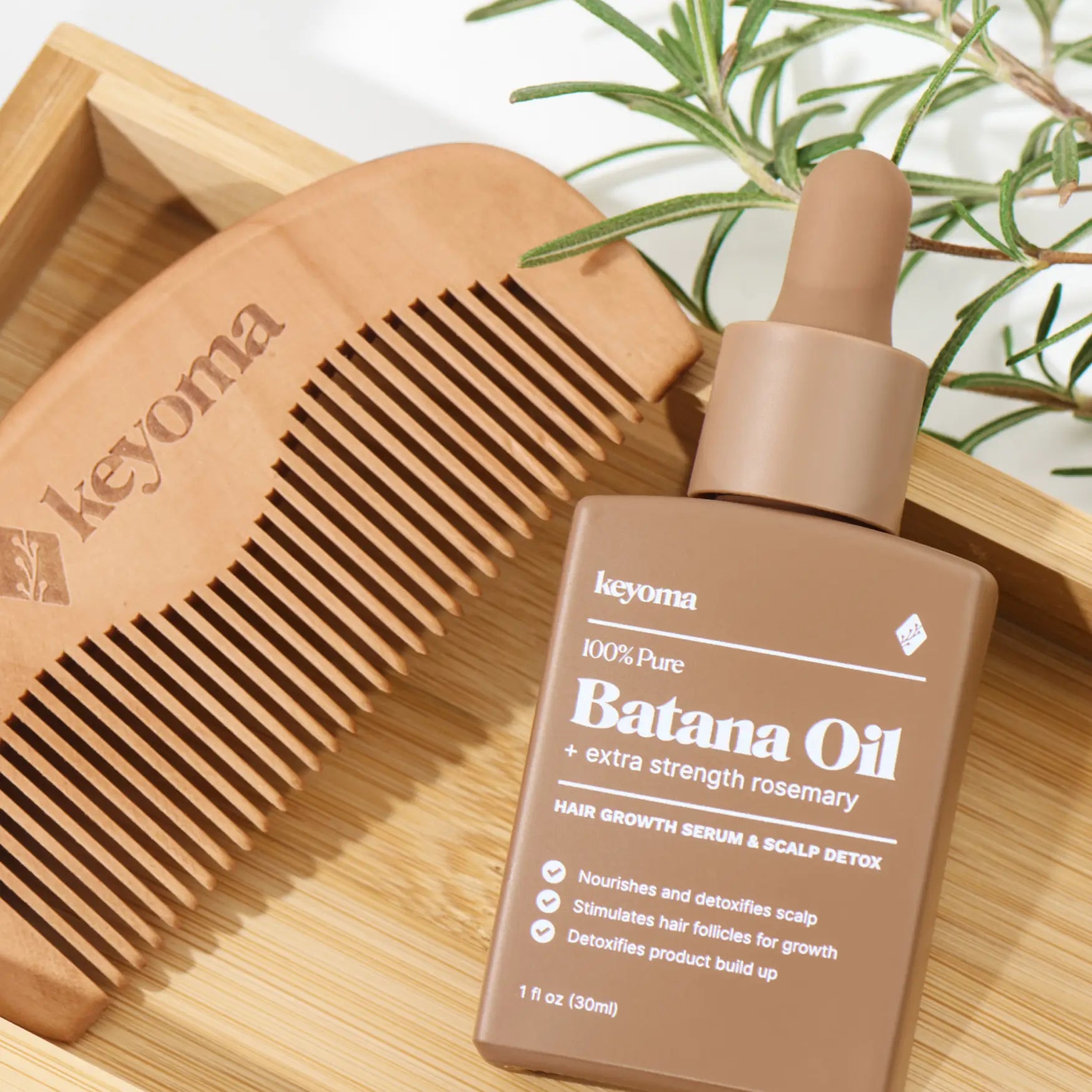
Keyoma’s Batana Oil + Rosemary Serum is a finished Batana-and-rosemary formulation, not a controlled test of pure Batana oil alone. Consider the complete ingredient list, texture, instructions, and your own tolerance. Any softness, scent, scalp feel, or styling effect may reflect the formulation as a whole.
After the next wash and style, assess detangling, softness, root volume, and scalp comfort. Keep the oil only if it improves the result without persistent residue or irritation.
Choose Batana Oil vs. Hemp Seed Oil for Softer Hair
Batana oil is usually the better match for rich conditioning on dry, coarse, curly, or damaged strands. Hemp seed oil is often easier to control on fine, straight, low-density, or buildup-prone hair. Neither deserves a universal “best” label, and neither has strong direct evidence as a topical regrowth treatment.
Choose according to the finish your hair can tolerate, then test a small amount under normal wash and styling conditions. Softer strands, easier detangling, and less breakage are realistic cosmetic goals. Sudden loss, patchy thinning, scalp pain, or persistent inflammation call for a diagnosis rather than another oil.
Featured Product
30% Off + 3 FREE Gifts
100% Pure Batana Oil + Rosemary


