

In this article
Your new bottle of batana oil may not look identical to the last one you purchased. One batch may appear slightly lighter, darker, or warmer under the same lighting.
A modest difference does not automatically mean the formula changed or the product has gone bad. Natural ingredients can show some variation between production batches. However, “natural” does not mean every change should be accepted without question.
The important distinction is whether the bottle remains within Keyoma’s approved product specifications. Color is one clue, but it cannot confirm quality, freshness, safety, or authenticity by itself.
Key Takeaways
-
Natural ingredients can create modest color differences between batches that meet product standards.
-
A different shade alone does not prove the oil has changed or spoiled.
-
Compare bottles under similar conditions before deciding that something is wrong.
-
Contact Keyoma when a new bottle shows a substantial or unexpected difference.
Why Two Keyoma Batches May Not Look Identical

Natural hair oils are not always visually uniform in the way fully synthetic or heavily standardized products can be. Small differences may remain even when the ingredients and intended formula stay the same.
For Keyoma Batana Oil with Rosemary, any acceptable variation must still fall within the specifications established for the finished formula. A bottle should not be considered normal based only on a general statement that natural oils vary.
Raw Materials Have Natural Characteristics
Batana oil comes from plant material. Rosemary oil also comes from a botanical source. Natural ingredients may not begin with exactly the same appearance or aroma every time.
Factors connected to the harvested material and its preparation may influence the final sensory profile. However, the presence of natural ingredients does not explain every unusual color, scent, or texture.
The supplier’s specifications and the finished-product requirements should determine whether a difference is acceptable. A customer should not have to guess based on internet photos or broad descriptions of batana oil.
Approved Processing Can Affect Appearance
Batana oil can look different depending on how it is extracted, processed, filtered, and incorporated into a finished formula. These factors can influence color and aroma without automatically changing the product’s intended use.
However, Keyoma Batana Oil with Rosemary should be assessed as its own formula. A comparison with raw batana butter, cold-pressed oil, or another company’s product does not establish what a Keyoma bottle should look like.
If you want a broader explanation of processing and appearance, Keyoma’s guide to yellow and brown batana oil covers those distinctions. When comparing two Keyoma orders, the relevant standard is Keyoma’s verified range for that product.
Color and Scent Do Not Always Shift Together
A slight color difference does not guarantee that the scent or consistency will also change. In the same way, a stronger natural aroma does not always mean the bottle should look darker.
Judge the full product experience rather than relying on one characteristic. Check the color, scent, dispensing behavior, packaging condition, and batch information together.
For a closer look at normal aroma descriptions and warning signs, read what batana oil smells like.
What Counts as Normal Batana Oil Batch Variation
There is no universal color chart that can tell you whether every batana oil product is within specification. Extraction methods, processing levels, formulas, and added ingredients differ among products.
For that reason, Keyoma’s product records should control the decision. Generic claims such as “all dark oil is pure” or “lighter oil is diluted” are not reliable enough.
Use the following guide to decide whether a difference needs closer review:
|
What You Notice |
How to Respond |
|
A modest difference in shade |
Compare both bottles under the same neutral lighting |
|
A slight difference in natural aroma |
Check the batch details and compare the complete product condition |
|
A dramatic or unexpected color change |
Pause use and contact Keyoma |
|
Sour, stale, chemical-like, or paint-like odor |
Do not treat it as ordinary batch variation |
|
Unusual separation or foreign material |
Stop and request a product review |
|
Damaged seal, leaking bottle, or broken dropper |
Photograph the packaging and contact Keyoma |
|
Burning, swelling, hives, or persistent irritation |
Stop using the product and seek appropriate medical guidance |
Exact acceptable shades, scent descriptions, and consistency ranges should come from Keyoma’s supplier specifications and batch records. They should not be estimated from photos or descriptions found online.
How Keyoma Can Review a Batch Difference
A batch number is more useful than a general description such as “this bottle looks darker.” It connects the product in your hand with the records for the production run.
When a customer reports a difference, Keyoma can review the details supplied with the order and compare them with the information available for that batch. Clear photos also make the review more useful, especially when two bottles are being compared.
The review should consider whether:
-
Both bottles contain the same Keyoma formula
-
The difference falls within the approved product range
-
The packaging and seal arrived intact
-
Other customers reported a similar concern from the same batch
-
The product requires further quality review
This process is more dependable than judging the oil against a social media video, marketplace listing, or image from another brand.
A product should only be described as verified when the conclusion is supported by the relevant records. Appearance alone cannot provide that confirmation.
How to Compare Your New Bottle Properly
Lighting, bottle position, and the amount of oil being viewed can make two bottles appear more different than they are. A quick comparison under inconsistent conditions may create unnecessary concern.
Use this process before deciding that your new bottle has changed:
-
Confirm the formula. Make sure both bottles are Keyoma Batana Oil with Rosemary and not two different products.
-
Use the same lighting. Place both bottles in indirect natural light or under the same neutral indoor light.
-
Set the bottles side by side. Avoid comparing a photograph of an old bottle with a new bottle in person.
-
Check the batch details. Locate the batch or lot information and photograph it clearly.
-
Inspect the packaging. Look for leakage, a broken seal, dropper damage, or material around the bottle opening.
-
Compare more than color. Note the scent, clarity, dispensing behavior, and overall consistency.
-
Document the difference. Take clear photos without filters, flash glare, or colored backgrounds.
Do not heat, refrigerate, dilute, or add fragrance to the oil as a home quality test. These actions can alter the product and make it harder to assess.
If your concern is limited to cloudiness or thickening after exposure to low temperatures, use Keyoma’s separate guide to cold-related hair oil changes.
When to Pause and Contact Keyoma
A subtle difference may fall within the expected range. A large, unexplained change deserves more caution.
Pause before applying the oil when:
-
The new bottle looks substantially different from your previous Keyoma order
-
The scent is sour, stale, musty, or chemical-like
-
The oil contains unexplained foreign material
-
The formula separates in an unfamiliar way
-
The bottle arrived with a damaged or missing seal
-
The dropper touched an unclean surface or may have introduced moisture
-
The product causes burning, swelling, hives, or persistent irritation
A changed appearance combined with an unusual smell or texture carries more weight than color variation alone. Keyoma’s guide to rancid hair oil signs explains how to evaluate that separate concern.
Do not apply questionable oil to your scalp to see what happens. If you experience a severe reaction, facial swelling, trouble breathing, or rapidly worsening symptoms, seek urgent medical care.
What to Include in Your Support Request
A detailed message can help Keyoma assess your concern without several rounds of follow-up questions.
Include:
-
Your order number
-
The batch or lot number
-
The date you received and opened the bottle
-
Clear photos of the bottle and label
-
A photo of the seal and dropper
-
Side-by-side photos if you still have the previous bottle
-
A brief description of the color, scent, or texture difference
-
Details about any damage noticed when the package arrived
Keep the product sealed and unchanged while waiting for guidance. Do not dispose of the bottle unless support instructs you to do so.
Frequently Asked Questions
Can batana oil color vary between batches?
Yes, modest color variation may occur in products made with natural ingredients. The difference still needs to fall within the approved specifications for the specific formula and batch.
Does a darker color mean the batana oil is stronger?
No. Color alone does not measure strength, effectiveness, purity, or freshness. A darker bottle should not be treated as more powerful than a lighter one.
Does a different color mean the Keyoma formula changed?
Not necessarily. Compare the product name, ingredient list, batch information, and complete product condition. Contact Keyoma if the difference is substantial or unexpected.
What should I send Keyoma when reporting a difference?
Send your order number, batch or lot number, clear product photos, packaging photos, and a short explanation of what changed. Include side-by-side images if you still have your previous bottle.
Check Your Keyoma Batch Before Applying It
A slight difference between bottles does not automatically indicate a quality problem. Natural ingredients may create modest variation while the formula remains within its approved range.
Still, no customer should be expected to decide whether a substantial change is acceptable based on color alone. Compare the bottles under similar conditions, check the batch details, and document anything unusual.
If the difference remains concerning, contact Keyoma before applying your Keyoma Batana Oil with Rosemary. A batch-specific review offers more reliable guidance than guessing from appearance.
Featured Product
30% Off + 3 FREE Gifts
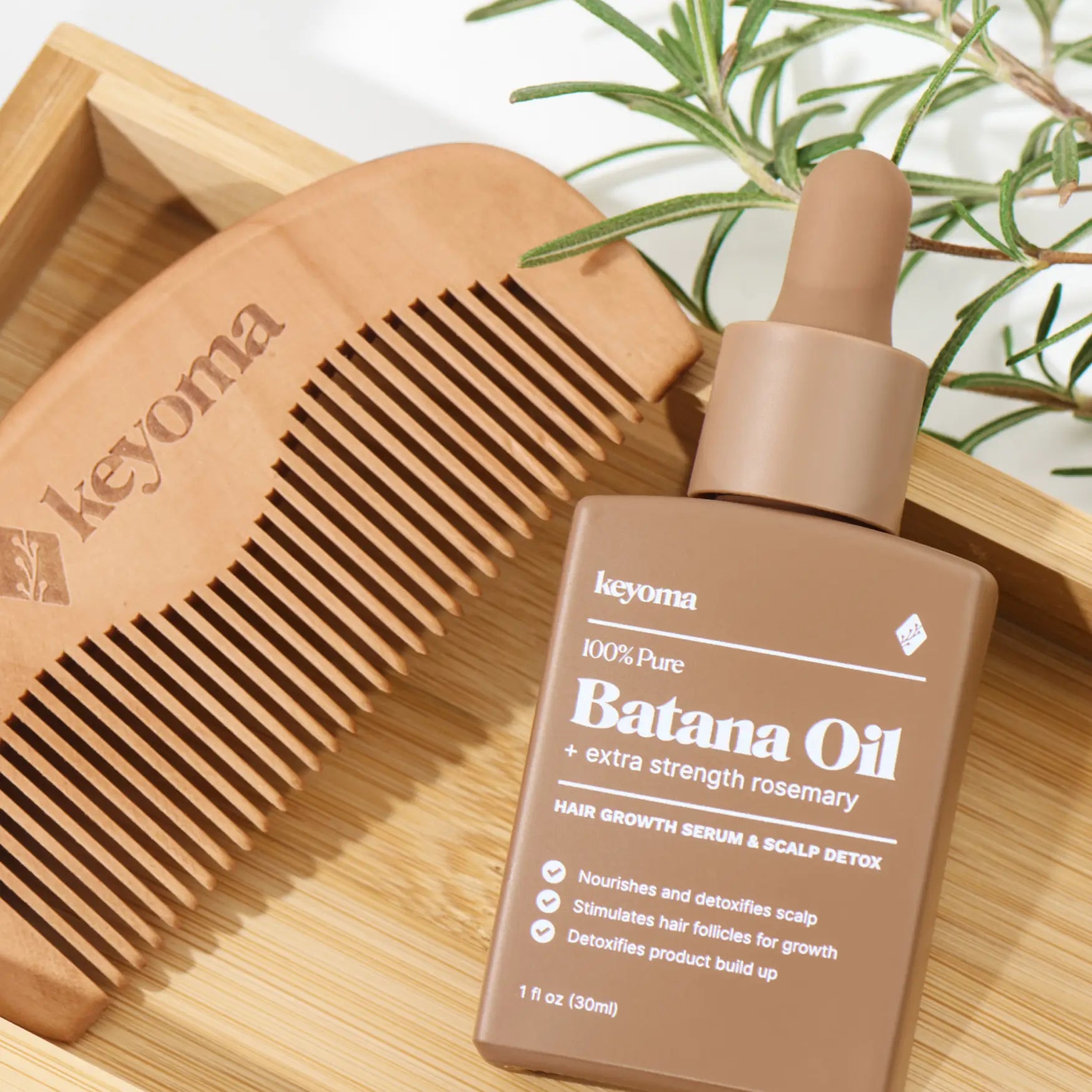
100% Pure Batana Oil + Rosemary


