

In this article
Blue tansy oil has an appealing reputation as a calming botanical, but the evidence for scalp use is still limited. It may help some people feel more comfortable when the scalp is mildly dry or reactive, yet it is not a proven treatment for dandruff, eczema, psoriasis, hair loss, or slow hair growth.
The ingredient is also easy to misuse. Blue tansy is a concentrated essential oil, not a moisturizing oil that should be poured directly onto the scalp. Any benefit depends on the dose, the carrier oil or finished formula, the cause of the irritation, and your individual sensitivity.
A careful approach focuses on realistic benefits, proper identification, low dilution, and a short trial. It also recognizes when an itchy or inflamed scalp needs diagnosis rather than another cosmetic oil.
Key Takeaways
-
Blue tansy may support scalp comfort, but human scalp evidence is weak.
-
Carrier oils often provide most of the softness and moisture.
-
Pure blue tansy essential oil must be diluted before scalp use.
-
Stop using it if burning, redness, or itching increases.
What Is Blue Tansy Oil?
Blue tansy oil is a concentrated aromatic oil distilled from the flowering plant commonly labeled Tanacetum annuum. Chemical studies of the oil have identified compounds such as chamazulene, camphor, sabinene, myrcene, and beta-pinene, although the percentages can vary with the plant source and distillation conditions. A 2023 chemical analysis of blue tansy examined its composition and biological activity in laboratory settings, not on human scalps.
Its deep blue color comes mainly from chamazulene. The plant does not necessarily contain chamazulene in that same finished form before processing. Heat during steam or hydrodistillation converts related plant compounds into chamazulene, which then colors the oil blue. Research on the chemistry and degradation of chamazulene explains how that conversion occurs during distillation.
Blue tansy should not be confused with common tansy, Tanacetum vulgare. They are different plants with different chemical profiles and safety concerns. Check the botanical name on the bottle and look specifically for Tanacetum annuum. A vague label that says only “tansy oil” is not enough information for scalp use.
The format matters just as much as the plant name. Pure blue tansy essential oil is highly concentrated. A serum or scalp oil may contain only a small amount dispersed in fatty oils. Readers comparing essential oils for hair care should treat the essential oil as an active aromatic ingredient, not as the moisturizing base.
A finished formula may also contain fragrance, preservatives, or several other plant extracts. Each added ingredient changes the reaction risk, so judge the whole formula rather than the blue tansy alone.
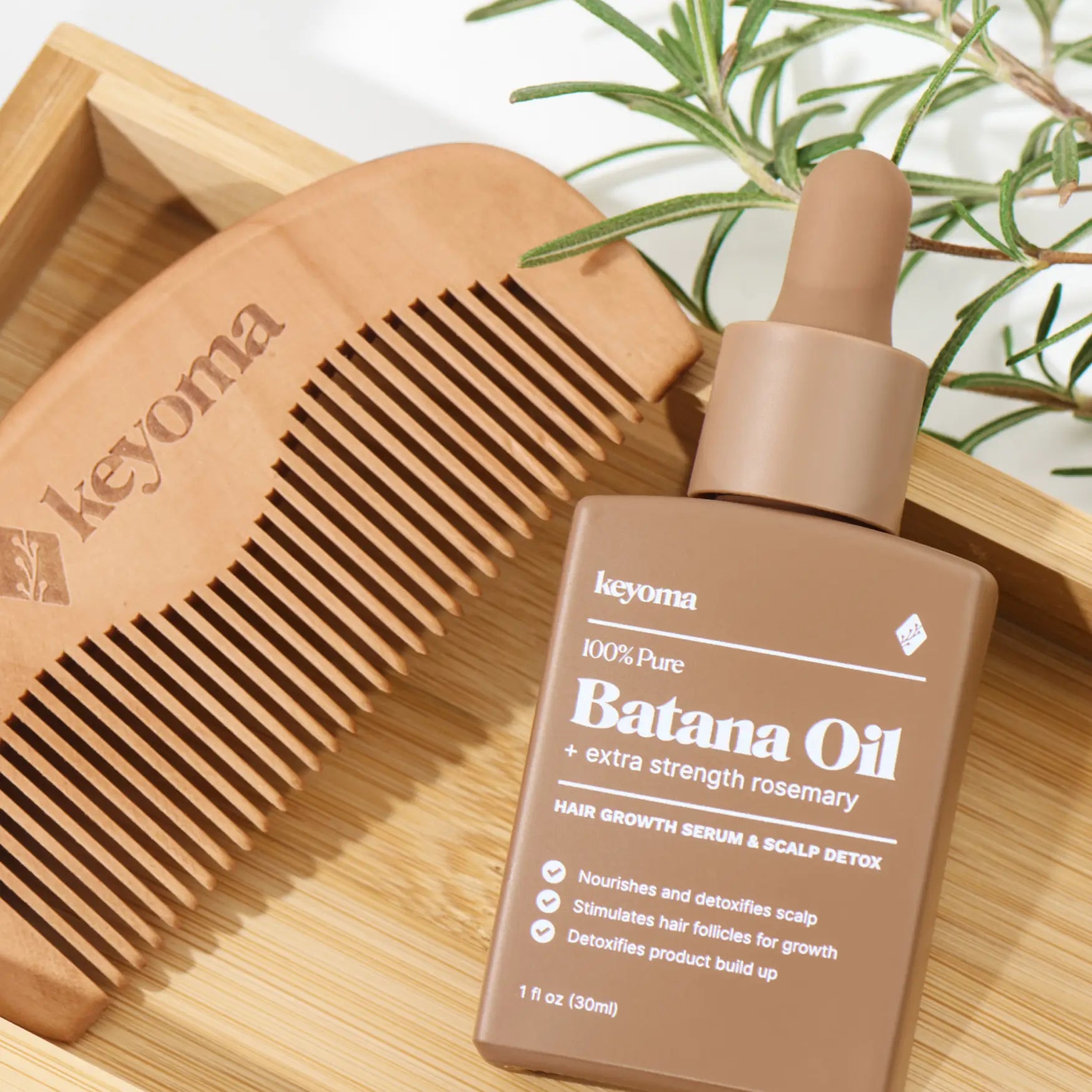
Carrier oils and essential oils play different roles. Batana, jojoba, sunflower, and similar fatty oils can coat hair and reduce moisture loss. Blue tansy and rosemary are volatile essential oils that require much lower concentrations. A formula combining batana oil with rosemary illustrates why the label and dilution matter more than the ingredient list alone.
Benefits of Blue Tansy Oil for Hair and Scalp
Blue tansy oil benefits are often described in broad terms. It is frequently marketed among anti-inflammatory hair oils, but most claims come from traditional use, ingredient chemistry, laboratory work, or finished skin-care formulas. There are no strong human trials showing that blue tansy directly treats a scalp disease or changes the hair-growth cycle.
May Help Calm Mild Scalp Discomfort
Chamazulene has shown anti-inflammatory activity in laboratory research. One PubMed-indexed study on chamazulene found that it could inhibit a pathway involved in inflammatory signaling. That finding supports a plausible calming effect, but it does not prove that diluted blue tansy will treat an inflamed human scalp.
Someone with mild tightness or dryness may find a well-formulated product soothing. The experience could come from the complete blend, including its carrier oils and other ingredients. A scalp that is painful, swollen, crusted, or intensely itchy needs more than a cosmetic calming ingredient.
May Offer Antioxidant Support
Chamazulene has also shown antioxidant activity in experimental models. Antioxidants can help limit oxidation in a formula or interact with free-radical processes, but that does not translate automatically into stronger follicles or faster growth. Hair-growth claims require clinical evidence on people, not only a promising compound profile.
For everyday care, antioxidant language should be read as supportive rather than corrective. Blue tansy may be one useful part of a balanced formula, but it cannot undo bleach damage, permanently repair split ends, or reverse a medical cause of shedding.
Can Complement a Moisturizing Carrier Oil
A dry scalp often feels better after oiling because the fatty carrier oil reduces water loss and adds lubrication. Blue tansy itself is present at a very low percentage in a safe blend, so it cannot provide the same amount of emollient material as the carrier.
That distinction is important when judging results. If flaking and tightness improve after using a blue tansy blend, the base oil may deserve much of the credit. People dealing with a genuinely dry scalp may benefit from a simple, fragrance-light moisturizer or carrier oil even without an essential oil.
May Make Hair Feel Softer and Look Shinier
Hair may feel smoother when an oil coats rough areas of the cuticle and reduces friction. Shine can increase because a more even surface reflects light more consistently. These are mainly properties of the carrier oil and the finished formula rather than proof that blue tansy strengthens the strand from within.
Apply that expectation to frizz and manageability as well. A small amount on the lengths may improve slip, but too much can leave hair heavy or greasy. Blue tansy does not biologically repair damaged hair, and it has no established ability to make follicles thicker.
Is Blue Tansy Oil Good for a Sensitive Scalp?
Blue tansy may suit some sensitive scalps, but “calming” does not mean allergy-proof. Essential oils contain many small fragrance molecules. They can irritate skin directly or trigger allergic contact dermatitis after repeated exposure. A review on contact reactions to essential oils notes that numerous essential oils have been linked to contact allergy, especially when the skin barrier is already compromised.
Sensitive scalp is also a broad description, not a diagnosis. Itching can come from product residue, hair dye, fragrance allergy, seborrheic dermatitis, psoriasis, fungal infection, lice, or another condition. The American Academy of Dermatology’s overview of itchy scalp causes shows why treating every irritated scalp as simple dryness can delay the right care.
Watch the pattern of your symptoms. Fine, dry flakes with tightness may point toward dryness, while greasy scale, a rash, sores, or sharply defined plaques suggest a different problem. A reaction that begins after a new shampoo, dye, fragrance, or oil blend may be contact dermatitis. A practical overview of an itchy scalp can help you organize common causes before adding another product.
When the cause is unclear, simplify your routine for several wash cycles and track any change in symptoms. Adding several new products at once makes the trigger harder to identify.
People prone to reactivity usually do better with shorter ingredient lists and low fragrance exposure. A resource on oils for a sensitive scalp can help compare carrier oils, but even a gentle base cannot guarantee that an added essential oil will agree with your skin.
Skip blue tansy on broken, bleeding, sunburned, or actively inflamed skin. Seek medical advice for persistent burning, thick scale, pus, spreading redness, scalp pain, sudden shedding, or patchy hair loss. Dandruff and seborrheic dermatitis may need targeted shampoos or prescribed treatment rather than more oil. The AAD explains that seborrheic dermatitis treatment often uses specific medicated shampoos chosen for the condition.
How to Use Blue Tansy Oil on Hair and Scalp Safely
Safe use begins with the least complicated option. A professionally formulated product with full directions is usually easier to dose than a bottle of pure essential oil. Add only one new product at a time so you can identify the cause if irritation develops.
Check the Label and Product Format
Look for the botanical name Tanacetum annuum, a complete ingredient list, directions, warnings, and a clear indication of whether the product is pure essential oil or already diluted. Do not assume a blue-colored oil contains authentic blue tansy. Color can vary, and a finished product may include other blue or green ingredients.
Avoid bottles labeled only as fragrance oil, perfume oil, or tansy oil when the species is unclear. Do not ingest the oil. Keep it away from the eyes, mouth, children, and pets. Pregnant or breastfeeding readers, children, and people with complex allergies should ask a qualified health professional before topical essential-oil use.
Dilute Pure Blue Tansy Essential Oil
Never apply pure blue tansy essential oil directly to the scalp. The Tisserand Institute’s essential-oil safety guidance notes that undiluted use raises the risk of adverse reactions and recommends low topical concentrations for general use.
For a beginner or reactive scalp, a conservative 0.5% to 1% dilution is more sensible than a strong DIY blend. At 1% by volume, use 0.1 milliliter of essential oil in 10 milliliters of carrier oil. Drop counts vary by bottle and viscosity, so measured volume or a preformulated product is more dependable.
Use one essential oil rather than stacking blue tansy with tea tree, peppermint, rosemary, and several fragrances. Multiple oils make the total concentration harder to control and make reactions harder to trace. The same basic logic used to dilute rosemary oil for hair applies here, although each essential oil can have its own limits.
Patch Test the Finished Mixture
Test the exact diluted mixture or finished product, not the carrier oil alone. Apply a small amount to a limited area of intact skin, such as behind the ear or on the inner arm, and leave the area otherwise undisturbed. Wait at least 24 to 48 hours before wider use, since some reactions are delayed.
A home spot test can reduce surprises, but it cannot guarantee future tolerance or diagnose an allergy. Medical patch testing uses standardized allergens and delayed readings. DermNet’s explanation of patch testing notes that clinical reactions may be assessed over 48 to 96 hours.
Do not continue testing through burning or a spreading rash. Wash the area gently and stop the product. A method for patch testing hair oil offers a controlled way to introduce one formula at a time.
Use a Small Amount for a Short Contact Time
For a first scalp trial, part the hair and apply a very small amount to one limited area. Leave it on for 15 to 30 minutes, then wash with a gentle shampoo. Avoid an overnight application until you know the formula is comfortable, and do not use it on consecutive days at first.
A pre-wash method limits exposure and makes it easier to remove excess oil. It also lowers the chance of buildup compared with frequent leave-on use. If the lengths need softness, apply the carrier-based formula mainly from mid-lengths to ends rather than saturating the scalp.
Stop immediately if you notice burning, stronger itching, swelling, hives, blistering, or increased redness. Continued use does not help skin “adjust” to an irritant or allergen. Guidance on scalp reactions from essential oil blends can help separate normal oiliness from warning signs that require stopping.
Use Blue Tansy Oil for Hair With Less Irritation
Blue tansy is best viewed as an optional fragrance-rich ingredient with plausible calming properties, not as a scalp treatment. Its chemistry is interesting, but current research does not establish direct benefits for dandruff, scalp disease, hair loss, or hair growth.
Choose the correct botanical species, use a low dilution, test the complete formula, and keep the first application brief. Pay attention to the carrier oil because it may provide most of the softness, shine, and relief from dryness. When symptoms are persistent, painful, or linked with hair loss, get the scalp assessed instead of relying on repeated oil trials.
Choose a gentle oil by matching the formula to the cause of your scalp discomfort. The safest result comes from keeping the formula simple and stopping at the first sign that your scalp does not agree with it.
Featured Product
30% Off + 3 FREE Gifts
100% Pure Batana Oil + Rosemary


