

In this article
Hair growth can feel painfully slow when you check the mirror every day. The change is so gradual that normal progress may look like nothing is happening at all.
For many people, the issue is not that hair has stopped growing. Hair may still be growing from the scalp, while breakage, shedding, or dry ends make the length look stuck. That difference matters because slow-feeling growth, poor length retention, and true hair loss need different responses.
A realistic hair growth timeline can help you judge your progress with less panic. You will see how fast hair usually grows, how the hair growth cycle works, what can slow visible progress, and when a scalp or shedding change deserves a dermatologist’s help.
Key Takeaways
-
Hair growth often feels slow because normal growth is gradual.
-
Breakage can hide new length even when roots are growing.
-
Shedding is normal, but sudden heavy shedding needs attention.
-
Monthly photos are more useful than daily checking.
Why Does Hair Growth Feel Slow?
Hair growth feels slow because small daily changes are hard to see. A strand may grow a tiny amount each day, but your eye usually notices length only after several weeks or months. If you are watching a short haircut grow out, waiting for bangs to blend, or trying to recover from breakage, normal growth can feel even slower.
Visible length also depends on how much hair you keep. Hair can grow at the root and still look the same length if the ends snap, split, or wear away from friction. That is why a person may see dark roots after coloring but still feel like the ends never pass the shoulders.
A better question is not only “Is my hair growing?” Ask whether you are retaining length. If the roots are changing, new growth is likely happening. If the ends feel thin, rough, or uneven, breakage may be hiding your progress. For a deeper comparison, the difference between hair growth or breakage can help you separate scalp growth from lost length.
How Fast Does Hair Grow?
Hair growth is measured in months, not days. Cleveland Clinic says scalp hair grows about 1 centimeter per month during the anagen phase, which is the active growth stage of the hair cycle.
That average is useful, but it is not a promise that every person will see the same length at the same pace. Medical News Today gives a broader average range of about 0.5 to 1.7 centimeters per month, or about 0.2 to 0.7 inches. Genetics, age, health, hormones, and pregnancy can affect that rate.
Normal Monthly Growth
In a normal month, many people gain around one centimeter of scalp hair. That is less than half an inch, so it can disappear visually if your hair curls, shrinks, flips outward, or sits on textured layers.
Curly, coily, and wavy hair may look especially slow because length is not always visible in a straight line. The strand may be longer when stretched, while the everyday shape looks unchanged. Color-treated or heat-styled ends may also break at nearly the same pace as the roots grow, which can make monthly growth harder to notice.
Normal Yearly Growth
Normal hair growth in a year is often around 12 centimeters if you use the 1-centimeter monthly average. That is roughly 4.7 inches. Some people may see less, while others may see closer to 6 inches depending on their natural growth rate and how well they retain the ends.
Yearly progress is easier to judge than weekly progress. A photo taken on the same day each month, in the same lighting, with the same part and hair position, gives a more honest view than daily mirror checks.
What Are the Stages of Hair Growth?
Hair does not grow nonstop forever. Each follicle moves through a cycle, and each hair on your scalp may be in a different stage at the same time. Anagen, catagen, and telogen, with shedding occurring as part of the cycle.
Understanding the stages of hair growth can make slow progress feel less confusing. Some hairs are actively growing. Some are transitioning. Some are resting. Some are ready to shed. That mix is normal, as long as shedding and thinning do not suddenly change.
Anagen: The Growth Stage
Anagen is the growth stage. During this phase, the follicle receives blood supply and nutrients that support the growing strand. Anagen can last two to seven years, which helps explain why some people can grow very long hair while others reach a shorter natural limit.
A longer anagen phase usually allows more potential length. A shorter anagen phase may mean hair sheds and restarts sooner, even if monthly growth speed is normal.
Catagen: The Transition Stage
Catagen is the transition stage. Hair stops actively growing and begins to detach from its blood supply. This stage as lasting about two weeks.
You cannot feel this stage happening. It is a normal pause between active growth and rest, not a sign that something is wrong.
Telogen: The Resting Stage
Telogen is the resting stage. The hair stays in place for a period before shedding. A larger shift into telogen can happen after stress, illness, weight changes, childbirth, or other body changes.
Acute telogen effluvium often appears two to three months after a stressor or body change. In many cases, it improves, but persistent or severe shedding should be checked.
Exogen: The Shedding Stage
Exogen is the shedding stage, when a hair releases from the scalp. Shedding can feel scary because you see the hair after it leaves your head, but some shedding is part of the normal cycle.
The American Academy of Dermatology says it is normal to shed 50 to 100 hairs per day. More significant shedding can happen after stress, losing 20 pounds or more, childbirth, illness, surgery, or stopping some medications.
Is Your Hair Growing Slowly or Breaking Off?
Slow growth and breakage can look almost the same in the mirror. Both can make your hair seem stuck at one length. The difference is where the problem happens. Slow growth starts at the follicle. Breakage happens along the strand or at the ends.
Look at the roots first. If you color your hair and see new root growth, your scalp is producing hair. If your part looks normal and your ponytail density feels stable, the issue may be length retention rather than slow growth. Dry ends, rough texture, uneven pieces, and tiny broken hairs on your shirt can point toward breakage.
Daily friction can make the problem worse. Tight elastics, rough towels, harsh brushing, and sleeping on abrasive fabric can weaken the hair shaft over time. If your ends snag often, a hair friction damage routine may matter more than chasing faster growth.
Sudden thinning is different. A widening part, patchy loss, scalp pain, scaling, redness, or heavy shedding is not just a length-retention issue. Mayo Clinic lists heredity, hormonal changes, medical conditions, aging, and other factors among common causes of hair loss.
What Causes Slow Hair Growth?
Slow hair growth causes can be biological, lifestyle-related, or damage-related. Sometimes the follicle is growing at a normal pace, but the strand is not surviving long enough to show length. Other times, health changes can affect shedding, density, or the growth cycle.
A single bad hair day does not mean you have a growth problem. Patterns matter more than one week of shedding or one month of no visible length. Watch for changes that continue, feel sudden, or come with scalp symptoms.
Genetics and Age
Genetics influence growth rate, density, strand thickness, and how long the anagen phase lasts. They also affect whether you are prone to pattern hair loss. Aging can make hair feel slower because strands may become finer, density may change, and breakage may show more easily.
If you notice thinning even without a clear family history, do not dismiss it. Hair loss can still happen due to hormones, health conditions, stress, or other triggers. A broader look at hair loss with no family history can help you decide what signs are worth tracking.
Stress or Illness
Stress and illness can shift more hairs into the resting phase. The shedding may not appear right away, which makes the timing confusing. A stressful event in January can show up as shedding in March or April.
Temporary shedding can recover, but the emotional side is real. Seeing hair in the drain can make you check more often, which can make the problem feel larger. If shedding is sudden, heavy, or lasts several months, a dermatologist can check whether telogen effluvium, pattern loss, a scalp condition, or another issue is involved.
Low Nutrients
Hair growth needs enough energy, protein, and key nutrients. Low protein intake, restrictive dieting, iron concerns, or other deficiencies can affect hair quality and shedding for some people.
A balanced diet for healthy hair and advises speaking with a healthcare provider before starting or adding supplements. That matters because random vitamins are not a guaranteed fix, and too much of certain nutrients can cause problems.
Hormone Changes
Hormone shifts can affect shedding, density, and the growth cycle. Postpartum changes, thyroid problems, menopause, and androgen-related hair loss can all change how hair looks and behaves.
Hormone-related changes often show as shedding, thinning at the part, or changes around the hairline rather than simple slow length. If the change is sudden or progressive, a medical evaluation is more useful than adding more products.
Heat and Chemical Damage
Heat tools, bleach, relaxers, permanent color, and harsh chemical services can weaken the strand. The scalp may keep growing hair, but damaged ends may snap before you see length.
Damage is not always obvious at first. Hair may still look styled and smooth, while the ends become less elastic and more prone to splitting. If heat tools are part of your routine, comparing heat brush vs blow dryer habits can help you reduce stress on the hair shaft.
Scalp Problems
A healthy scalp supports a better environment for hair. Itching, redness, scaling, pain, bumps, or persistent flaking can signal irritation or a scalp condition that needs proper care.
Scalp problems should not be covered up with heavy oils or styling products if symptoms are active. A dermatologist can identify whether dandruff, seborrheic dermatitis, psoriasis, infection, alopecia areata, or another concern is involved. The AAD lists several causes of hair loss, including autoimmune disease, scalp psoriasis, infection, hormonal changes, and tight hairstyles.
How to Support Healthy Hair Growth
Healthy hair growth support is not about forcing your scalp to grow several inches in a few weeks. Biology sets the pace. Your routine can still help by reducing breakage, supporting scalp comfort, and making the ends less likely to snap.
The best approach is usually simple and steady. Feed your body well, handle hair gently, protect the ends, and track progress in a way that shows real change.
Eat Enough Protein and Nutrients
Hair is made largely of protein, so very low protein intake can affect hair quality. Meals that include enough protein, healthy fats, and micronutrient-rich foods give your body better support for normal growth.
Supplements should be based on need, not panic. If you suspect a deficiency, ask a healthcare provider about testing before adding iron, vitamin D, biotin, or other supplements. A targeted fix is safer than guessing.
Be Gentle With Wet Hair
Wet hair is more vulnerable to stretching and snapping. The AAD recommends using a wide-tooth comb on wet hair and detangling from the ends upward, especially for hair that tangles easily.
Start with the bottom few inches, then move higher as knots release. Pulling from the roots through a tangle can tighten knots and cause more breakage. I notice fewer snapped ends when detangling is slow, sectioned, and done before styling.
Apply and Massage Batana Oil
Batana oil can be used as a supportive hair oil for softness, scalp massage, and dry ends. It should not be framed as a shortcut that makes hair grow faster than your natural biology allows.
For scalp massage, use a small amount and keep pressure gentle. The goal is comfort and even application, not aggressive rubbing. For dry ends, a light layer of pure batana oil may help reduce snagging and make the hair feel smoother before washing or styling.
Reduce Heat and Bleach
Heat and bleach can make hair more fragile, especially when used often. Lower heat settings, heat protectant, fewer passes, and longer breaks between chemical services can reduce damage.
Small changes add up. Let hair air-dry partway before blow-drying. Avoid flat ironing the same section several times. Space out color services when possible. A routine that protects the strand helps your natural growth become more visible.
Protect the Ends
The ends are the oldest part of your hair. They have been exposed to brushing, washing, weather, styling, and friction longer than the roots, so they need more protection.
Use gentle detangling, soft hair ties, loose styles, and a smooth pillowcase when possible. If your ends feel dry or rough, a hair oil for dry ends can support softness and reduce snagging. Oil cannot permanently repair split ends, but it can make fragile ends easier to manage.
Track Growth Monthly
Daily checking makes normal growth feel invisible. Monthly tracking gives your hair enough time to show change.
Take photos in the same light, with the same shirt, part, and angle. Stretch one small section if your hair shrinks, but avoid pulling hard. Keep notes on shedding, breakage, scalp symptoms, heat use, trims, and major stressors. Over time, the pattern becomes easier to read.
Track Why Does Hair Growth Feel Slow With Clearer Progress
Hair growth often feels slow because normal growth is measured in small monthly changes. A slow mirror result does not always mean your follicles have stopped working.
Focus on the difference between root growth, breakage, shedding, and thinning. Roots show whether growth is happening. Ends show whether you are keeping length. Shedding patterns and scalp symptoms show whether the issue may need medical help.
Featured Product
30% Off + 3 FREE Gifts
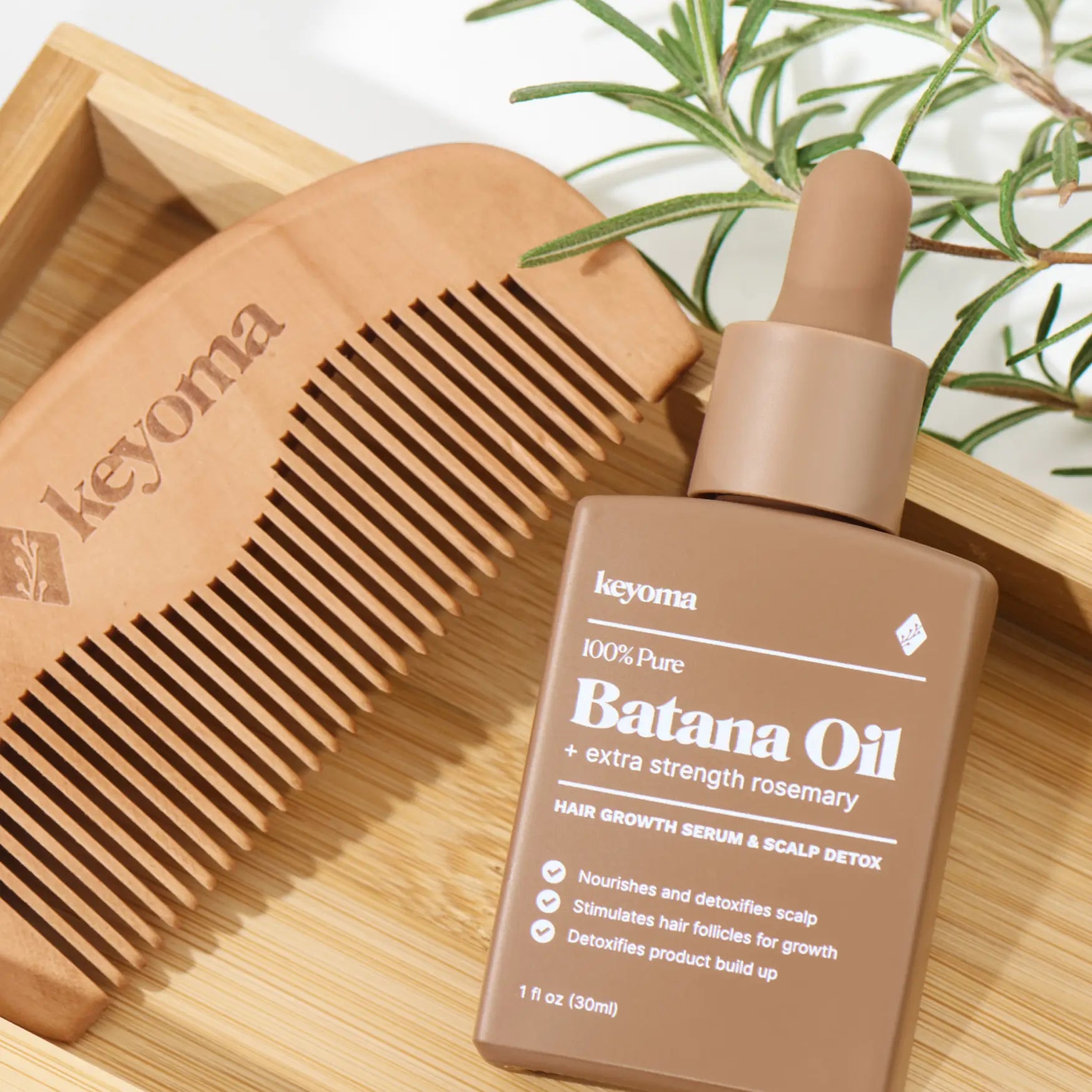
100% Pure Batana Oil + Rosemary


