

In this article
Batana oil is usually the richer choice, especially for thick, coarse, curly, coily, very dry, or rough-feeling hair. Grapeseed oil is usually the lighter choice, making it easier to control on fine strands, oily roots with dry ends, or hair that quickly looks flat after oiling.
Neither oil is better for everyone. Your best match depends on strand diameter, density, texture, dryness, damage, application amount, and whether you plan to rinse the oil out or leave a small amount on the hair.
Both oils mainly work as surface conditioners. They can add slip, reduce friction, smooth roughness, and help slow moisture loss, but they do not add water to the strand. They also cannot rebuild broken bonds, fuse split ends, or reverse permanent structural damage.
Key Takeaways
-
Choose batana oil for richer conditioning on thick, coarse, curly, coily, or very dry hair.
-
Choose grapeseed oil for a lighter finish on fine hair, dry ends, or frequent use.
-
Apply either oil sparingly because too much can create residue and reduce volume.
-
Treat both oils as cosmetic conditioners, not remedies for hair loss or scalp disease.
What’s the Difference Between Batana and Grapeseed Oil?
Batana and grapeseed oil can both make hair feel smoother, but they suit different routines. Batana tends to create a richer coating that works well as a pre-wash or mask-style treatment. Grapeseed oil generally spreads in a thinner layer, so a small amount can be easier to use for shine, flyaways, or dry ends.
The words richer and lighter are relative. Refining, extraction, added ingredients, and application amount can change how either oil feels.
|
Comparison Point |
Batana Oil |
Grapeseed Oil |
|
Oil weight |
Usually richer and more coating |
Usually lighter and easier to spread thinly |
|
Finish |
Softer, more conditioned, potentially heavier |
Smoother, shinier, usually less dense |
|
Best use case |
Pre-wash treatment or intensive lengths treatment |
Light leave-in smoothing or frequent end care |
|
Suitable hair types |
Thick, coarse, curly, coily, very dry |
Fine, straight, wavy, or easily weighed-down |
|
Typical application |
Small amount through mid-lengths and ends, often rinsed out |
Very small amount on ends, flyaways, or lower lengths |
|
Washability |
May need more thorough shampooing |
Often easier to remove, though excess still feels greasy |
|
Scent |
Unrefined forms may smell nutty or roasted |
Often mild or neutral, depending on processing |
|
Color |
Unrefined forms may be dark orange-brown |
Usually pale yellow to light green |
|
Main limitation |
Can flatten fine hair or leave residue |
May not feel rich enough for very dry or coarse lengths |
|
Evidence level |
Limited ingredient-specific human hair research |
Laboratory hair-sample research exists, but not a clinical trial |
Source and Processing
Batana oil comes from the kernels of the American oil palm, Elaeis oleifera. Traditional processing may involve boiling the fruit, drying and cracking the nuts, then heating the kernels to release the oil. Refined versions can look, smell, and feel different from traditionally processed or unrefined versions. A closer look at what batana oil is made from can help you understand why products sold under the same ingredient name vary so much.
Formula Botanica’s overview of batana oil describes unrefined batana as red-orange with a noticeable nutty aroma and also notes the lack of conclusive clinical evidence for its promoted hair-growth effects. Grapeseed oil is pressed or otherwise extracted from grape seeds, a byproduct of winemaking. Cold-pressed, refined, and solvent-extracted versions may differ in scent, color, stability, and sensory finish.
Texture, Weight, and Finish
Batana oil usually sits on the richer side of the lightweight vs heavy hair oil spectrum. It can form a more noticeable coating, which may improve softness and slip on rough lengths. That same coating can reduce movement or volume when used heavily on fine, straight, or low-density hair.
Grapeseed oil is commonly described as lighter and less coating. An evidence review of grapeseed oil also treats its lightweight feel as a practical feature while stressing that broad hair-benefit claims lack strong clinical evidence. The difference between dry oil and regular hair oil is useful here because “dry” describes finish, not the absence of oil.
Scent, Color, and Ease of Washing
Unrefined batana may have a deeper brown or orange tone and a stronger roasted, earthy, or nutty scent. Refined batana or a finished serum may be paler, milder, and more fluid. Do not use one product’s texture to define every form of batana oil.
Grapeseed oil often has a lighter color and milder scent. It may rinse away more easily when used sparingly, while batana may need a pre-wash approach or more thorough shampooing. Either oil can look greasy when overapplied.
Best Hair Types and Routine Uses
Hair type should guide the method rather than act as a strict rule. The American Academy of Dermatology’s healthy-hair guidance recommends choosing care based on characteristics such as fine, coarse, straight, curly, or thick hair. It also advises applying conditioning products mainly to the ends when hair is fine or straight.
Fine hair refers to strand diameter, not the number of hairs on your scalp. Fine hair can be dense, while thick-looking hair can still contain fine individual strands. The distinction between fine hair and thin hair helps prevent choosing an oil based only on overall volume.
Batana often suits thicker or drier lengths, while grapeseed may suit fine hair or frequent touch-ups.
When Is Batana Oil the Better Choice?

Batana oil makes the most sense when your priority is richer conditioning, not the lightest possible finish. It can be useful when the lower lengths feel coarse, dull, rough, or difficult to detangle, especially when you plan to wash it out afterward.
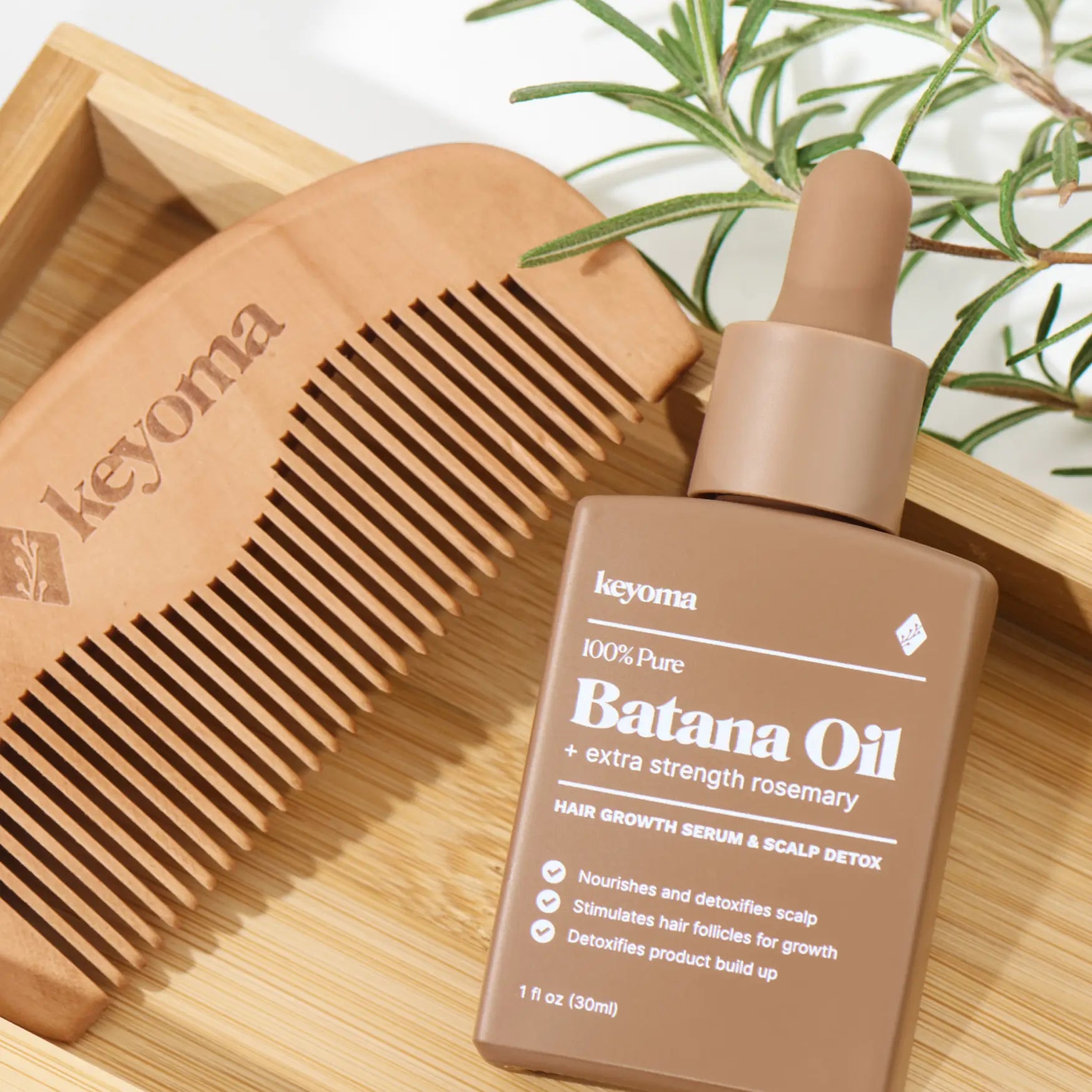
Product format still changes the experience. The Keyoma Batana Oil and Rosemary Serum contains both batana oil and rosemary oil. It is not a bottle of plain batana oil, so its feel should not be used to define every pure, raw, refined, or unrefined batana product.
Choose batana if: your hair tolerates richer products, your lengths feel very dry or coarse, you prefer pre-wash treatments, and you do not mind more thorough cleansing.
Thick, Coarse, Curly, or Coily Hair
Thick, coarse, curly, and coily hair often benefits from more lubrication because bends, curls, and grooming can increase friction between strands. A review of hair oils and their cosmetic uses describes oiling as a way to increase slip, smooth the cuticle surface, and reduce friction during grooming.
Batana’s richer feel may make detangling easier and help dry curls look more defined and polished. Apply it where roughness is greatest rather than automatically coating the scalp. Hair density and porosity still matter, so coarse hair may need more than fine curly hair.
Very Dry or Rough-Feeling Lengths
Dry lengths often feel better when a conditioning film reduces surface roughness and slows water loss. Batana can make those strands feel softer, smoother, and less rigid. The effect is cosmetic but still useful, especially when hair catches during combing or looks dull after washing.
Oils do not replace water-based conditioning. Apply batana after a moisturizing wash routine or use it before shampooing to reduce friction during cleansing. The goal is to support the hair’s feel and manageability, not to “hydrate” a dry strand with oil alone.
Pre-Wash and Mask-Style Treatments
A pre-wash method is usually the safest place to test a richer oil. Spread a small amount through the driest parts of the mid-lengths and ends, leave it on only as long as your scalp and hair tolerate, then shampoo thoroughly. A defined contact time is less important than how easily the oil cleanses away.
This method avoids a heavy all-day finish. If hair still feels coated after drying, reduce the amount before changing the routine.
When Batana Oil May Feel Too Heavy
Batana may be too rich when hair loses volume, separates into oily sections, attracts buildup, or needs repeated shampooing to feel clean. Fine strands and oily roots tend to show these effects sooner, but overapplication can overwhelm any hair type.
Review the amount before deciding the oil itself is unsuitable. Guidance on how much batana oil to use can help you scale back by hair length and density. Persistent residue may also mean a formulated serum, lighter blend, or ends-only method fits better than unrefined batana.
When Is Grapeseed Oil the Better Choice?

Grapeseed oil is often the more practical option when you want light smoothing, controlled shine, or an oil that fits between washes. It is especially useful when richer products leave the hair flat, stringy, or difficult to restyle.
A small amount can be spread over a wider area, which makes grapeseed oil easier to control on fine hair. For detailed uses and safety guidance beyond this comparison, see the complete guide to grapeseed oil for hair.
Choose grapeseed if: your strands are fine, your roots become oily quickly, you want a small leave-in amount, or you prefer easier washability.
Fine or Easily Weighed-Down Hair
Grapeseed oil for fine hair works best when the amount stays very small and away from the roots. Fine strands have less diameter, so a visible oil film can quickly reduce lift and movement. Start at the ends, rub the oil between your palms, then lightly skim what remains over flyaways.
Do not confuse fine hair with low density or thinning. Judge the result by movement, softness, and cleanliness rather than the label alone.
Light Leave-In Smoothing
Grapeseed oil can work as a finishing oil when you want to soften dry ends or reduce the look of flyaways. Apply it after styling, not as a substitute for conditioner or heat protection. A small amount can add shine without creating the dense finish associated with richer oils.
Leave-in success depends more on dose than ingredient reputation. Once oil is visible as a wet film, you have probably gone beyond what fine hair needs. Blotting with a clean towel may help, but washing is often the most reliable fix for a large overapplication.
Oily Roots With Dry Ends
Mixed needs are common. Your scalp may produce enough oil while the lower lengths remain dry from age, washing, heat, color, or friction. In that case, place grapeseed only on the ends and leave the roots untreated.
The same placement principle applies to batana, though grapeseed may be easier to keep subtle. A routine for an oily scalp with dry ends should separate scalp cleansing from length conditioning instead of forcing one product over the entire head.
When Grapeseed Oil May Not Feel Rich Enough
Very coarse, highly weathered, bleached, or tightly coiled hair may absorb a small amount of grapeseed oil without feeling much softer. The oil can still add shine, but it may not create enough slip for detangling or enough coating for a longer pre-wash treatment.
Increase the amount cautiously, switch to batana for wash-out use, or layer grapeseed over a water-based leave-in. Repeatedly adding light oil can eventually create as much residue as one heavy application, so “lighter” does not mean impossible to overuse.
Batana vs Grapeseed Oil for Common Hair Goals

The better oil changes with the job. Batana tends to suit intensive conditioning, while grapeseed fits lighter maintenance. Damage level alone does not decide the answer because heavily damaged fine hair may still become limp under a rich coating.
For Dryness and Softness
Batana usually creates a softer, more cushioned feel on very dry or coarse lengths. Grapeseed may provide enough smoothness for mild dryness, especially when hair is fine or becomes greasy easily.
For both oils, softness comes mainly from surface lubrication and reduced friction. Neither oil supplies water. Pair oil with a suitable conditioner, then use the oil to help the hair retain a smoother feel between washes.
For Frizz and Shine
Grapeseed is often easier for targeted shine because it can be spread thinly across the surface. Batana may give stronger smoothing on coarse frizz, but the finish can look heavy if the amount is not carefully controlled.
Frizz can come from humidity, curl pattern, damage, or styling habits. Oil may reduce roughness, but it will not change natural structure. A hair porosity guide can help explain why some strands collect residue while others still feel rough.
For Damaged or Breakage-Prone Hair
Batana oil for damaged hair may make rough strands feel more flexible and less abrasive during handling. Grapeseed may be preferable when damaged hair is fine, because a lighter coating can add slip without sacrificing as much volume. Review the signs of damaged hair before assuming that dryness, frizz, or low volume all require the heaviest oil.
Hair fiber cannot biologically rebuild itself once it is damaged because the visible strand is made of dead cells. A review of hair-care physicochemistry explains that cosmetic treatments can improve feel and reduce further wear, but they do not restore the strand as living tissue would. Oils may temporarily smooth split areas and reduce friction, but they cannot fuse a split end or rebuild broken internal bonds.
A 2023 laboratory study indexed in PubMed applied grapeseed, safflower, and rosehip oils to natural, dyed, and damaged hair samples. Researchers measured gloss, color, elasticity, breaking behavior, and fracture appearance, with grapeseed performing well across several tests. These were treated hair samples, not people using grapeseed oil in a clinical trial, so the findings do not prove permanent repair.
For Scalp Application
Neither oil should be presented as a treatment for dandruff, inflammation, hair loss, or another scalp condition. If the scalp feels comfortable and healthy, you can test a small amount, but scalp application is optional. Length-only use is often more predictable.
Before wider skin or scalp use, follow a careful hair oil patch test. The AAD’s product-testing advice recommends testing a product on a small skin area and stopping if redness, itching, or swelling develops.
Skip scalp oiling and seek suitable professional guidance for persistent itching, sores, painful bumps, heavy scaling, burning, or unexplained hair loss. Research has also raised concern that scalp oils may worsen seborrheic dermatitis in some patients, even though oils can reduce fiber friction on tightly coiled hair.
For Frequent Hair Oiling
Grapeseed often fits more frequent use because a thin layer is easier to control and wash out. Batana may work better as an occasional richer treatment. There is no universal schedule because washing habits, climate, styling, density, and oil amount all affect buildup.
Use the hair’s response to set your hair oiling frequency. Reduce use when hair looks flat, sticky, or difficult to cleanse. Even a light oil can accumulate between washes.
Can You Use Batana and Grapeseed Oil?
Yes. Mixing can soften the sensory weight of a batana-based blend while keeping more richness than grapeseed alone. It may suit someone who finds pure batana too coating but finds grapeseed too light for dry ends.
There is no evidence-based universal mixing ratio. Make a tiny test blend instead of preparing a full bottle. Keep the batch simple, use clean tools, and change only one variable at a time. That makes it easier to tell whether heaviness came from the batana proportion, total amount, placement, or contact time.
Apply the test to one small section of the lower lengths first. Compare softness, movement, residue, and washability after your normal cleansing routine. If the blend still feels heavy, lower the total dose before removing batana completely. Guidance on hair oil overuse can help you identify buildup before adding another product.
Choose Batana Oil vs Grapeseed Oil for Softer Hair
Use this decision flow to make the choice:
-
Check strand weight: choose grapeseed for fine or easily flattened strands, and consider batana for coarse or substantial strands.
-
Rate dryness: choose batana for very dry, rough lengths, or grapeseed for mild dryness and targeted ends.
-
Choose the finish: use grapeseed for light shine and movement, or batana for a richer conditioned feel.
-
Pick the treatment type: use batana for pre-wash or mask-style care, and grapeseed for a minimal leave-in application.
-
Consider washability: choose grapeseed when easy cleansing matters, or batana when you are comfortable shampooing more thoroughly.
-
Match the frequency: use a lighter oil when applying more often, and reserve richer treatments for when your hair actually needs them.
The best result comes from the smallest amount that gives enough softness and slip. Choose by how your hair behaves after application and washing, not by claims that one oil works for every texture or concern.
Featured Product
30% Off + 3 FREE Gifts
100% Pure Batana Oil + Rosemary


