

In this article
You can use hair oil under a wig, but it should not be automatic. Apply it only when your natural hair or a specific scalp area needs extra lubrication. A controlled amount may soften dry strands. Too much can soak the cap, make the wig shift, trap residue, and worsen discomfort.
First identify the actual problem. Dry braid ends, sweat, band pressure, and burning near adhesive need different responses. Oil may help dry hair, but it will not remove sweat, correct a tight fit, or calm an adhesive reaction.
Your wig setup should also guide the routine. A removable glueless wig gives you regular access to inspect and clean your scalp. A longer-wear or adhesive installation limits access, so every product needs to be applied more conservatively.
Key Takeaways
-
Oil only the hair or scalp areas that genuinely feel dry.
-
Add water-based moisture before oiling dry natural hair.
-
Keep oil away from adhesives, grips, clips, and sore skin.
-
Clean sweat and buildup instead of covering them with oil.
Should You Put Hair Oil Under a Wig?
Hair oil can help when the natural hair feels dry, rough, or prone to tangling. It coats the strand, improves slip, and may slow moisture loss. It does not add water. When the hair feels dry, use a suitable water-based leave-in first, then apply a thin layer of oil to the lengths or ends.
Scalp oiling is a separate decision. Dermatologist Shilpi Khetarpal, MD, notes that oiling may suit some dry, coarse, or tightly curled hair, while fine hair and dandruff-prone scalps may feel weighed down or irritated. Her Cleveland Clinic guidance on hair oiling recommends starting with a small amount.
Placement matters more than a fixed schedule. Scalp oiling and hair-length oiling solve different problems. Dry ends may benefit from oil while a hot, itchy, or coated scalp may need cleansing or less friction.
Find Out What Actually Feels Dry or Uncomfortable
Itching under a wig does not always mean the scalp lacks oil. Sweat, old products, glue residue, rough cap material, tight braids, clips, combs, and bands can create similar sensations. Inspect the area before choosing a product.
The American Academy of Dermatology recommends matching cleansing frequency to scalp oiliness and shampooing mainly at the scalp to remove oil and residue. Its healthy hair-care recommendations also support placing conditioning products where the hair needs them.
|
Problem |
Likely Area Involved |
May Oil Help? |
Where to Apply It |
When Oil May Make It Worse |
|
Dry braid ends |
Natural hair |
Yes, lightly |
Ends and exposed dry sections |
Braids already feel coated |
|
Dry-feeling scalp |
Scalp skin |
Sometimes |
A few clean, exposed parts |
Redness, residue, or greasy flakes are present |
|
Oily scalp |
Scalp skin |
Usually not |
Do not add oil |
The scalp already feels slick or heavy |
|
Itching after sweating |
Scalp and cap |
Usually not |
Clean and dry first |
Sweat remains trapped beneath product |
|
Tenderness near clips |
Pressure point |
No |
Do not oil the area |
Slipperiness allows more rubbing |
|
Burning near adhesive |
Hairline skin |
No |
Keep products away |
Oil spreads residue or disrupts hold |
|
Flakes mixed with residue |
Scalp and base style |
Usually not |
Clean before reassessing |
Another layer makes buildup harder to remove |
When flakes appear, check whether they are loose and dry or mixed into an oily coating. The difference between dandruff and a dry scalp matters because oil may worsen buildup. Persistent rash, swelling, pain, or heavy flaking deserves professional assessment.
Do You Actually Need Oil Under Your Wig?
-
Hair feels dry but scalp feels normal: moisturize and lightly oil the natural hair.
-
A clean scalp area feels dry without redness: consider minimal targeted application.
-
Scalp feels sweaty, oily, or coated: cleanse instead.
-
Hairline feels sore or pulled: loosen or change the setup.
-
Skin burns near adhesive: stop exposure and inspect the area.
Match Your Oiling Routine to the Type of Wig You Wear

Access and attachment determine how easily you can correct overapplication. A routine that works under a wig removed every night may leave a longer-wear installation greasy, unstable, and difficult to clean.
Removable or Glueless Wigs
Remove the wig before oiling so you can see the base style. Check the scalp, braid ends, and attachment points with clean fingers. Apply oil after removal or well before the next wear period, then blot excess before replacing the wig. Daily access also helps reveal shifting bands, tight braids, or a cap that needs washing.
Wigs Worn With a Cap, Band, or Grip
A well-fitting cap or liner may reduce rubbing and absorb sweat. Breastcancer.org notes that a wig cap can absorb sweat and protect the scalp from irritation. A rough seam or tight edge can still create pressure. Clean or replace caps as directed, and keep oil light where a grip or band sits.
Adhesive and Longer-Wear Installations
Use the least product possible when the wig stays attached for several days. Excess oil is difficult to remove without disturbing the installation, so do not force it through lace or cap material. Keep oil away from the adhesive perimeter unless the manufacturer confirms compatibility because it may reduce hold or complicate removal.
How to Prepare, Apply, and Manage Hair Oil Under a Wig

Use a controlled, area-specific method. Work on clean, visible sections whenever possible. The natural hair beneath the wig is the main application target, not the wig fibers.
Start With Clean Hair and Scalp
Fresh oil layered over sweat, sebum, adhesive residue, and older products can create a sticky coating. Begin with clean hair and scalp whenever possible. The AAD also recommends starting protective styles on clean hair in its advice for preventing weave and extension damage. Wash according to scalp oiliness, sweat, product use, and access rather than using oil to delay cleansing.
Let Hair Dry Before Covering
Do not place a wig over soaking-wet hair. Dampness trapped beneath braids, a cap, and a wig can feel hot and uncomfortable. After washing or moisturizing, let the scalp and thicker sections dry fully before reinstalling the wig.
Add Moisture if Needed
Dry hair often needs water-based moisture before oil. Apply leave-in conditioner or moisturizer to dry lengths and ends, then add a light oil layer to reduce friction or slow moisture loss. Do not keep adding oil when the hair still feels brittle.
Use a Small Amount
Place a minimal amount on clean fingertips, rub the fingers together, and touch only the dry sections. Your fingertips should feel lightly conditioned rather than wet.
A universal drop count does not work because formulas, hair density, braid size, and dryness differ. Apply less than you think you need, then reassess.
Focus on Hair and Ends
When the hair feels dry but the scalp is comfortable, keep oil on exposed lengths, braid ends, or sections that rub together. The same low-buildup approach used for applying batana oil to braids works under a wig: target dry natural hair and stop once it feels flexible.
Apply to Scalp Only if Needed
Part the accessible hair and touch a trace of product to selected dry scalp areas. The skin should not look wet or leave a heavy film.
Skip scalp oil when the area feels hot, sweaty, oily, tender, inflamed, or coated. Repeated itching after one product is a reason to stop it.
Keep Oil Away From Attachment Areas
Leave a clean buffer around tape, glue, lace adhesive, wig grips, and other securing surfaces. This reduces transfer and helps preserve the intended hold.
Oil can increase shifting even when it does not visibly dissolve adhesive. Extra movement may create more rubbing along the hairline.
Remove Excess Before Wearing
Let the product settle briefly, then press a clean tissue against the treated section. A clear oily mark means the application was too heavy.
Blot the area and wait again before putting the wig on. This transfer test is more useful than following a fixed number of drops.
Avoid Adhesive Areas
Do not apply oil over or directly beside irritated adhesive skin. Burning does not mean the glue is working correctly. Stop exposure and follow the adhesive’s removal instructions.
A visible rash, swelling, blisters, or persistent burning may indicate irritation or contact dermatitis and may require professional care.
Avoid Clips, Combs, and Tight Bands
Oil cannot correct a painful clip, comb, elastic, or band. Added slip may let the attachment move and rub a wider area.
Reposition or loosen the attachment, add an appropriate soft barrier, or choose another securing method. A wig should not cause headaches or persistent tenderness.
Avoid Irritated or Broken Skin
Do not apply cosmetic oil to cuts, sores, inflamed bumps, blisters, or broken skin. Pause the wig or attachment method when possible so the area can be inspected.
Seek medical guidance for spreading redness, pus, bleeding, fever, significant pain, or irritation that continues after the suspected trigger is removed.
Don’t Oil the Entire Scalp Without a Reason
A full-scalp coating traps more product beneath the wig and makes the target area harder to identify. It may also worsen heaviness on an oily scalp. Introduce one new product at a time and patch-test the hair oil, especially when it contains fragrance or essential oils.
How Much Oil Is Enough?
Hair density, braid size, formula weight, sweat, wig type, and wear time all affect the amount. Begin with the least you can spread over the target. Signs of hair oil overuse include an oily cap, sliding, matted braids, greasy fingers, odor, limp hair, or increased itching.
Care Between Wig Days
Adjust care to access and activity instead of one schedule. Nightly removal allows faster inspection, while longer-wear installations require greater restraint.
If You Remove the Wig Daily
Inspect the scalp, edges, braid ends, cap, and attachment points after removal. Clean the cap when needed and treat only areas that show genuine dryness.
Nightly access also helps you catch early tenderness, bumps, broken hairs, or product residue before they worsen.
If You Wear It for Several Days
Avoid repeatedly layering oil through lace or cap material. Product applied without a clear view may collect unevenly or reach the adhesive.
When the scalp becomes increasingly itchy, oily, or odorous, arrange proper access for inspection and cleansing instead of adding more oil.
After Sweating
Remove a glueless wig when possible, let heat escape, dry the scalp, and wash or replace a damp cap. Exercise, heat, and humidity may require less leave-on oil and more cleansing.
Do not seal sweat beneath another product layer. Clean first, then reassess any remaining dryness.
On Wash Day
Clean the scalp and hair well enough to remove sweat and styling residue, then rinse thoroughly. Condition or moisturize the hair as needed and dry the base style before replacing the wig.
Check for product buildup before resuming oil. A clean starting point makes the result easier to judge.
What to Do if Your Scalp Itches or Burns Under the Wig

Treat new itching or burning as a reason to inspect the setup. Oil should not be the first response when sweat, pressure, friction, residue, or adhesive may be responsible.
Remove the Wig or Reduce the Pressure
Take off a removable wig and let the scalp cool. Check for red marks, shifted clips, tight bands, or braids that pull when the wig moves.
For a secured installation, reduce tension safely and arrange adjustment or removal if pain continues.
Check the Cap, Band, Adhesive, and Base Style
Examine every layer touching the uncomfortable area. A folded cap edge, rough seam, tight braid, adhesive overlap, or misplaced comb may explain the pain.
Also check the overall fit. A wig that is too tight compresses the hairline, while a loose unit can create repeated friction.
Stop the Most Recent Product
Pause the newest oil, adhesive, spray, edge product, or scalp treatment. Introducing several products together makes the trigger harder to identify.
Do not reapply a product merely to test the reaction. Burning, swelling, worsening itching, or a rash are reasons to stop.
Clean Away Sweat and Product Residue
When safe access is available, cleanse the scalp and wash or replace the cap or liner. Avoid aggressive scratching, which may further irritate the skin.
Let the area dry and reassess it before applying anything else. Continued discomfort on a clean, pressure-free scalp may need professional evaluation.
Build Your Own Low-Buildup Wig Routine With Keyoma
Base your routine on six factors: wig type, natural-hair dryness, scalp oiliness, access frequency, sweat level, and attachment method. With a nightly removable wig, you can moisturize dry braid ends, add a trace of oil, test for transfer, and clean the cap regularly. An oily scalp under an adhesive installation usually calls for more conservative product use.
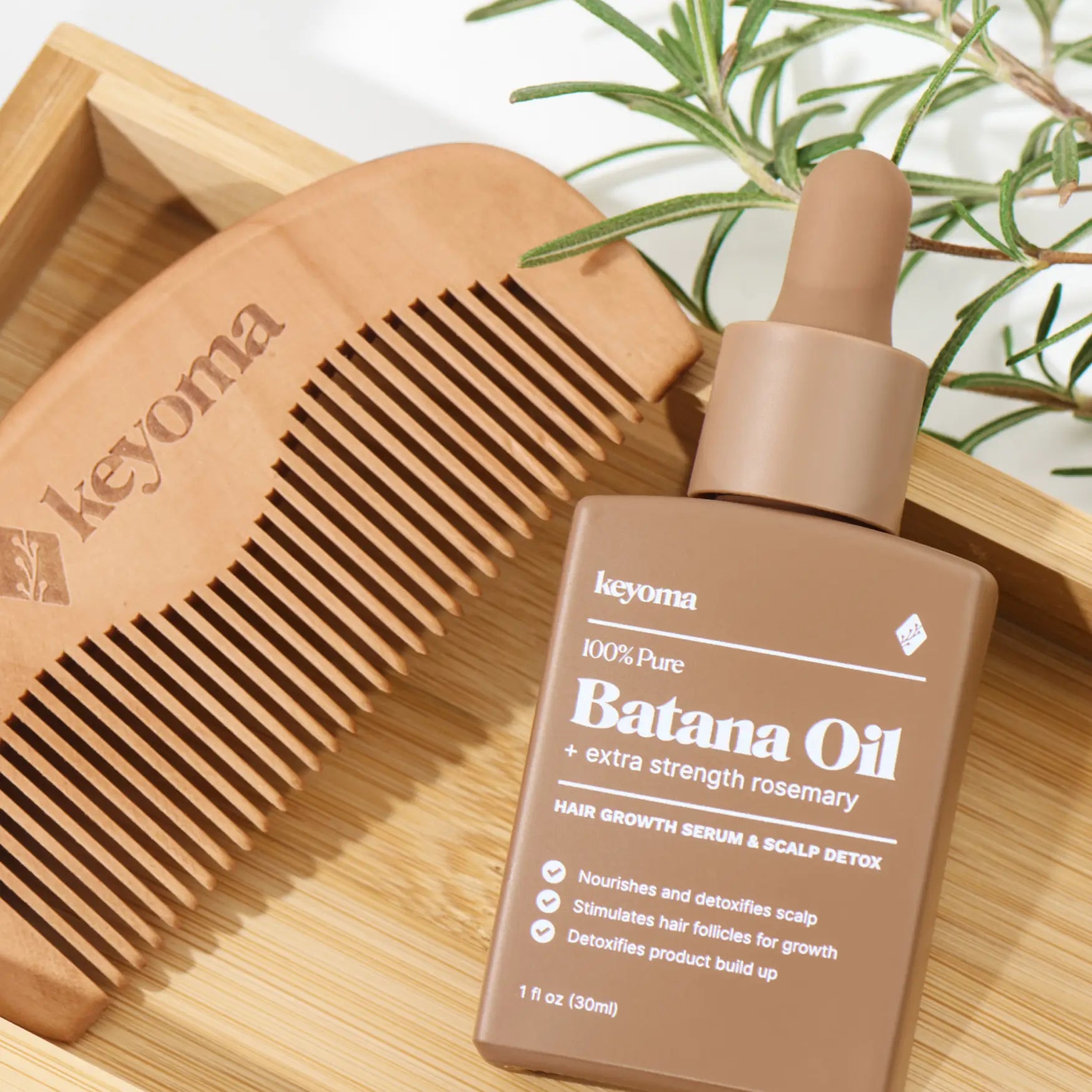
When oil suits the problem, Keyoma Batana Oil and Rosemary Serum can be used as an optional targeted formula on natural hair or selected clean scalp areas. It contains batana and rosemary oil, not pure batana oil alone. Follow current directions, begin lightly, and avoid attachment zones and irritated skin.
Protecting the hairline depends on reducing mechanical stress. The AAD lists pain, stinging, broken hairs, and a receding hairline among warning signs in its traction alopecia guidance. Review the signs and prevention of traction alopecia if tenderness, bumps, breakage, or thinning appears. Oil cannot cancel tight braids or a poorly fitted wig.
Use Hair Oil Under Wig Without Scalp Discomfort
Keep the process selective. Add water-based moisture when the natural hair feels dry, use a small amount of oil only where lubrication is useful, and cleanse when sweat or residue is the real problem. Match the amount and timing to your wig type and access level.
Stop and reassess when the scalp burns, the hairline hurts, the wig slips, or the cap becomes oily. A low-buildup approach is more useful than oiling on a fixed schedule.
Featured Product
30% Off + 3 FREE Gifts
100% Pure Batana Oil + Rosemary


