

In this article
The best oils for low-density hair include argan, jojoba, grapeseed, squalane, sweet almond, and batana oil. The right choice depends on your strand thickness, curl pattern, dryness, and how you plan to use the oil.
Lighter options such as squalane or grapeseed oil work well for small finishing applications. Richer options such as batana oil can suit dry lengths and curls when used in controlled amounts, often before washing.
No oil is automatically safe from weighing down your style. Placing too much near the scalp can separate your strands, reduce root lift, and make your scalp more visible. Starting with a small amount and applying it from the ends upward helps prevent that flat, coated finish.
This guide focuses on caring for naturally low-density hair. It does not treat low density as hair loss or suggest that oil can increase the number of follicles on your scalp.
Key Takeaways
-
Low density describes strand spacing, while fine hair describes individual strand width.
-
Lightweight oils can still flatten roots when the dose or placement is wrong.
-
Batana oil suits controlled pre-wash care better than heavy root-to-tip leave-in use.
-
Start at the ends, then increase the amount only when your hair needs it.
What Low-Density Hair Needs From an Oil
Hair density describes how closely your strands grow across your scalp. If fewer strands grow within an area, your hair has lower density. You may notice more visible scalp when you create a part or move the hair between your fingers.
This is different from strand thickness. Fine hair has a smaller individual strand diameter, while coarse hair has a larger diameter. You can have fine, high-density hair or coarse, low-density hair. Our guide to fine hair versus thin hair explains why those terms should not be used interchangeably.
If you are unsure where your hair falls, check your hair density before choosing an oil. Density is only one part of the decision. Your strand thickness, porosity, curl pattern, length, and current routine also affect how an oil feels.
Low-density hair generally benefits from an oil that:
-
Spreads easily in a controlled amount
-
Adds slip without forming a thick coating
-
Rinses out during your normal wash routine
-
Can be applied without covering the root area
-
Matches the dryness and texture of your lengths
“Lightweight” is a practical description rather than a standardized scientific category. An oil that feels light on coarse curls may leave fine, straight strands looking separated. The formula, amount, placement, and other styling products all influence the result.
Best Oils for Low-Density Hair

There is no single oil that works for every low-density hair type. Some oils are better for finishing, while others make more sense as short pre-wash treatments.
Argan Oil for Dry Ends and Surface Frizz
Argan oil is a useful starting choice when the ends look rough or small flyaways make the hair surface appear uneven. It spreads well in small amounts and can add softness without requiring scalp application.
Place one drop in your palm and rub both hands together. Press the oil into the ends first, then use the residue left on your hands across the mid-lengths. Avoid adding a fresh drop near the roots.
Cleveland Clinic notes that argan oil contains fatty acids and vitamin E. However, there is not enough evidence to support claims that it helps hair grow. Treat argan oil as a conditioning or finishing option rather than a way to increase density. You can read its overview of argan oil benefits for more context.
Argan oil may still feel heavy on short, straight, or fine hair. If one drop creates visible sections, use the small amount left on your fingertip instead of dispensing a full drop.
Jojoba Oil for Targeted Pre-Wash Care
Jojoba oil spreads quickly, making it helpful when you want to treat selected dry areas without coating your full head.
For a pre-wash treatment, divide your hair into loose sections. Apply a small amount to the dry lengths and let it sit briefly before shampooing. Avoid pouring the oil directly onto the scalp, since that makes the dose harder to control.
Jojoba is often described as similar to the oil produced by the scalp. That comparison does not mean it performs the same way for every person. If your roots become oily quickly, begin with the ends and observe the result before trying it closer to the scalp.
Grapeseed Oil for a Lighter Finish
Grapeseed oil has a fluid texture that is easy to spread across the ends. It may suit straight or wavy hair when you want light smoothing rather than an intensive treatment.
Start with one drop across both palms. Press it onto the final few inches of your hair, then stop. Do not rake freshly oiled fingers through the root area, as this can make strands gather into sections.
A fluid texture does not guarantee a weightless result. If your hair already contains leave-in conditioner, curl cream, or styling serum, even a small amount of extra oil may create a coated finish.
Test grapeseed oil without changing the rest of your routine. This makes it easier to see whether the oil, dose, or product combination is affecting your volume.
Squalane for Flyaways and Precise Finishing
Squalane works well when you need control over a few dry ends or surface flyaways. Since it is often used in small amounts, it can fit short styles and hair that loses volume easily.
Apply one drop across your palms until your hands no longer look wet. Press the residue onto the areas that need smoothing. This is less likely to overload one section than placing the drop directly onto your hair.
Check the ingredient label when choosing a product. Squalane and squalene are related but different ingredients. Hair and skin products commonly use the more stable form called squalane, which may come from plant-based sources.
Squalane is better suited to targeted finishing than a generous pre-wash treatment. Long, dry curls may need an oil with more body and spread.
Sweet Almond Oil for Low-Density Curls
Low-density curls still need enough slip to separate, shape, and detangle without unnecessary pulling. Sweet almond oil may work for curls that feel dry through the lengths but lose definition beneath heavy product layers.
Apply it section by section instead of covering the whole head at once. Place a drop across both hands, smooth it onto one section, then check whether the curls stay lifted and defined before adding more.
Keep the oil away from the roots when volume is your priority. Focusing on the lengths can support softness while leaving more space around the scalp.
If you have a known nut allergy or a history of reactions, review the product information and speak with a qualified medical professional before using sweet almond oil. Patch-test unfamiliar products before applying them across a large area.
Batana Oil for Dry Lengths and Pre-Wash Oiling
Batana oil is richer than lightweight finishing oils, but that does not automatically make it unsuitable for low-density hair. It can be a strong option when your ends are dry, processed, coarse, curly, or exposed to regular friction.
The key is to use batana oil according to its richness. Instead of coating your roots and leaving it on as a daily styling product, apply a measured amount to the mid-lengths and ends before washing.
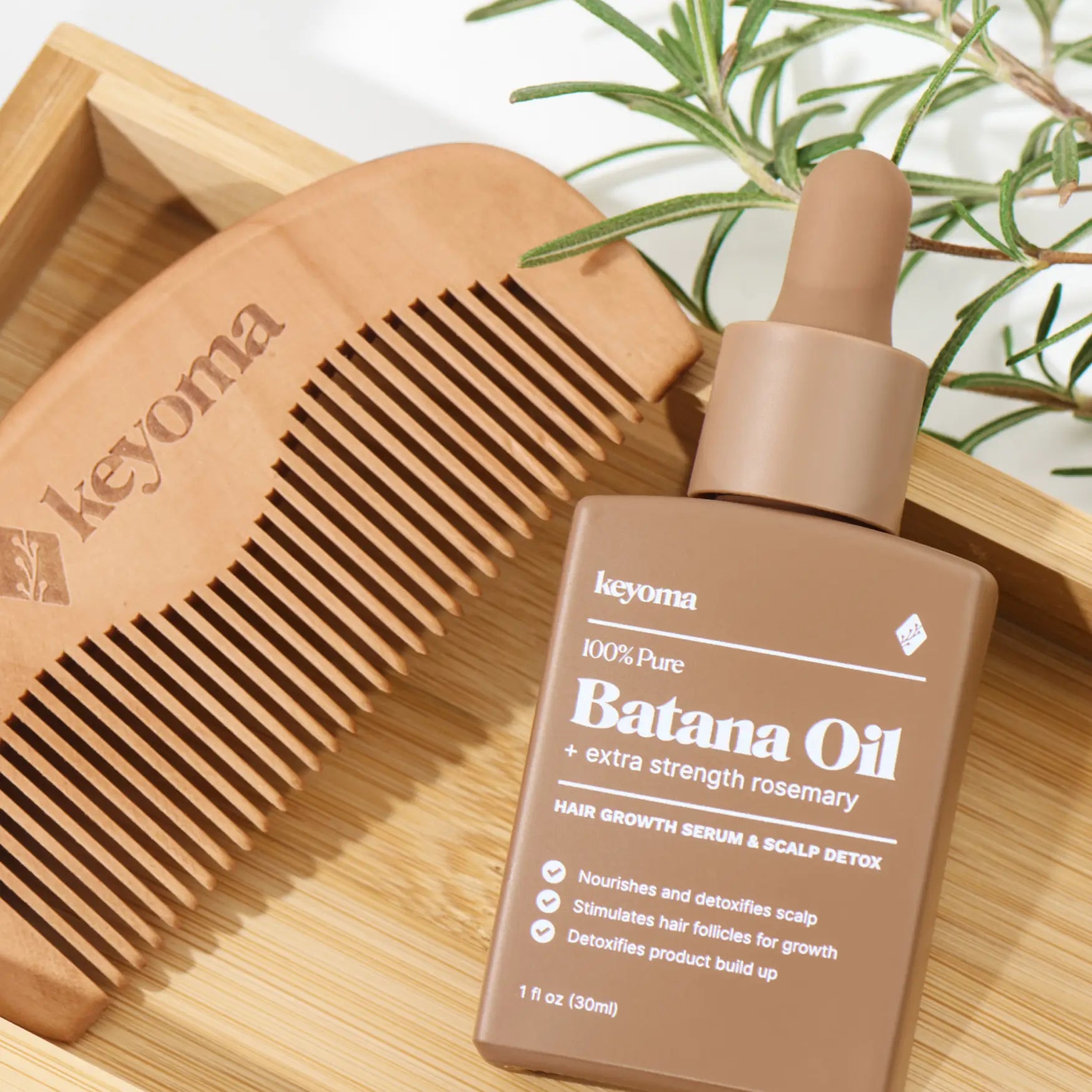
Warm a small amount of Keyoma Batana Oil with Rosemary between your palms. Work it through the driest sections first and keep most of the oil below the ears. If your hair is short or fine, use less than you would on long, coarse, or coily hair.
Leave it on long enough to soften and coat the lengths without turning the routine into an overnight requirement. Hair that becomes greasy easily may respond better to a shorter application before shampooing.
You can also apply a trace amount to dry ends after styling. Use only the residue left on your palms rather than a full drop. This gives you more control over shine without pulling the roots down.
Our guide to using batana oil without greasy roots offers a more detailed ends-first method.
Batana oil can support softness, slip, and a smoother appearance. It should not be presented as a way to change natural density or regrow lost hair.
Match the Oil to Your Hair, Not Density Alone
Use density as one selection factor rather than your only one. The table below provides practical starting points based on how your hair behaves.
|
Hair Situation |
Starting Option |
Best Placement |
Starting Amount |
|
Straight hair with flat roots |
Squalane or grapeseed |
Ends only |
One drop |
|
Wavy hair with surface frizz |
Argan |
Mid-lengths and ends |
One drop |
|
Low-density curls needing slip |
Sweet almond or jojoba |
Sectioned lengths |
One to three drops |
|
Coarse or processed dry ends |
Batana oil |
Mid-lengths and ends |
Small pre-wash amount |
|
Oily roots with dry ends |
Grapeseed or squalane |
Final few inches |
One drop |
|
Short hair needing light smoothing |
Squalane |
Targeted dry areas |
Palm residue |
These are starting points, not fixed rules. Long, coarse curls may need more product than short, fine hair. Increase the dose slowly and judge the result once your hair is fully dry.
If your scalp gets oily while the lower lengths stay dry, treat them as separate zones. Our oily scalp and dry ends guide explains how to clean the roots while supporting the older hair below them.
How to Apply Oil Without Flattening Your Roots
Application technique affects the result as much as the oil you choose. A suitable oil can still make low-density hair look flat when the amount or placement is wrong.
Begin With One Drop
Dispense one drop into your palm rather than applying the dropper directly to your hair. Rub both hands together to create a thin, even layer.
Touch the driest part of your hair first. If the oil spreads without creating shiny sections, add another drop only where needed.
Short or fine hair may need less than one full drop for finishing. Touching the dropper opening and spreading that residue across your fingertips gives you a smaller dose.
Apply From the Ends Up
Begin with the ends because they are older and have experienced more washing, brushing, heat, friction, and environmental exposure than the roots.
Move upward with the residue left on your hands. Stop before reaching the scalp when root lift matters.
For curls, press or smooth oil over individual sections. Avoid repeatedly raking your fingers through curls that have already formed, since this can disturb their shape.
Match the Timing to the Oil
Different application times serve different purposes:
-
On damp hair: A small amount can spread more evenly through the lengths.
-
On dry hair: You can target flyaways or rough ends and see the finish immediately.
-
Before washing: Rich oils such as batana oil can support dry lengths without remaining on the roots after styling.
-
Between washes: Use palm residue on the ends rather than adding a fresh layer throughout the hair.
-
Overnight: Reserve this for oils and amounts you already know will wash out cleanly.
A longer application does not guarantee a better result. Low-density or fine hair may respond better to less oil and a shorter contact period.
Check the Result After Drying
Do not judge your density while your hair is wet. Damp strands naturally gather into sections and reveal more scalp.
Once your hair is dry, check whether:
-
The roots still have lift
-
Your part looks the same as before oiling
-
The ends feel soft rather than slick
-
Curls hold their shape
-
Separate sections look defined rather than greasy
-
Your hair moves freely when you turn your head
If the style looks flatter, change one factor during the next application. Reduce the amount first. If that does not help, move the oil farther from the roots, shorten the application time, or choose a lighter option.
Signs You Are Using Too Much Oil
How your hair behaves is a better guide than the amount listed on a general product tutorial.
You may be using too much oil when:
-
Your roots lose lift soon after styling
-
Individual strands gather into oily sections
-
Your scalp becomes more visible after application
-
The lengths still feel coated after shampooing
-
Your curls stretch or lose their shape
-
You need dry shampoo to restore volume
-
Your hair attracts lint or feels sticky
Reduce the dose before deciding that your hair cannot use oil. The problem may be the amount rather than the ingredient.
Your full routine also matters. Oil layered over leave-in conditioner, curl cream, serum, and heat protectant may create signs of hair oil overuse even when each product feels manageable on its own.
How to Wash Rich Oil From Low-Density Hair
A rich oil is easier to use when you plan the removal before application.
Start by rinsing your hair with warm water. Apply shampoo to the scalp and roots, where oil and product residue collect. Massage with your fingertips, then let the lather move through the lengths during rinsing.
Check how your hair feels before shampooing again. A second wash is useful only when the roots or lengths still feel coated. Shampooing repeatedly when the hair already feels clean may leave the ends rough.
Condition the mid-lengths and ends after washing. This restores slip without placing more product near the roots.
If batana oil or another rich oil remains after washing, review the complete method for washing out thick hair oil. Reducing the amount during your next application is often more effective than using a stronger cleanser.
When Low Density May Be More Than Your Natural Pattern
Some people naturally have fewer strands across the scalp. That alone does not indicate a health problem.
A noticeable change over time deserves different attention. If your part has become wider, your ponytail feels smaller, or you are shedding more hair than usual, do not assume an oil will correct the change.
Hair oils can affect softness, shine, slip, and styling behavior. They do not create new follicles.
Consider speaking with a dermatologist or another qualified professional if the change continues or comes with distinct bald areas, scalp pain, redness, thick scaling, bleeding, or inflammation.
Build a Low-Density Oil Routine That Fits Your Hair
Begin with one oil and one clear purpose. Choose a light finishing oil if you want to smooth a few ends or flyaways. Choose a richer pre-wash oil if your lengths need more softness and slip.
For dry, curly, coarse, or processed lengths, Keyoma Batana Oil with Rosemary offers a richer option that you can control through amount, placement, and timing. Warm a small amount between your palms, apply it below the roots, and wash it out before judging the result.
The best oil routine is not the one that covers every strand. It is the one that supports your dry areas while keeping your roots clean, lifted, and free to move.
Frequently Asked Questions
What oil is best for low-density hair?
Argan, jojoba, grapeseed, squalane, sweet almond, and batana oil are useful options. Choose based on your strand thickness, curl pattern, dryness, and intended use. Lighter oils suit finishing, while batana oil may work better as a measured pre-wash treatment.
Is batana oil suitable for low-density hair?
Yes. Low-density hair can use batana oil when the amount and placement match the hair’s needs. Apply a small amount to dry mid-lengths and ends instead of coating the roots. Fine or easily weighed-down hair may benefit from a shorter pre-wash application.
Can low-density hair use oil on the scalp?
Yes, but scalp oil may separate the strands and make the roots look flatter. If volume is your priority, keep most of the oil on the lengths or use scalp oil as a controlled pre-wash step.
Is low-density hair the same as thinning hair?
No. Low density describes the number or spacing of strands across your scalp. Thinning describes a reduction in the amount of hair over time. Naturally low-density hair does not automatically mean you are experiencing hair loss.
Which oil is best for low-density curly hair?
Sweet almond, jojoba, argan, or batana oil may suit low-density curls. Use lighter oils for finishing and richer oils for dry sections or pre-wash care. Apply the oil section by section and keep it away from the roots when you want to preserve lift.
How much oil should I use on low-density hair?
Begin with one drop for finishing. Long, coarse, or curly hair may need more, while short or fine hair may need only the residue left on your palms. Increase the amount one drop at a time.
Featured Product
30% Off + 3 FREE Gifts
100% Pure Batana Oil + Rosemary


