

In this article
Hair oil can contribute to small bumps, whiteheads, or pimples around the forehead and hairline when the product repeatedly reaches acne-prone skin. The oil may be part of the problem, but it is not the only possible cause.
Hair oil hairline breakouts are often shaped by placement and transfer rather than by the product touching the scalp once. Oil can run from the roots, move from coated hair onto the face, spread through sweat, or collect on pillowcases and headwear.
You may not need to stop using hair oil completely. A narrower application area, a smaller amount, cleaner contact surfaces, and a controlled product trial can help you determine whether your routine is contributing.
Key Takeaways
-
Hair oil may trigger breakouts when it repeatedly reaches nearby skin.
-
Placement often matters as much as the type of oil used.
-
Clean fabrics and hands can reduce indirect product transfer.
-
A patch test cannot predict whether repeated use will clog pores.
Can Hair Oil Cause Hairline Breakouts?
Yes. Hair oil can contribute to breakouts when it migrates onto the forehead, temples, ears, cheeks, or back of the neck and helps clog pores. The American Academy of Dermatology notes that oils in hair products may cause tiny breakouts along the hairline, forehead, and neck. These bumps may include whiteheads and small flesh-colored papules.
This pattern is often called pomade acne or acne cosmetica. Despite the name, pomades are not the only possible trigger. Hair oils, gels, waxes, conditioners, sprays, edge-control products, and other leave-in formulas can leave residue on nearby skin.
Hair oil is also only one possible factor. Ordinary acne, folliculitis, irritation, ingrown hairs, sweat, friction, and other skin conditions may look similar. Location and timing can offer clues, but appearance alone cannot confirm the cause.
If you are also concerned about itching, buildup, or irritation, review other possible side effects of hair oiling separately rather than assuming every symptom has the same cause.
Why Hair Oil May Cause Pimples Around the Hairline
Direct Application and Runoff
Oil placed directly along the visible edge of the hairline can easily reach facial skin. Even when you aim for the scalp, a runny formula may travel toward the forehead, temples, sideburn area, or ears.
Applying more product increases the amount available to migrate. It does not necessarily make the hair softer, shinier, or easier to manage. Readers who are unsure about quantity may benefit from reviewing general hair oiling tips before changing products.
Hair, Hands, and Fabrics Transfer Oil
Coated strands can rest against the forehead, cheeks, ears, or neck throughout the day. Oily fingers may also transfer residue when you adjust your hair, touch your face, or put on a bonnet or hat.
Overnight contact can be prolonged. Hair may rub against the pillowcase for several hours, while a bonnet, headband, or scarf can press product against acne-prone areas.
|
Transfer Route |
How Oil Reaches the Skin |
|
Direct application |
Product is placed on or too close to the visible hairline |
|
Scalp runoff |
A fluid formula travels from the roots toward the face |
|
Hair-to-face contact |
Oiled strands rest on the forehead, temples, cheeks, or neck |
|
Hands-to-skin contact |
Fingers spread residue after application |
|
Pillow transfer |
Oiled hair leaves residue that later touches the face or neck |
|
Headwear transfer |
Bonnets, hats, caps, or bands hold oil against the hairline |
|
Sweat |
Moisture helps move residue across nearby skin |
Sweat and Friction Spread Residue
Sweat can mix with oil and other product residue, then move it across the forehead and temples. Tight hats, helmets, headbands, and visors may add friction and keep that mixture in contact with the skin.
The AAD advises gentle sweat removal and clean clothing or equipment for acne-prone skin. Heavy scalp oiling immediately before exercise, hot weather, or extended headwear use may create more contact than your skin tolerates.
If workouts are a frequent trigger, separating oiling days from intense exercise may be more useful than repeatedly washing the hairline. A broader look at sweat and hair care can help you plan oiling around activity.
The Finished Formula and Contact Time Matter
A thick oil is not automatically acne-causing, and a lightweight oil is not automatically acne-safe. Finished products may also contain waxes, butters, silicones, fragrance, styling polymers, or other ingredients that affect how the formula sits on hair and skin.
Online comedogenic ratings for individual oils cannot reliably predict how every finished hair product will behave. Amount, frequency, contact time, the full formula, and individual skin response all matter. A product that works well on the ends may still be unsuitable along an acne-prone hairline.
Signs Your Hair Oil Routine May Be the Trigger
Bumps Cluster Near Product Contact
Product-related breakouts often appear along the upper forehead, temples, visible hairline, ears, sideburn area, cheeks touched by hair, or the back of the neck. You may notice whiteheads, blackheads, flesh-colored bumps, or inflamed pimples.
DermNet describes pomade acne as follicular plugging and comedones along the hairline linked with greasy hair products. Still, the same areas can develop other types of acne or follicular conditions.
Breakouts Follow Oiling Days
A repeated pattern can be more informative than one isolated pimple. Breakouts may appear or worsen after scalp oiling, overnight treatments, slicked styles, edge control, or frequent use of leave-in products near the face.
Look for consistency rather than an immediate reaction. Pore clogging may develop after repeated exposure, so the timing may be less obvious than burning, redness, or itching from irritation.
A New Formula or More Product Preceded the Change
A recent product switch, heavier application, more frequent oiling, or a new habit of sleeping with oiled hair may point to a routine trigger. Using several new products at once makes the pattern harder to identify.
Residue and greasiness can also signal using too much hair oil, although excess product does not prove that it caused the bumps. It simply raises the chance of migration and prolonged contact.
Appearance Alone Cannot Confirm the Cause
Hairline bumps are not automatically pomade acne. Folliculitis may be itchy or pustular, irritation may burn or scale, and ingrown hairs may center around recently removed or closely cut hair.
Deep pain, spreading redness, pus, crusting, scarring, persistent itching, or hair loss deserves professional assessment. A qualified healthcare professional can distinguish acne from conditions that need different care.
How to Prevent Hairline Breakouts From Hair Oil
Leave a Narrow Buffer Around the Hairline
Make placement your first adjustment. Stop the application slightly behind the visible edge instead of coating the fine hairs and facial skin along the forehead and temples.
A narrow buffer reduces direct contact while allowing you to treat the intended hair area. Check the ears, sideburn area, and back of the neck as well, since transfer is not limited to the front hairline.
Keep Cosmetic Oil Below the Mid-Lengths
Direct scalp application is not always necessary. If your goal is softness, shine, frizz control, or dry-end care, apply the oil from the mid-lengths downward and keep coated strands away from the face.
The Mayo Clinic also suggests applying hair oil away from the forehead and temples when acne is a concern. This approach may be especially useful for people with an oily scalp and dry ends.
Use the Smallest Useful Amount
Start with less than you think you need, then add a small amount only where the hair still feels dry. More oil creates more residue and opportunities for transfer without guaranteeing a better cosmetic result.
If your roots stay coated, your hair separates into greasy sections, or residue remains after washing, consider whether your hair oil is too heavy for the amount and placement you use.
Control Sprays and Runny Formulas
Spray oils and thin liquids can reach the face even when the nozzle is aimed at the hair. When the product instructions allow it, spray into your hands first, then smooth a measured amount onto the intended section.
You can also shield the forehead with a clean hand or tissue while spraying. Gently remove any accidental contact instead of leaving a fine mist on the skin.
Reduce Overnight, Sweat, and Headwear Transfer
Tie or wrap oiled hair so it does not rest on the forehead, temples, cheeks, or neck. Keep the wrap comfortable and avoid placing a saturated edge directly against the hairline.
Wash pillowcases, sheets, bonnets, scarves, caps, hats, headbands, and visors regularly. The AAD specifically recommends cleaning items that can hold hair-product residue, including pillowcases, sheets, caps, hats, headbands, and visors.
Avoid heavy scalp oiling just before exercise, hot outdoor activity, or long periods in tight headwear. Clean contact surfaces matter more than trying to scrub the skin afterward.
Choose the Finished Formula, Not an Oil Ranking
Labels such as non-comedogenic, non-acnegenic, oil-free, or “won’t clog pores” can be useful starting points for acne-prone readers. They are not a guarantee that every person will tolerate the product.
The AAD recommends oil-free and non-comedogenic labels for acne-prone skin, but your response still depends on the full formula and how you use it. Do not assume that “pure,” “natural,” “organic,” or “cold-pressed” means acne-safe.
Know What a Patch Test Cannot Predict
A home patch test is mainly used to screen for visible irritation or an allergic-type skin reaction. It does not reproduce repeated application along the full hairline, extended pillow contact, sweat, or gradual pore clogging.
The AAD explains that product testing and medical patch testing are used to identify skin reactions and possible allergens, not to determine future pore-clogging risk. Review how to patch test a hair oil for reaction screening, but keep acne risk as a separate question.
What to Do if Hairline Breakouts Have Already Appeared
Pause the most likely product while keeping the rest of your routine as stable as possible. A controlled elimination is easier to interpret than replacing your oil, shampoo, conditioner, styling products, and skincare all at once.
Use three simple steps:
-
Stop the suspected oil or styling product from contacting the affected areas.
-
Photograph or note the same hairline zones under similar lighting.
-
Keep other products and habits unchanged while you monitor the pattern.
Do not reapply the suspected product directly to active breakouts to prove that it caused them. Acne may not disappear immediately after the trigger is removed, and one product change will not clear bumps caused by another condition.
Gently cleanse any oil that reaches the face using lukewarm water and a mild, non-abrasive cleanser. The AAD advises applying cleanser with the fingertips and avoiding scrubbing, washcloth friction, and harsh rubbing because irritation can make the skin look worse.
Consider when to stop scalp oiling if the bumps keep returning despite better placement. Seek professional care for deep or painful lesions, drainage, spreading redness, scarring, significant hair loss, persistent itching, or bumps that do not improve after routine changes.
Prevent Hair Oil Hairline Breakouts for Calmer Skin
You do not have to blame every oil or abandon hair oil at the first sign of a bump. Start by reducing direct contact, keeping cosmetic oil on the lengths, using less product, and cleaning anything that repeatedly touches oiled hair.
A stable, controlled routine gives you a clearer view of what is happening. If the bumps persist, worsen, or come with pain, pus, scarring, or hair loss, get an evaluation instead of treating every hairline bump as product-related acne.
Featured Product
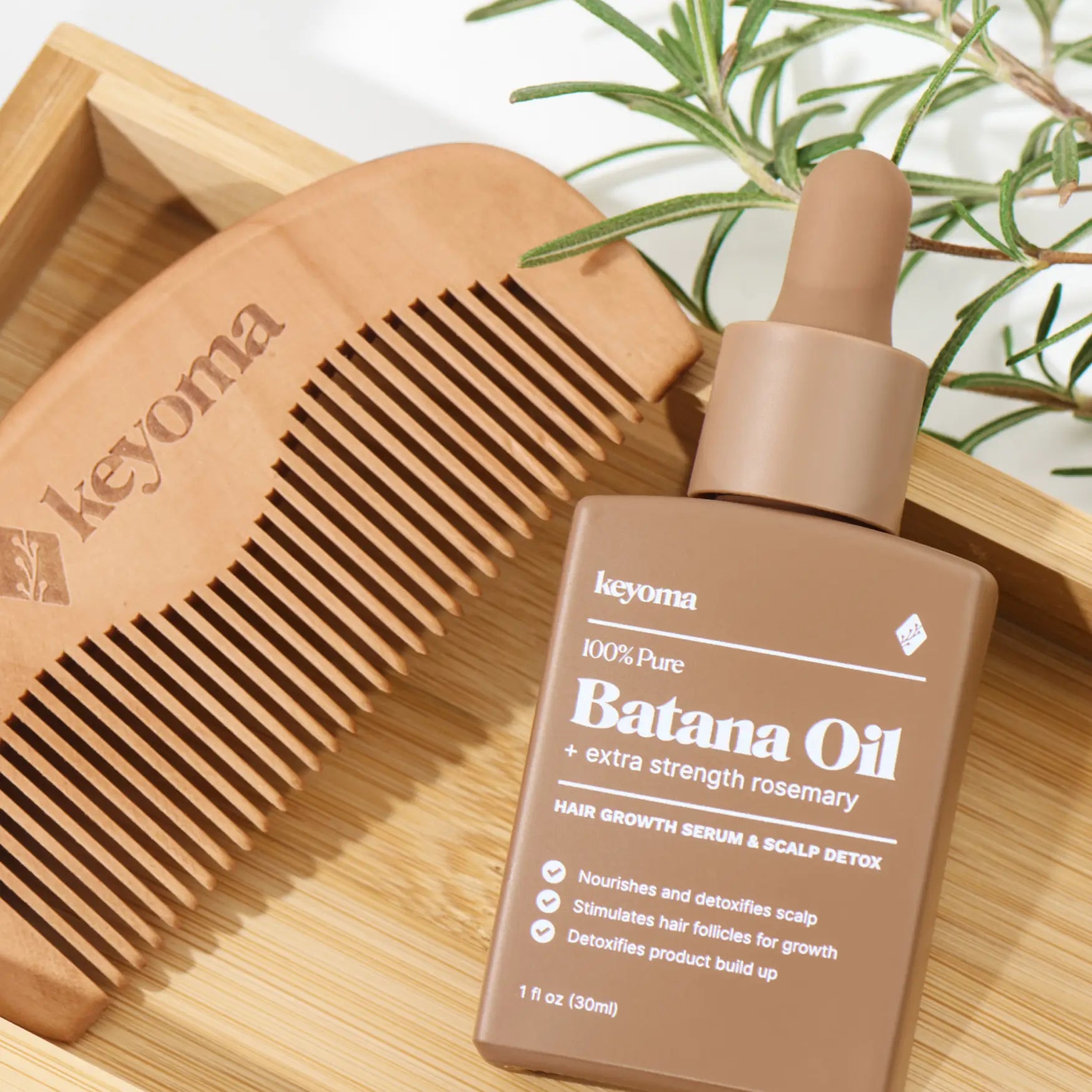
30% Off + 3 FREE Gifts
100% Pure Batana Oil + Rosemary


