

In this article
Camphor oil is an aromatic ingredient that can create a cooling, warming, or tingling feeling on the skin. It appears in some finished topical products for temporary relief of minor pain or itching. It is not a gentle everyday oil, and stronger sensation does not mean better results.
Safety needs to come first. Camphor can irritate the skin, enter the body through topical exposure, and cause poisoning if swallowed. Homemade mixtures made with crystals or concentrated oil are difficult to measure accurately, so they carry more risk than professionally formulated products with clear directions.
For hair and scalp care, the evidence is limited. Camphor oil has not been proven to grow hair, stop hair loss, or permanently clear dandruff. Its most realistic role is as a carefully controlled ingredient in a finished topical product, not as a cure-all for scalp problems.
Key Takeaways
-
Camphor oil can cause strong cooling, warming, or tingling sensations.
-
Evidence for hair growth and dandruff control remains limited.
-
Follow a finished product label instead of estimating a DIY dilution.
-
Never swallow camphor or apply it to damaged skin.
What Is Camphor Oil?
Camphor is a fragrant, waxy compound associated with the camphor tree, Cinnamomum camphora. Camphor oil usually refers to an aromatic distillate or a product that contains camphor and related volatile compounds. Camphor may come from plant material, but it can also be produced synthetically from turpentine-derived materials. The PubChem camphor record and a recent review of camphor uses and hazards describe both natural and synthetic sources.
The term camphor essential oil can describe different materials, including a distilled oil, camphor in a carrier, or a concentrated formulation ingredient. These products are not interchangeable. Check the ingredient list, concentration, directions, and intended use.
Camphor has recognized topical uses when it is included at controlled levels in correctly labeled products. The FDA’s external analgesic monograph lists camphor as an antipruritic or counterirritant active ingredient within specific concentration ranges. These products work by changing sensory signals at the skin, which can create temporary cooling or pain relief. They do not prove that the underlying cause of itching, flaking, or scalp discomfort has been treated.
Scalp flakes can also have several causes. Dryness, oily buildup, irritation, contact dermatitis, psoriasis, eczema, and seborrheic dermatitis may look similar without being the same problem. Comparing dandruff vs. dry scalp can help you avoid choosing an overly strong ingredient for a scalp that mainly needs gentler cleansing or moisture support. The American Academy of Dermatology also notes that dandruff can relate to medical conditions, hair care habits, or oily skin.
What Are the Different Types of Camphor Oil?

Camphor oil is often described by color grades created during distillation and refining. These grades should not be treated as equal alternatives. Color alone is also not a complete safety test, especially when a product lacks a full ingredient list or concentration.
White Camphor Oil
White camphor oil is the grade most often discussed for aromatic and topical applications. In liquid form, it may appear clear or only slightly milky rather than bright white. A recent review identifies white camphor oil as the form used medicinally, while distinguishing it from grades with more concerning constituents. Even white camphor oil can be irritating or toxic when misused, so “white” does not mean safe to apply undiluted.
For scalp use, look for a finished product that clearly identifies its purpose and camphor content. Avoid unlabeled oils, fragrance blends, ritual camphor, and crystals sold without cosmetic or drug-use directions.
Brown Camphor Oil
Brown camphor oil may contain more safrole and is unsuitable for casual skin or scalp use. It is not a stronger version of white camphor oil. Avoid products that omit the grade, concentration, or intended use.
Yellow Camphor Oil
Yellow camphor oil is also associated with higher safrole content. It is not a substitute for a properly formulated white camphor product, regardless of natural or pure marketing claims.
Blue Camphor Oil
Blue camphor oil is another color grade described in older classifications. A medically reviewed overview by Cynthia Cobb, DNP, APRN classifies blue camphor oil as toxic and not the therapeutic grade. The practical rule is simple: do not apply blue, brown, or yellow camphor oil to your hair or skin, and do not assume that any camphor product sold online is designed for personal care.
Camphor Oil Benefits for Hair and Scalp

Most camphor oil benefits discussed online mix traditional practice, laboratory findings, and personal reports. A 2024 review of camphor in skin research discusses antimicrobial and anti-inflammatory potential, but that research does not establish a scalp treatment or hair-growth effect.
Those forms of evidence do not carry the same weight as controlled human research. A 2023 clinical review found some potential for camphor-containing topical products in pain and itching, but the authors said the limited number of studies did not support definitive recommendations. Hair growth was not established as a clinical benefit.
May Temporarily Ease Itching or Discomfort
Camphor can affect sensory receptors in the skin, so a correctly formulated topical product may temporarily reduce the perception of mild itching or discomfort. That can feel useful when the scalp is mildly irritated, but symptom relief does not identify the cause. Persistent itch may come from dandruff, dermatitis, psoriasis, an allergy, infection, or product buildup.
Before adding another active ingredient, review common itchy scalp causes. Seek medical advice for sores, pus, swelling, bleeding, severe redness, patchy hair loss, or itching that continues despite basic care.
Creates a Cooling, Warming, or Tingling Sensation
Camphor can produce cooling and warming sensations because it stimulates temperature-sensitive nerve pathways. The FDA classifies certain camphor preparations as counterirritants, which are meant to change how discomfort is felt at the skin. A tingle may show that sensory receptors are reacting, but it does not show that follicles are receiving more nutrients or entering a growth phase.
Burning is not a sign that camphor oil is working. Strong heat, pain, redness, or increasing itch suggests irritation. Rinse the product away and stop using it rather than leaving it on longer.
Has Limited Evidence for Hair Growth and Dandruff
There is not strong clinical evidence that camphor oil grows hair, reduces shedding, or treats the underlying causes of hair loss. Claims about scalp circulation are often based on sensation or local skin effects rather than measured hair outcomes. It is more useful to separate hair breakage vs. hair loss before choosing an oil. Dry, snapping strands need a different approach from shedding at the root or progressive thinning.
Dandruff also needs a cause-based approach. The American Academy of Dermatology’s dandruff guidance recommends established shampoo ingredients such as ketoconazole, selenium sulfide, salicylic acid, sulfur, zinc pyrithione, or coal tar. Camphor is not listed as a standard dandruff active. DermNet’s seborrheic dermatitis overview describes dandruff as a mild form of seborrheic dermatitis and notes that psoriasis, eczema, and fungal scalp conditions can enter the differential diagnosis.
Oil may soften dry flakes for some people, but it can also add residue or worsen an oily, yeast-associated scalp. Review whether hair oil can worsen dandruff before treating every flake with more oil. Camphor should not replace a proven dandruff shampoo or a dermatologist’s assessment when symptoms are persistent.
How to Use Camphor Oil for Hair

The safest approach is to use a professionally formulated product made for the scalp or skin. Do not create a universal recipe from camphor crystals, concentrated oil, or an unlabeled aromatic product. Safe concentration depends on the material, existing camphor content, intended use, application area, and finished formula.
Choose a Professionally Formulated Product
Look for a complete ingredient list, clear directions, warnings, and a stated purpose. A finished product should tell you where to apply it, how much to use, how often to use it, and whether it must be rinsed. Avoid products that encourage direct use of concentrated camphor or make unsupported hair-growth claims.
A controlled formula is preferable because the concentration has already been set. The FDA monograph shows that camphor uses depend on defined ranges and labeling, not on a general “few drops” rule.
Follow the Label Instead of Guessing Dilution
How to dilute camphor oil cannot be answered with one ratio for every product. A diluted commercial blend may already be ready to use, while a concentrated formulation ingredient may not be appropriate for home use at all. Adding carrier oil without knowing the starting concentration still leaves the final dose uncertain.
Use only the amount and frequency on the label. More frequent application can increase irritation and exposure. If you already oil your scalp, compare the product directions with a sensible hair oiling frequency rather than stacking multiple oils and actives on the same day.
Patch Test Before Wider Scalp Use
Apply the finished product to a small area of intact skin according to its directions, then watch for redness, swelling, itching, burning, or a rash. A patch test cannot guarantee full scalp tolerance, but it can reveal an obvious reaction before wider use.
Follow a careful hair oil patch test and avoid testing behind the ear if that area is already irritated. People with eczema, fragrance allergy, very reactive skin, or a history of essential-oil reactions should ask a clinician before use.
Apply Only to Intact Skin
Never apply camphor oil to cuts, burns, sores, scratched areas, or inflamed skin that has started to crack or weep. Keep it away from the eyes, eyelids, mouth, nostrils, and other sensitive areas. Do not cover it with a tight cap, wrap, or bandage unless the finished product specifically directs you to do so.
FDA labeling for camphor-containing counterirritants warns against use on wounds or damaged skin, tight bandaging, and eye contact. These limits are especially important on the scalp, where scratching may create small breaks that are easy to miss.
Avoid DIY Camphor and Coconut Oil Mixtures
Camphor and coconut oil is a traditional combination, but coconut oil does not neutralize camphor toxicity. It only lowers concentration when the starting amount and final volume are measured accurately. Melting crystals into warm oil or crushing tablets into a jar can produce an unknown and uneven concentration.
For regular softness, moisture sealing, or breakage support, a plain carrier oil is usually a better fit than a strong aromatic ingredient. Oils for a sensitive scalp can help you compare gentler options.
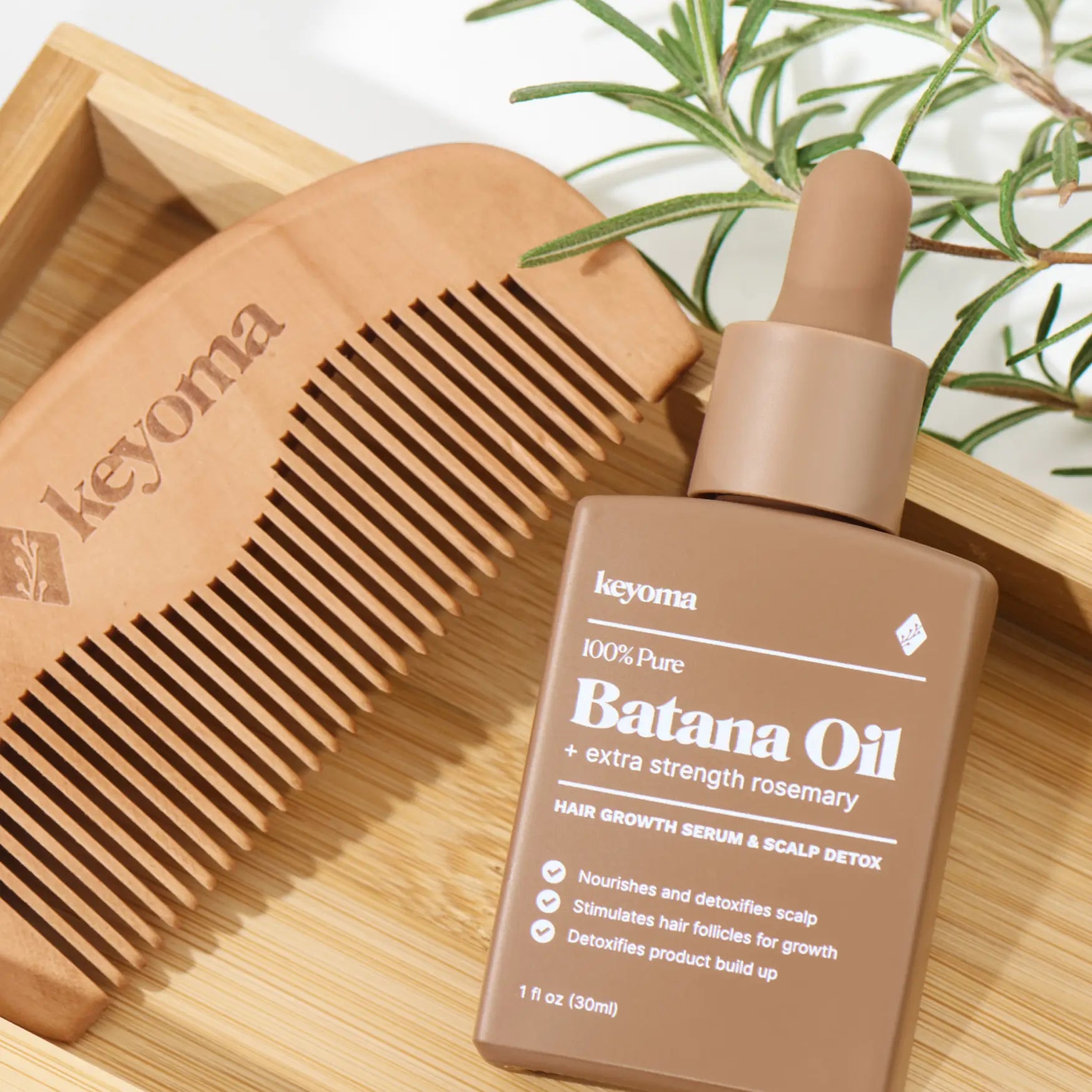
A straightforward pure batana oil avoids forcing camphor into a routine that does not need it.
Use a small amount of any scalp oil. Heavy residue can make hair feel coated and may complicate flaking. Check whether a hair oil is too heavy before adding more.
Stop if you develop a clogged scalp feeling after hair oil instead of layering another treatment over the discomfort.
Camphor Oil Side Effects and Precautions
Camphor oil side effects can range from local irritation to severe poisoning. Topical reactions may include burning, redness, itching, rash, swelling, or blisters. Larger exposure, repeated use, damaged skin, or covering the application may increase risk because camphor can be absorbed through skin. A human dermal absorption study documented absorption after topical application of a camphor-containing preparation.
Never swallow camphor oil, crystals, tablets, or a topical product that contains camphor. Poison Control warns that even a small swallowed amount can be dangerous and that seizures may begin within minutes. Poisoning has also occurred in children after camphor skin products were applied too often or covered with extra clothing.
Use these precautions every time:
-
Keep camphor products locked away from children and pets.
-
Use them only on intact skin and only as the label directs.
-
Avoid the eyes, mouth, nostrils, and other sensitive areas.
-
Do not use heat, tight wraps, or extra layers over the application.
-
Stop immediately if burning, swelling, blistering, or worsening redness develops.
Ask a healthcare professional before use on a child, during pregnancy or breastfeeding, with medicated scalp treatments, or on chronic skin conditions. Seek urgent help after swallowing camphor or if symptoms include vomiting, confusion, muscle twitching, breathing trouble, loss of consciousness, or seizures. Contact your local poison center or emergency service rather than waiting for symptoms to pass.
Is Camphor Oil Right for Your Scalp Routine
Camphor oil may suit a narrow need when it appears in a professionally formulated product for temporary itching or sensory relief. It is a poor choice when the goal is routine nourishment, softness, moisture, or proven treatment for dandruff and hair loss.
Choose it only when the product clearly states its grade, concentration, purpose, and directions. Skip DIY crystal mixtures, undiluted application, and any product that treats burning as a sign of effectiveness. For ongoing flaking, pain, inflammation, or shedding, identify the cause first and use an evidence-based treatment that matches the problem.
Featured Product
30% Off + 3 FREE Gifts
100% Pure Batana Oil + Rosemary


